

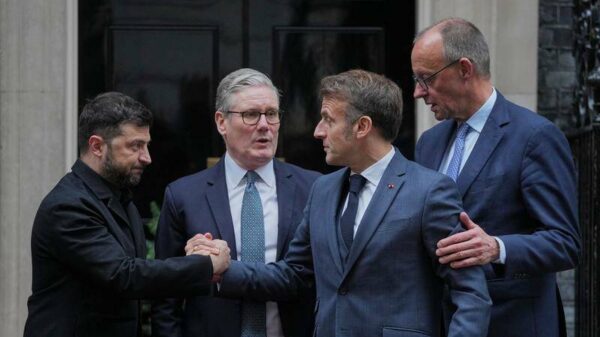





























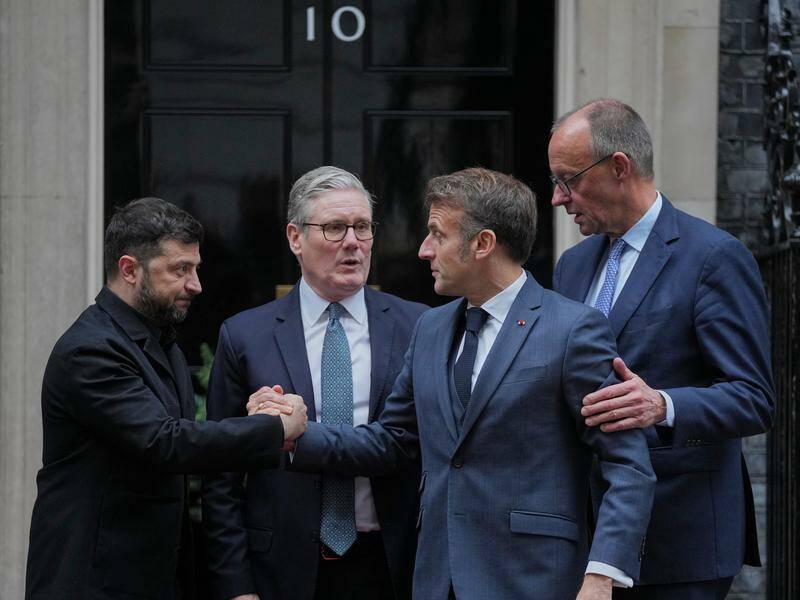
Ukrainian President Volodymyr Zelenskiy is conducting urgent negotiations with leaders from approximately 30 nations to secure fair terms for ending the ongoing war with Russia. This initiative reflects a concerted effort by Ukraine’s allies to navigate the complexities of the conflict, particularly amid pressure from the United States.
The talks, which were hastily organized, include significant participation from leaders of major European nations such as Germany, Britain, and France, who are joining via video link. Zelenskiy emphasized the urgency of these discussions on Thursday, indicating a desire to prevent Ukraine from being cornered by demands from U.S. President Donald Trump for a swift resolution to the conflict.
European governments are particularly motivated to influence these peace negotiations, citing their own security concerns as a primary factor. On Wednesday, Trump noted that he had discussed proposals with European leaders, stating that Zelenskiy “has to be realistic” regarding any peace plan that might require Ukraine to cede territory to Russia. Trump’s efforts to mediate a settlement have faced delays, with previous deadlines for a resolution having come and gone without results. Originally, Trump aimed for a peace agreement to be reached by the end of November 2023.
Russia, seeking to demonstrate its engagement with Trump’s peace initiatives, is also keen to avoid further U.S. sanctions. Sergey Lavrov, the Russian Foreign Minister, stated on Thursday that Russia has communicated “additional proposals” concerning collective security guarantees, which both Ukraine and European nations believe are necessary to prevent future aggression.
The specifics of these proposals were not disclosed by Lavrov, but he noted that discussions on security guarantees cannot be limited to Ukraine alone. As these diplomatic efforts unfold, Ukraine has intensified its military actions, launching one of its largest drone strikes in the nearly four-year conflict. This operation temporarily grounded flights at all four airports in Moscow for seven hours and led to operational restrictions at airports across eight other Russian cities, according to Russia’s civil aviation authority, Rosaviatsia.
The Russian Ministry of Defence reported intercepting 287 Ukrainian drones across various regions, countering the Kremlin’s narrative that its invasion has been overwhelmingly successful. Analysts suggest that Russian President Vladimir Putin aims to position himself as negotiating from a position of strength, despite the fact that since the full-scale invasion began in February 2022, Russia has only gained control of about 20 percent of Ukraine.
As negotiations reach a critical juncture, European leaders issued a statement on Wednesday indicating that the talks are at a “critical moment.” Zelenskiy announced that next week Ukraine will coordinate on a bilateral level with several European nations, reinforcing his commitment to advancing discussions swiftly.
In this complex landscape of diplomacy and military action, the outcome of these talks could have significant implications for the future of Ukraine and its relationship with both Russia and its Western allies.