



































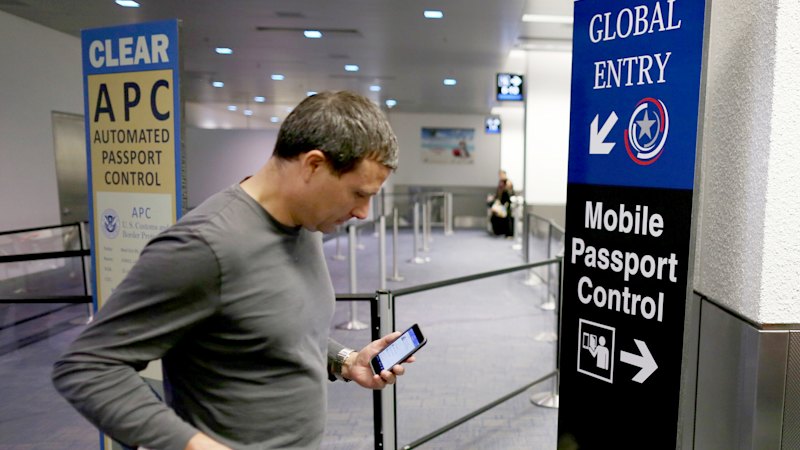
In March 2025, a French scientist was denied entry into the United States after US border agents conducted a search of his phone. The incident has sparked outrage among French officials, who suggested that the scientist’s critical messages about former President Donald Trump influenced the decision. US authorities, however, have asserted that political considerations did not play a role. This event has prompted many travelers to question the legality and implications of such searches at US borders.
US Customs and Border Protection (CBP) agents possess broad authority to search travelers’ electronic devices without a warrant, thanks to an exception to the Fourth Amendment’s protections against unreasonable searches. In the fiscal year 2025 alone, CBP performed 55,318 searches of electronic devices at ports of entry. This figure, while a notable increase compared to previous years, represents only about 0.01 percent of the nearly 420 million travelers who entered or exited the country by air, land, and sea during that same period.
According to Jessica Turner, a spokesperson for CBP, these searches aim to uncover digital contraband, terrorism-related content, and information that may affect a visitor’s admissibility into the country. Nevertheless, an increasing number of travelers are reporting inquiries regarding their legally protected online speech when crossing borders, raising concerns about the extent of privacy rights at immigration checkpoints.
Understanding Your Rights During Device Searches
The legal rights of travelers concerning device searches vary based on citizenship status and the location of entry into the United States. While noncitizens have faced the majority of searches, the percentage of devices belonging to US citizens that were searched increased from 21 percent to 25 percent over the last three years.
When it comes to unlocking devices, CBP agents are authorized to demand access for any reason at a port of entry. For US citizens and lawful permanent residents, agents must allow entry even if the device is not unlocked. However, the agent may seize the device for up to five days, or longer at a supervisor’s discretion. This situation presents a dilemma for travelers, as the decision to unlock a device may hinge on the sensitivity of the information it contains.
As explained by Kabbas Azhar, an Equal Justice Works fellow at the Electronic Privacy Information Center, travelers must weigh the risks of protecting their privacy against the potential consequences of losing access to their devices. For instance, medical professionals or journalists may be hesitant to share their passcodes due to the confidential nature of their information.
While basic searches involve manual inspection of devices, more invasive forensic searches may occur in rare instances. These advanced searches allow agents to copy the contents of a device onto government computers for further examination, which could uncover deleted files, according to Nate Wessler, deputy director of the Speech, Privacy and Technology Project at the American Civil Liberties Union (ACLU).
The Legal Landscape of Device Searches
The legal framework governing electronic device searches at US borders is complex and varies by state. In 18 states, including California and Massachusetts, agents are required to have reasonable suspicion to conduct a forensic search. In contrast, agents in 10 states, such as Florida and Georgia, can perform these searches without any such requirement. Other states, like New York and Texas, lack clear rules regarding this issue.
Conflicts in federal court rulings have led to a particularly complicated situation at New York City airports, where the 2nd US Circuit Court of Appeals is currently considering a unified rule. To streamline enforcement, CBP has mandated that agents possess reasonable suspicion before conducting forensic searches, though exceptions exist for “national security concerns,” a definition privacy advocates warn could be broadly interpreted.
For travelers within the US, the rules differ significantly. The Transportation Security Administration (TSA) does not have the authority to examine the digital contents of devices during domestic travel, allowing for greater privacy protections.
As travelers prepare for international journeys, there are several measures they can take to safeguard their data. Disconnecting devices from the internet or turning them off can limit access to digital boarding passes or itineraries, but travelers should carry hard copies of essential documents for inspection. If a device is seized, it is advisable to request a receipt detailing the seizure.
Upon regaining access to a device, changing the passcode is a prudent step to enhance security. As the landscape of digital privacy continues to evolve, understanding these rights and taking proactive steps can help protect sensitive information during travel.
