





























In a significant shift, academic freedom in the United States is facing unprecedented challenges, as highlighted by the President’s policies that restrict funding for critical areas of research. This situation has raised alarms among international academic leaders, including those at Sweden’s prestigious Karolinska Institutet, where President Annika Östman Wernerson warns of a potential global impact.
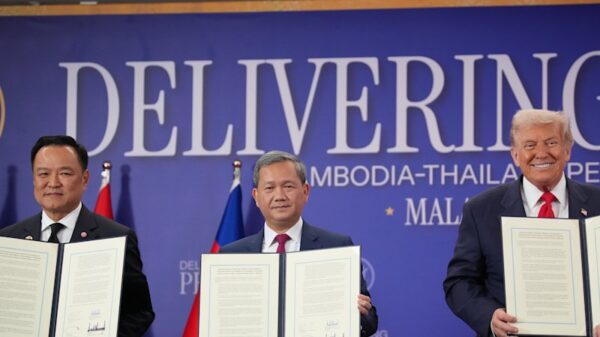
Historically, the United States has been a beacon for research and higher education, a reputation built in the aftermath of the Second World War. However, under President Donald Trump, a new era of politicization in research funding has emerged. Federal agencies, such as the National Institutes of Health (NIH), have begun to restrict funding for studies on topics like gender differences, vaccines, and climate change, using keyword lists to filter out what is deemed undesirable. This shift threatens the very foundation of academic freedom, a principle that has long protected the pursuit of knowledge in democratic societies.
Annika Östman Wernerson describes the current climate in the U.S. as a serious assault on academic freedom. She states, “What is happening now, unfortunately, means a slowdown in this progress,” referencing the historical contributions of American research to medical advancements. Prior to these changes, 58 research projects at Karolinska Institutet received funding from U.S. federal agencies, with approximately a quarter of these projects now facing halted funding.
The ramifications extend beyond funding. Swedish researchers who collaborate with U.S. institutions find themselves navigating an increasingly precarious environment. “We have extensive collaboration with the United States, and many travel there to study or take up visiting positions,” Östman Wernerson explains. “If research databases hosted in the U.S. were to become inaccessible, the consequences could be enormous.”
This decline in academic freedom is not an isolated phenomenon. According to the Academic Freedom Index (AFI), more than 30 countries have experienced a deterioration in academic freedoms over the past decade. The situation in the United States, alongside the decline seen in Hungary, reflects a worrying trend that could influence other nations, including Sweden. “What has happened in the United States could happen here,” Östman Wernerson cautions.
Concerns are echoed by András Simon, a Professor of Cell and Molecular Biology at Karolinska Institutet. He notes the chilling effects of the current political climate on American universities, recounting his own experience with a canceled seminar series at a U.S. university, where uncertainty about entry permissions loomed large. “In just six months, the United States has become more authoritarian than Hungary when it comes to academic freedom,” Simon remarks.
The value of academic freedom extends beyond mere autonomy; it fosters innovation and societal benefits. It allows researchers to formulate their own questions, publish results openly, and engage in critical discussions. Östman Wernerson emphasizes the importance of maintaining funding that supports curiosity-driven research. She cites the unexpected success of mRNA research, which led to revolutionary vaccines during the COVID-19 pandemic, as an example of how unencumbered research can yield significant societal benefits.
Despite Sweden’s strong position in the AFI, both Östman Wernerson and Simon urge vigilance. “We need to strengthen protections for academic freedom in Sweden and stop taking it for granted,” Östman Wernerson states. She highlights that political pressures can lead to the prioritization of research based solely on perceived utility, potentially stifling exploratory studies that could lead to unforeseen breakthroughs.
The governance structures of Swedish universities also play a pivotal role in maintaining academic freedom. While Swedish universities operate as government agencies, a model with greater distance from political influence would be advantageous if pressures increase. Simon advocates for a hybrid governance model that combines hierarchical leadership with collegial governance, which empowers researchers and facilitates resistance to authoritarian trends.
As the landscape of academic freedom shifts dramatically, Swedish researchers are called to action. Östman Wernerson insists it is essential not to succumb to self-censorship in response to external pressures. “We must stand up for science,” she asserts, highlighting the necessity of collaboration with U.S. researchers during these turbulent times.
The ongoing developments in the U.S. serve as a stark reminder of the fragility of academic freedom worldwide. As countries like Sweden navigate these challenges, the global academic community must unite to safeguard the principles that underpin research and education.