
























UPDATE: An urgent safety alert has been issued for the wind energy sector across Australia following the discovery of asbestos in wind turbine components. This alarming finding has triggered a nationwide audit and raised serious concerns about the integrity of renewable energy projects, particularly in the Hay and Balranald regions.
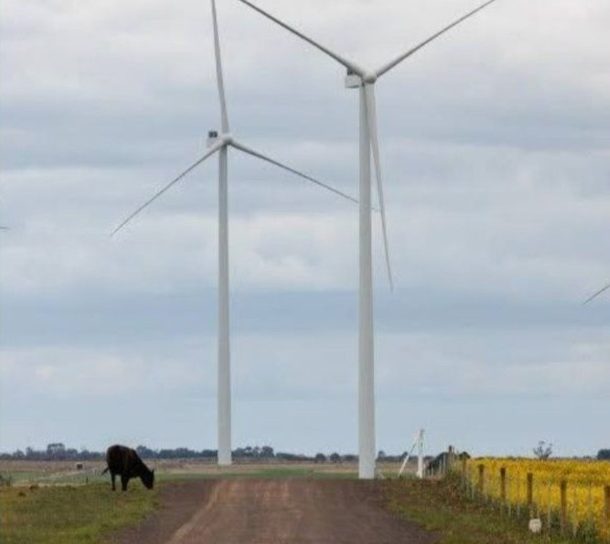
The contamination, traced to brake pads supplied by 3S Industry to Goldwind Australia, has led to immediate regulatory action. The affected turbines, which contain white asbestos, have been deployed in key states including New South Wales, Victoria, Queensland, Tasmania, and Western Australia. While these components are internal and not exposed to the public, the safety of workers involved in construction and maintenance is now at risk.
Authorities have imposed strict access restrictions to the affected turbines, allowing only sampling activities with personnel required to wear appropriate personal protective equipment, as advised by occupational hygienists. Goldwind operates or has supplied turbines at 475 of Australia’s more than 2,000 turbines; however, the exact number containing asbestos remains unclear.
Goldwind asserts that independent assessments have deemed the occupational health risk to be “very low” and that the issue was identified through proactive testing. Nevertheless, the seriousness of the situation has prompted WorkSafe Victoria and other state and federal authorities to coordinate a response plan for risk assessment and safe removal procedures.
The discovery comes at a critical time as Goldwind plans to construct 45 wind turbines at the proposed Baldon Wind Farm, located just 13 kilometers north of Moulamein and 55 kilometers east of Balranald. Stage one of this project lies entirely within the Murray River Council area. In addition, the Hay region is set to see further development with two other wind farms approved: Pottinger Energy Park, proposing up to 115 turbines, and Bullawah Wind Farm, set to construct up to 143 turbines.
“BayWa r.e. takes worker and community health seriously,” stated Marteena Mackenzie, the community engagement manager for Bullawah. “Asbestos is banned in Australia, and no BayWa r.e project will use components containing asbestos, including the Bullawah Wind Farm.” This commitment comes in light of the recent asbestos contamination issues highlighted in other projects, underscoring a collective effort in the renewables industry to prevent future incidents.
In a broader context, the importation of asbestos into Australia has been strictly prohibited since 2003. This incident follows another alarming case where asbestos-contaminated colored sand imported from China led to school closures across the nation, heightening public concern.
Goldwind has initiated a program of checks and planned replacement works, with all relevant authorities notified. The urgency of the situation coincides with the Australian Government’s efforts to pass critical reforms to the Environmental Protection and Biodiversity Act through the Senate before Parliament adjourns.
As developments continue to unfold, stakeholders and communities await further updates regarding the safety of existing projects and the integrity of future wind energy developments. The future of Australia’s renewable energy landscape now hinges on swift and effective responses to this contamination crisis.