





























Isaac Herzog, the President of Israel, is set to visit Australia, a trip that has already generated considerable discussion and controversy. Scheduled to begin on February 7, 2026, Herzog’s visit comes at a tumultuous time for both Israel and the Jewish communities worldwide, particularly following the tragic terrorist attacks that occurred in Bondi. The visit raises questions about the nature of solidarity and the appropriateness of protests during a moment of mourning.
Herzog holds a largely symbolic role as the head of state, distinct from the executive powers held by Benjamin Netanyahu, Israel’s Prime Minister. Historically, Herzog has been aligned with the Labor Party, which positions him at odds with Netanyahu’s Likud Party. Despite this, his current role requires him to represent all Israelis, transcending political affiliations. One aspect of Herzog’s authority includes the power to grant pardons, a point of interest given Netanyahu’s ongoing legal challenges involving charges of fraud and bribery.
The controversy surrounding Herzog’s visit is compounded by his relationship with Netanyahu, who has reportedly requested a preemptive pardon from the president as he faces trial. This request has drawn attention, particularly following comments from former US President Donald Trump, who publicly suggested that Herzog should grant the pardon.
Herzog’s visit is intended as a gesture of solidarity with Jewish communities in Australia, following the devastating effects of antisemitism and recent violent incidents. He expressed his desire to connect with these communities, stating, “I’m coming to visit and see my brothers and sisters of the Jewish communities in Australia to express our bond, our connection, our love, our affection, our condolences.” He aims to strengthen ties between Israel and Australia, noting that both nations share common values and goals in various fields including climate, agriculture, and science.
The president also highlighted Australia’s historical ties with Israel, recalling the significant contributions made during World War I and Australia’s early recognition of Israel as a state. He referred to the efforts of Doc Evatt, a pivotal figure in Australia’s foreign policy, who played a crucial role in the establishment of Israel at the United Nations.
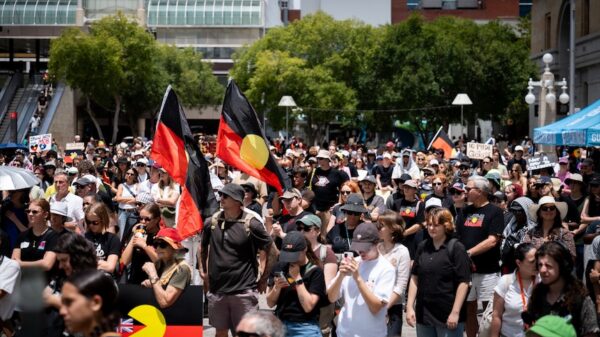
While Herzog has connections and friends within Australia, including Prime Minister Anthony Albanese, the environment surrounding his visit is markedly different from previous state visits. Protests are expected, a reflection of deep divisions within Australian society regarding the Israeli-Palestinian conflict. Mark Leibler, former chair of the Zionist Federation of Australia, noted that protests during past visits were minimal compared to the current climate, which is charged with heightened tensions.
The backdrop of Herzog’s visit includes the ongoing conflict following Hamas’s attacks on Israeli civilians on October 7, 2023. The subsequent military response from Israel has drawn criticism from various global leaders. Many observers express concern about the humanitarian impact of the conflict, particularly on Palestinian civilians. Herzog defended the Israeli military’s actions, asserting that targeting Hamas’ infrastructure—often situated in civilian areas—is necessary for national security.
As the political landscape evolves, Herzog faces scrutiny regarding his own statements and actions, including a recent controversial comment that has been perceived as lacking sensitivity. He acknowledges misunderstandings but maintains that his intent was to emphasize the distinction between innocent Palestinians and those involved in militant activities.
The visit presents Australians with a significant choice: to engage in protests against Herzog’s presence, or to embrace the opportunity for solidarity with local Jewish communities who feel increasingly vulnerable. Many Jewish Australians have expressed feelings of fear and frustration, feeling unfairly associated with the actions of the Israeli government. In light of this, some argue that peaceful protests could exacerbate divisions rather than contribute to healing.
Polls indicate that many Australians do not wish to take sides in the ongoing conflict, with some even expressing a positive view of Israel. Critics of the protests argue that they do not reflect the broader sentiment of Australian society and may undermine the values of compassion and respect that the country upholds.
Ultimately, Herzog’s visit serves as a critical moment for reflection on how Australia will respond to the complexities of international relations, domestic sentiments, and the need for communal solidarity amidst tragedy. The decision on how to approach this visit will not only impact Jewish Australians but will shape the broader narrative surrounding Australia’s stance on the Israeli-Palestinian conflict.