




























Recent clashes between Thailand and Cambodia have escalated significantly, with Thailand conducting airstrikes in response to renewed violence that has resulted in casualties on both sides. The conflict erupted early on Sunday, with reports indicating that at least one Thai soldier has died and several others have been injured.
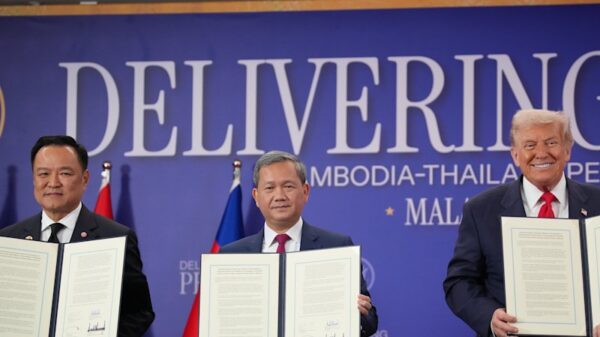
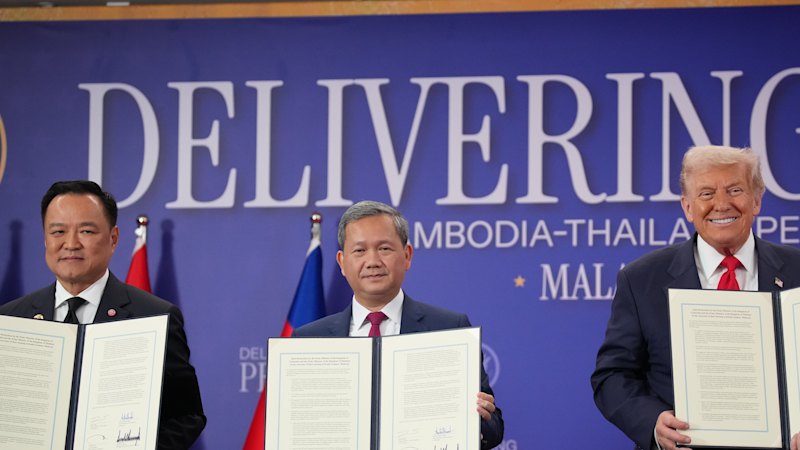
The latest fighting follows a period of tension that began just weeks after the signing of peace accords brokered by former US President Donald Trump. The agreements, intended to solidify peace between the two nations, were struck during a summit in Kuala Lumpur on October 26, 2023.
Both nations are blaming each other for the recent violence. The Thai military asserts that Cambodian forces initiated the conflict by firing upon a security team in Sisaket province. In retaliation, Thailand has deployed F-16 fighter jets against military targets in Cambodia, marking a considerable escalation in the ongoing dispute.
Escalating Tensions and Military Responses
Cambodia’s Prime Minister Hun Manet, who succeeded his father Hun Sen earlier this year, has called for patience among his troops, labeling the Thai military as “invaders” and warning that a “red line” has been crossed. Meanwhile, Cambodian Lieutenant-General Maly Socheata condemned Thailand’s actions as “inhumane and brutal,” illustrating the high levels of animosity between the two governments.
The conflict has its roots in historical territorial disputes that date back to colonial-era map-making. Both nations are now facing pressure domestically, with rising nationalist sentiments complicating any potential resolutions. Cambodia seeks to take the matter to the International Court of Justice, where it has previously had favorable outcomes. Conversely, Thailand prefers to address the issues through bilateral negotiations.
Impact on Civilians and Political Ramifications
The fallout from the renewed clashes has led to evacuations along the border, with civilians on both sides caught in the crossfire. Reports indicate that more than 40 lives were lost during a previous conflict in July, highlighting the severe human costs associated with this ongoing crisis.
As political leaders navigate this sensitive situation, Anutin Charnvirakul, Thailand’s Prime Minister, has pledged to hold elections in the upcoming year. However, he faces criticism regarding his government’s response to various crises, including flooding in southern Thailand.
Critics of the Hun Sen and Hun Manet regime suggest that the current conflict may serve as a tool for consolidating political power within Cambodia, where dissent is not tolerated. The complexities of the situation pose a challenge for both leaders as they attempt to manage public sentiment while addressing the pressing need for peace.
The situation remains fluid, and the potential for further escalation continues to loom as both sides remain entrenched in their positions. As international observers watch closely, the hope for a sustainable resolution to the Thailand-Cambodia border disputes hangs in the balance.