

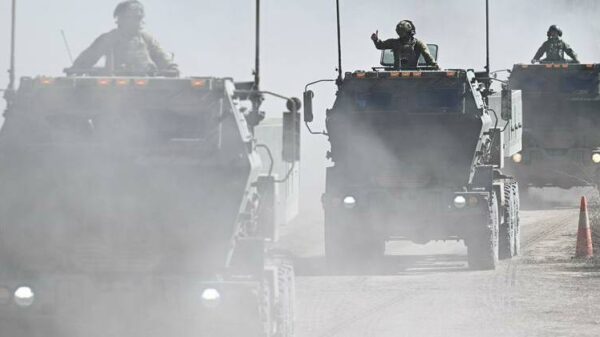


























Tensions between Thailand and Cambodia have intensified, leading to renewed military clashes despite a peace accord brokered by former US President Donald Trump. The conflict escalated over the weekend, with Thailand launching airstrikes in response to border skirmishes that resulted in the death of at least one Thai soldier and multiple injuries.
The latest round of fighting began on Sunday and intensified early on Monday, prompting Thailand to deploy F-16 fighter jets against Cambodian military positions in “several areas.” According to reports, the Thai military stated that Cambodian troops initiated the conflict by firing on a security team in Sisaket Province, injuring two soldiers.
In a statement, Cambodian Lieutenant-General Maly Socheata condemned Thailand’s response as “inhumane and brutal.” Meanwhile, Cambodian Prime Minister Hun Manet, who succeeded his father Hun Sen in 2023, urged his troops to remain resolute, framing the situation as a defense against “invaders.” He ominously noted that a “red line” had been drawn, signaling a strong stance from the Cambodian government.
Historical Context of the Conflict
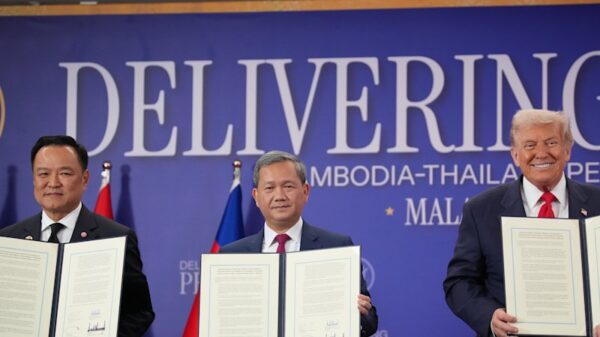
The underlying tensions between the two nations have a long history, rooted in colonial-era disputes over territory. The recent conflict saw both countries engaged in a five-day military confrontation in July 2023, resulting in over 40 casualties, including civilians. The situation was temporarily quelled when Trump mediated a ceasefire by threatening to impose higher tariffs and with the assistance of Malaysian Prime Minister Anwar Ibrahim, who chairs the ASEAN for this year.
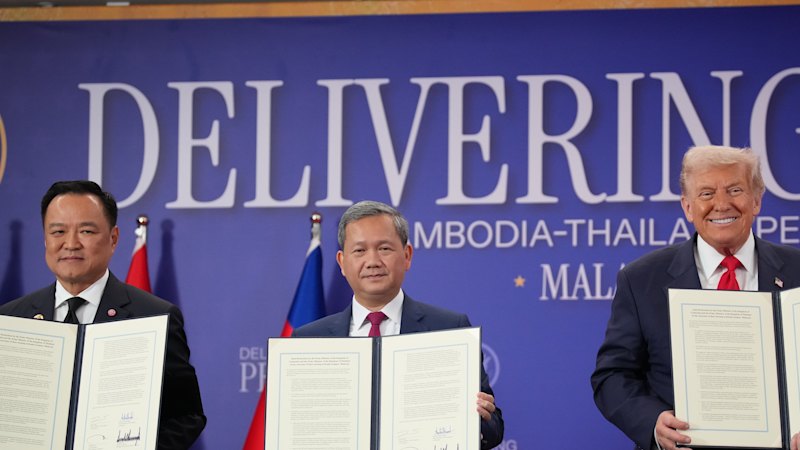
Trump heralded the peace accords signed on October 26, 2023, in Kuala Lumpur as a historic achievement. He claimed the resolution of this conflict as one of eight he had “solved” during his presidency. However, the agreement was fragile from the start, characterized more as a preliminary step towards peace than a definitive resolution.
Barely two weeks after the agreement, fighting erupted once again, with reports from Phnom Penh stating that a civilian had been killed. Thailand accused Cambodia of laying landmines that injured several of its soldiers, further complicating the situation. The renewed clashes have forced evacuations of civilians from both sides of the border, highlighting the ongoing humanitarian impact of the conflict.
Political Implications and Future Prospects
Both nations are grappling with significant political pressures that complicate the resolution of their disputes. Cambodia seeks to take the border issues to the International Court of Justice, a strategy that has previously yielded positive outcomes for them. In contrast, Thailand prefers to address these matters bilaterally, but rising nationalist sentiments in both countries make it politically challenging for either leader to appear as though they are conceding territory.
Critics argue that the Cambodian government, under Hun Sen and Hun Manet, has exploited the conflict to consolidate political power, especially in a regime known for its intolerance of dissent. On the Thai side, Prime Minister Anutin Charnvirakul faces challenges of his own, including widespread criticism for his administration’s handling of flooding crises in southern Thailand. He has announced plans for elections in the upcoming year, which may impact how he navigates this latest escalation.
As both nations brace for further developments, the international community watches closely, anticipating how these tensions will unfold in the coming days. The fragile peace established earlier this year appears to be hanging by a thread, with both sides poised for potential further conflict.