




















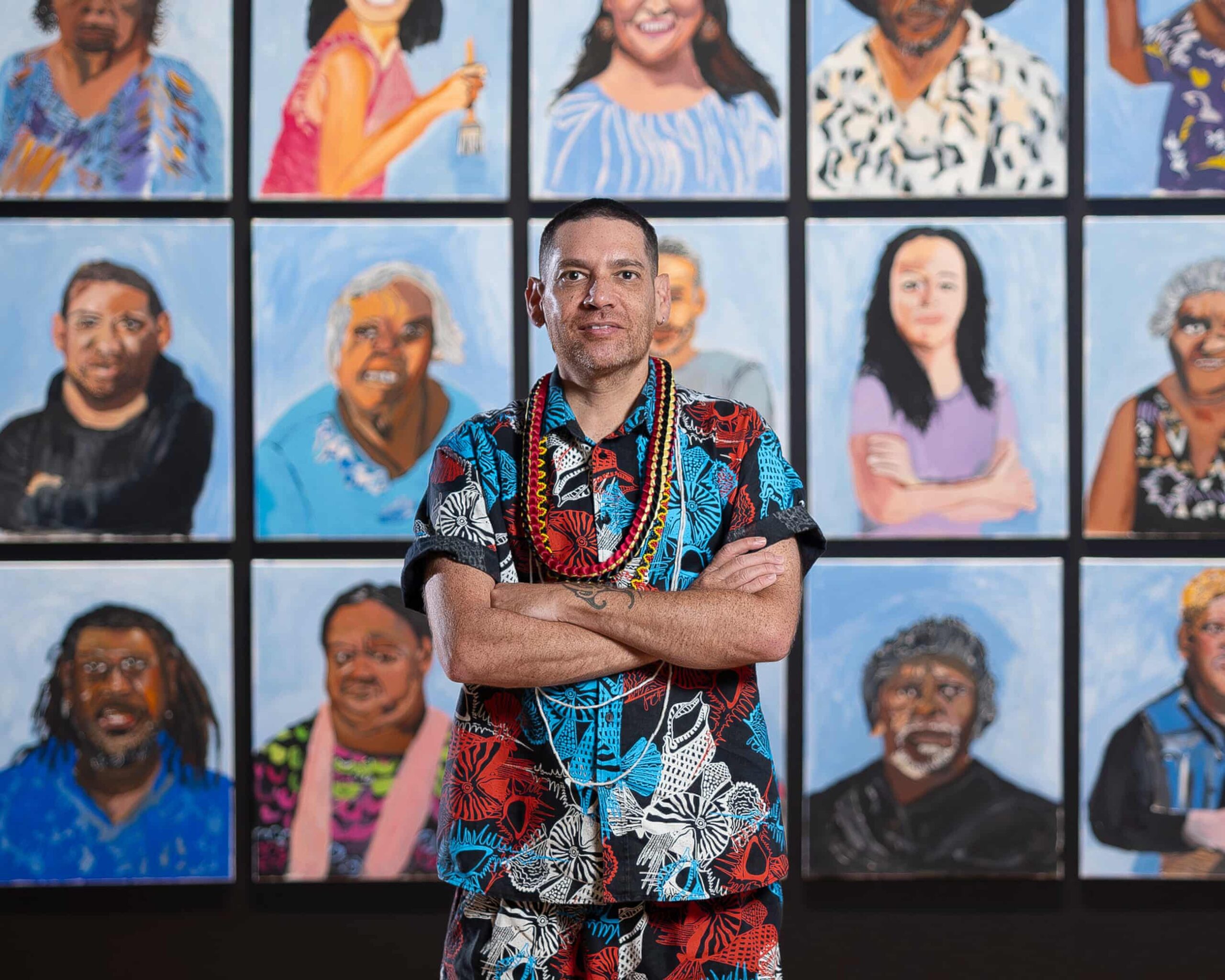
The National Indigenous Art Triennial opens this weekend at the National Gallery of Australia (NGA) in Canberra, showcasing the deep cultural connections and stories of Indigenous artists. Curated by Tony Albert, the exhibition, titled After the Rain, features a diverse array of works from 57 artists, highlighting themes of hope, resilience, and cultural regeneration.
One of the focal points of the exhibition is the nearly full-scale reconstruction of the house of renowned artist Albert Namatjira, built on his ancestral land in Ntaria/Hermannsburg. This house, constructed in the 1940s, stands as a testament to Namatjira’s legacy. Albert describes this installation as “lit from within, almost like this breath or this heartbeat,” emphasizing its role as the exhibition’s heart and soul. The glasshouse is part of a collaboration between Canberra Glassworks and the Iltja Ntjarra Art Centre in Mparntwe/Alice Springs.
The Triennial features contributions from various artists, including the Hermannsburg Potters, who have created clay replicas of personal items belonging to Namatjira, such as his paintbrushes and boots. These artistic expressions reflect a broader cultural and political regeneration, particularly in light of the recent failed referendum regarding an Indigenous voice to parliament.
Aretha Brown, a young emerging artist from the Gumbaynggirr community, expressed that the aftermath of the referendum has been challenging. “It feels, after the referendum, as if everything has been burnt down,” she said. Yet, she remains optimistic, stating, “But now the seeds are going to come back stronger and greener.” Brown’s large mural at the entrance of the exhibition presents a timeline of significant events in Australian history, culminating in the recent referendum.
Another significant contributor is Vincent Namatjira, the great-grandson of Albert Namatjira and the first Indigenous winner of the Archibald Prize. He has painted portraits of fellow artists featured in the Triennial, alongside a large canvas depicting his great-grandfather. This connection to familial and cultural legacies resonates throughout the exhibition.
Curator Tony Albert raised questions about the NGA’s commitment to hosting the Triennial every three years, as previous iterations were held only every five years. Following discussions with gallery director Nick Mitzevich, the NGA has confirmed its commitment to a more regular schedule. The exhibition’s theme, After the Rain, invites interpretations that range from optimism to reflections on natural disasters and their cultural implications.
Artists like Jimmy John Thaiday are addressing pressing environmental issues. His video work, Just Beneath the Surface, highlights the impact of climate change on the Torres Strait Islands, using materials salvaged from abandoned fishing nets. The exhibition also features a poignant installation by Kamilaroi artist Warraba Weatherall, which connects environmental degradation with cultural suppression. Titled Mother-Tongue, the work includes projections of deforestation onto tables adorned with designs from Kamilaroi kinship systems.
As the exhibition continues to evolve, it also reflects the personal journeys of its artists. Thea Anamara Perkins, a granddaughter of activist Charles Perkins, has created portraits that celebrate her family’s history and contributions to Indigenous rights. Her artistic style has shifted, infusing her subjects with depth and connection to her heritage.
Another highlight comes from Dylan Mooney, who explores themes of queer identity within Indigenous culture. His vibrant banners depict same-sex couples intertwined with the landscape, a representation of love that draws from his own experiences as a queer Indigenous artist. Mooney emphasizes the importance of passing on knowledge to younger generations of artists.
The National Indigenous Art Triennial runs until April 26, 2024, and will embark on a three-year tour across Australia following its time in Canberra. As the exhibition unfolds, it serves as a platform for dialogue about the ongoing cultural and political conversations surrounding Indigenous communities. Through hope and artistry, the Triennial reaffirms the resilience of First Nations peoples and their rich cultural heritage.