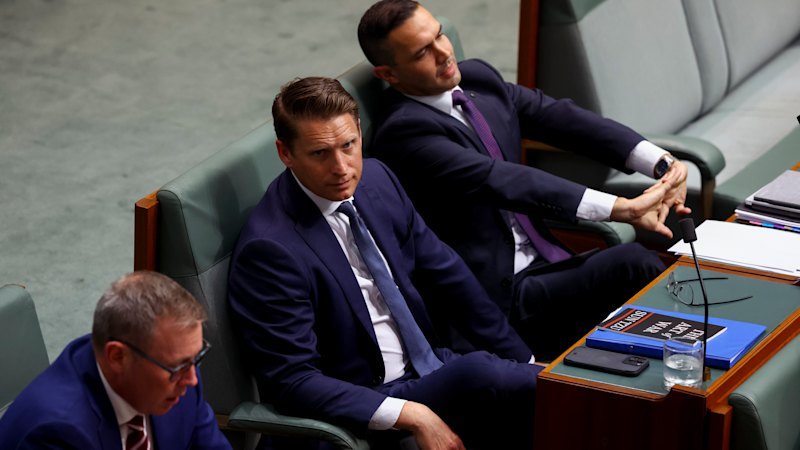
Andrew Hastie, a member of the Australian Liberal Party, drew attention during a recent parliamentary question time by displaying a copy of The Art of War on his desk. This incident occurred just days after he announced his withdrawal from a potential leadership contest, leading to speculation about his political ambitions.
The presence of the ancient military treatise, attributed to the Chinese strategist Sun Tzu, has ignited discussions among political observers and colleagues alike. Some interpret the choice of reading material as a strategic statement, while others question its appropriateness in a parliamentary setting.
Hastie’s reading selection was noted on September 27, 2023 during a session of the Australian Parliament. The timing of his display is particularly significant, given the political climate within the Liberal Party, which has been navigating challenges and leadership questions in recent months. His decision to publicly engage with such a renowned text has led to varied interpretations of his intentions.
In recent weeks, the Liberal Party has faced scrutiny over its leadership dynamics. Hastie’s earlier consideration for leadership had generated considerable interest, but his abrupt exit from the race left many wondering about his future role within the party. By showcasing The Art of War, he may be signaling his readiness for strategic maneuvers in the evolving political landscape.
Critics have pointed out the potential for mixed messages in Hastie’s actions. While some see the reading as a demonstration of tactical insight, others view it as an attempt to distract from his recent political retreat. The duality of interpretations highlights the complexities of political communication.
As the Liberal Party continues to grapple with its identity and direction, Hastie’s choice of literature may serve as a metaphorical reflection of ongoing power struggles. The impact of his public persona and the choices he makes, including seemingly benign decisions like reading material, are increasingly scrutinized in the context of party dynamics.
The attention surrounding Hastie’s actions exemplifies how even small gestures within the political arena can provoke significant discourse. As members of the Australian Parliament prepare for future sessions, the implications of hastily made decisions and the art of political strategy will likely remain at the forefront of discussions.
In conclusion, Andrew Hastie’s use of The Art of War during question time has not only piqued curiosity but also intensified conversations about his political trajectory and the broader challenges facing the Liberal Party. As observers continue to analyze the underlying messages in his actions, it remains to be seen how this episode will influence his future engagements within Australian politics.