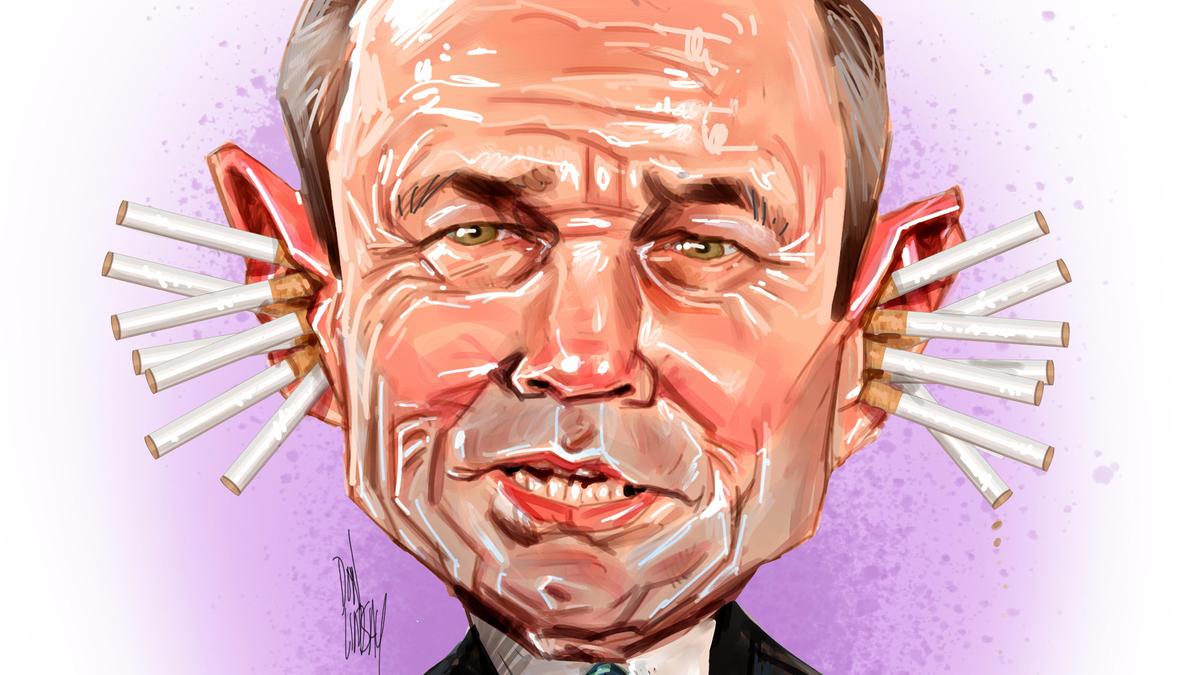
The Western Australian government has announced new legislation aimed at tackling the illicit tobacco trade, with Premier Roger Cook promising to “crush” the criminal networks responsible for firebombing shops. Despite the government’s commitment to implementing some of the toughest tobacco laws in the nation, the lack of specific details in the legislation has raised concerns among legal experts and critics.
This week, Cook unveiled a set of penalties that include fines reaching millions of dollars for individuals and tens of millions for companies involved in the trade. Offenders could face prison sentences of over a decade. At a media briefing in Dumas House, Cook emphasized the government’s determination to eradicate the illicit market, but the announcement left many questions unanswered.
Unclear Definitions Raise Concerns
One of the most significant issues with the new legislation is the vague definition of what constitutes a “large commercial quantity” of illicit tobacco. The announcement fails to specify the threshold quantity for possession, leaving it open to interpretation. In contrast, other states have clear benchmarks: Queensland sets the minimum at 50 cigarettes or 50 grams of tobacco, while New South Wales does not act unless there are at least 2,500 cigarettes or 2.5 kilograms of tobacco. South Australia defines it as 5,000 cigarettes or 5 kilograms.
In Western Australia, current laws do not define a “commercial quantity,” making this omission particularly glaring. Legal experts suggest that without a precise definition, those in the illicit trade could exploit this loophole, undermining the effectiveness of the new penalties.
The announcement also reveals a phased approach to the legislation, with Cook indicating that this is merely the first “tranche” of reforms, while additional licensing changes are expected later in the year. Critics question the rationale behind delaying these measures, suggesting it provides black market operators additional time to operate without fear of repercussions.
Addressing Broader Issues
Another concern revolves around the practical application of the legislation. The proposed closure orders primarily target legitimate brick-and-mortar stores, potentially allowing illicit operators to evade penalties by conducting business through mobile units or temporary locations. This raises doubts about the government’s ability to effectively combat the illicit market.
Commissioner of Police Col Blanch had previously requested enhanced powers to address the growing issue of illicit tobacco. Critics argue that the government should look to successful frameworks established in other states rather than reinventing the wheel.
Amid the legislative challenges, Premier Cook faced questions about his political future and internal party dynamics during the announcement. He acknowledged the need for focused governance, stating, “Our focus is not on who’s going to be leader tomorrow. It’s on how we’re providing good government today.”
Despite this sentiment, many in Western Australia feel that issues such as energy shortages, housing affordability, and an overstretched health system demand urgent attention. The effectiveness of the new tobacco legislation remains uncertain, particularly in light of its unclear details and phased implementation.
As the government proceeds with its plans, stakeholders will be watching closely to see if the promised measures will translate into meaningful action against the illicit tobacco trade.