




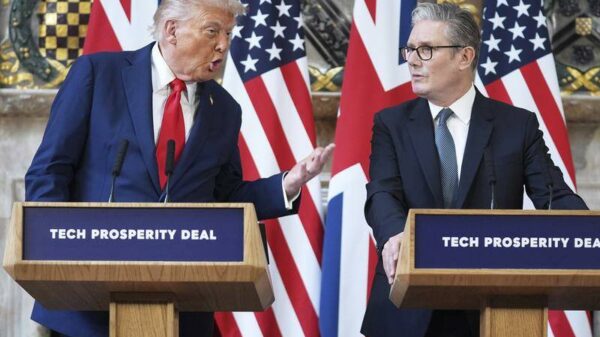


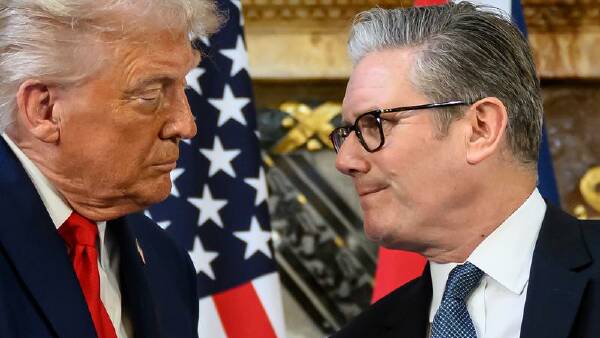
















Donald Trump has publicly criticized British Prime Minister Keir Starmer, drawing unfavourable comparisons to former Prime Minister Winston Churchill. Trump’s remarks were made during a press conference at the White House, where he expressed dissatisfaction with the UK’s limited support for recent US military actions against Iran. “This is not Winston Churchill that we’re dealing with,” Trump stated, reflecting his frustration with what he perceives as a lack of commitment from one of America’s closest allies.
These comments mark Trump’s third pointed critique of Starmer within the week, coinciding with escalating tensions surrounding Washington’s air strikes in Iran. The US military campaign has raised concerns among some allies, who view the actions as reckless and potentially in violation of international law. Trump’s administration has frequently chastised European nations, including the UK, for not meeting military spending commitments and for their immigration policies.
In a separate issue, Trump announced plans to cut off all trade with Spain following the country’s refusal to allow US military access to its bases for operations linked to strikes on Iran. “Spain has been terrible,” he remarked, instructing Treasury Secretary Scott Bessent to sever all economic dealings. “We don’t want anything to do with Spain,” he further emphasized.
Starmer defended the UK’s position, explaining that Britain did not participate in the US-Israeli strikes on Tehran because any military engagement must be based on a “viable, thought-through plan.” He has allowed the use of UK bases for what he describes as limited defensive strikes. This follows incidents such as a recent drone attack on a British base in Cyprus, believed to have been orchestrated by the Iran-backed group Hezbollah.
During a meeting with German Chancellor Friedrich Merz, Trump expressed his annoyance at logistical challenges related to landing US military jets at the strategically vital air base at Diego Garcia. He indicated that it took several days to arrange landing rights, suggesting that this inefficiency complicated military operations.
Despite a history of amicable relations, recent events have strained the bond between the US and the UK. Trump noted in an interview with the *Sun* newspaper that he never expected to see Britain as a reluctant partner in international efforts. Instead, he praised France and Germany for their cooperation.
The diplomatic landscape remains tense, particularly as Britain, along with France and Germany, issued a joint statement after Iranian attacks, calling for renewed negotiations while maintaining close communications with the US and Israel.
As the situation evolves, the implications of Trump’s comments and actions may significantly impact the future of transatlantic relations, raising questions about the UK’s role in international military operations and its partnership with the US.