









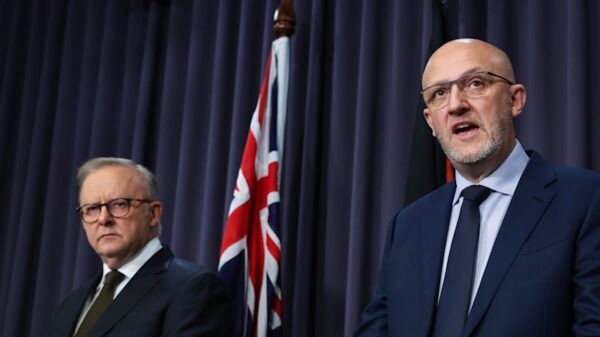
























UPDATE: Major Australian retailers Coles and Woolworths have sharply criticized new Federal laws aimed at banning price gouging, claiming the regulations could harm consumers instead of helping them. These laws, which prohibit excessive pricing relative to supply costs, were announced by Federal Treasurer Jim Chalmers and will come into effect on July 1. Violators could face fines of up to $10 million per breach.
The Federal Government‘s move is part of an overhaul to Australia’s food and grocery code, officially mandated in April. Coles argues that the new regulations will exert “upward, not downward” pressure on grocery prices, contradicting the intended goal of easing cost-of-living pressures for consumers.
Coles stated that for every $100 spent by customers, its profit margin is around $2.43, which translates to less than 3¢ per dollar. A spokesperson emphasized that rising operational costs, including energy and fuel, are driving grocery prices higher, not corporate greed.
“At a time when the focus should be on easing cost-of-living pressures, these regulations risk doing the opposite,” said the Coles representative.
Woolworths echoed similar sentiments, labeling the price gouging laws as “unprecedented” and unfairly targeting only two Australian-owned supermarkets. The company’s representative warned that foreign retailers could operate without the same restrictions, creating an uneven marketplace.
“We are absolutely focused on delivering the best value for customers,” the Woolworths spokesperson said, noting that average prices have declined year-on-year for seven consecutive quarters.
These developments come as recent reports from the Australian Competition and Consumer Commission revealed that both Coles and Woolworths are among the most profitable supermarkets globally, with profits of $1.08 billion and $1.4 billion respectively for the 2025 financial year.
Despite these profits, the Commission found little evidence of price gouging, raising questions about the necessity of the new regulations. The supermarket sector remains highly concentrated, with Coles and Woolworths dominating the market, which could further complicate the impact of these laws.
What happens next? As these laws approach implementation, both chains are expected to challenge them vigorously, and ongoing discussions about their potential effects on pricing and competition will likely dominate headlines in the coming weeks. Consumers and industry analysts alike are watching closely to see how these changes will affect grocery shopping across Australia.
Stay tuned for more updates on this developing story as it unfolds!