













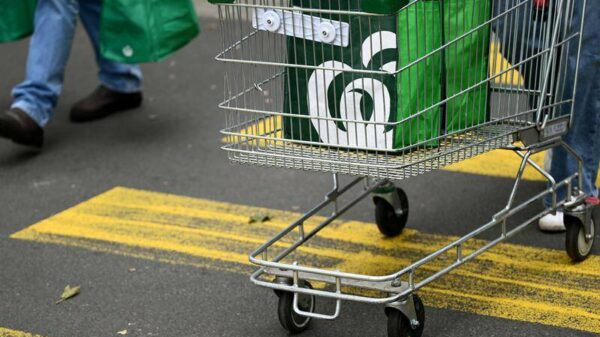














UPDATE: Supermarkets across Australia are sounding alarms over new regulations aimed at curbing price gouging, warning that the changes could lead to higher grocery costs for consumers. The Albanese government has just announced that starting July 1, 2024, supermarkets will face strict limits on pricing, which they claim may not achieve the intended goal of reducing expenses for shoppers.
The government’s new rules, part of an update to Australia’s Food and Grocery Code of Conduct, aim to prevent excessive pricing by large retailers. However, Coles and Woolworths, two of Australia’s largest supermarket chains, argue that these measures will backfire, increasing costs instead of alleviating them. Jim Chalmers, the Treasurer, stated on Sunday, “This is all about getting a fairer go for families in their weekly shop.”
Supermarkets could face fines of up to $10 million for each violation, which is three times the financial benefit obtained or 10% of their turnover over the past year. This stringent approach follows a March 2023 report by the Australian Competition and Consumer Commission (ACCC), which highlighted the limited competition between Coles and Woolworths, both of which were among the world’s most profitable supermarkets.
Despite the findings, the ACCC did not accuse these retailers of price gouging, nor did it define what constitutes “excessive” pricing. Coles, which generates a mere $2.43 profit for every $100 spent by customers, insists that increased regulations will not resolve the pressing issue of high grocery prices. A spokesperson warned that these new rules risk worsening the situation for families already facing cost-of-living pressures.
Woolworths echoed these concerns, claiming the ban would disrupt their ability to deliver value to consumers. The company warned of a potential “butterfly effect” where shoppers miss out on savings, as they have reportedly provided discounts for seven consecutive quarters. A spokesperson remarked, “The law is unprecedented by targeting only two Australian-owned companies,” emphasizing that foreign competitors might exploit this imbalance.
Both the Australian Retailers Association and the National Retail Association have voiced strong opposition to the government’s move. Chris Rodwell, the chief executive of the Australian Retailers Association, stated, “These measures seek to address a problem for which there is no evidence and risk having the opposite effect, pushing grocery prices higher for Australian families.”
In response to the legislation, David Littleproud, Leader of the Nationals, indicated that the coalition will review the proposed rules thoroughly. “In society, there should be a deterrent and a consequence for doing the wrong thing,” he noted on Nine’s Today program.
The Business Council of Australia also criticized the ban, arguing that it misdirects efforts to lower prices. CEO Bran Black asserted, “If Australia wants lower prices and better outcomes for consumers, we need to focus on reducing unnecessary regulation and addressing the underlying cost pressures across supply chains.”
As grocery prices have surged at more than double the rate of wages since late 2022, consumers are increasingly feeling the financial strain. The ACCC attributed some of these price increases to additional profits from Coles, Woolworths, and Aldi.
With the new regulations set to take effect in less than a year, shoppers and retailers alike are watching closely. The government maintains that its intent is to protect families, but supermarkets warn that the unintended consequences could mean higher prices at checkout. As the debate unfolds, the impact on Australian families and the grocery landscape remains to be seen.