




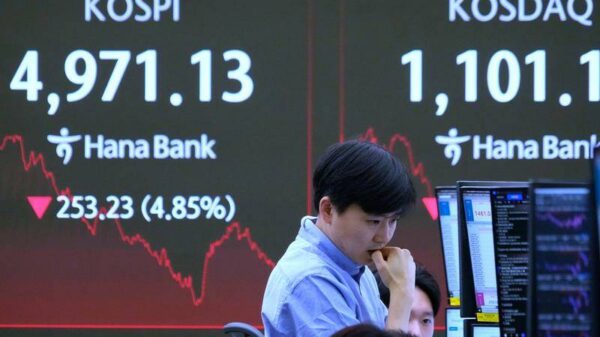

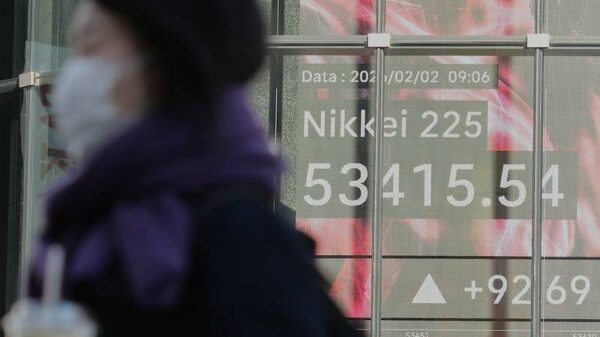



























Asian stock markets experienced significant declines on March 15, 2024, primarily driven by a wave of selling in the technology sector. South Korea’s Kospi index plummeted by 3.9 percent, reflecting investor concerns over high valuations of tech shares. This downturn coincided with a notable drop in Bitcoin, which fell as much as 8 percent, trading near $71,000 early in the day.
Key Market Movements
The sell-off in technology stocks led to widespread declines across the region. In Japan, the Nikkei index fell by 0.9 percent, while South Korea’s largest company, Samsung Electronics, saw its shares drop by 5.9 percent. Chip manufacturer SK Hynix suffered an even steeper decline of 6.7 percent. Chinese markets also faced losses, with Hong Kong’s Hang Seng index down 0.3 percent and the Shanghai Composite losing 0.6 percent.
Australia’s S&P/ASX 200 index decreased by 0.4 percent, and Taiwan’s Taiex dropped by 1.5 percent. The downward trend in tech stocks reflected broader apprehensions, also seen in the US markets, where the S&P 500 index fell 0.5 percent on March 14, marking its fifth loss in six days.
Impact on Major Companies
In the United States, tech companies continued to face pressure despite some reporting stronger-than-expected earnings. Advanced Micro Devices shares plummeted by 17.3 percent after the chipmaker announced higher profit figures but failed to meet investor expectations following a year of price surges. Similarly, Uber Technologies shares fell 5.1 percent after the ride-hailing company reported quarterly results that did not meet market expectations.
On a more positive note, Super Micro Computer saw its stock rise by 13.8 percent due to better-than-expected profits driven by demand for AI servers. Retail giant Walmart edged up by 0.2 percent, marking a significant milestone as its total market value surpassed $1 trillion, joining a select group of companies including Nvidia and Apple.
Commodity markets also experienced volatility. The price of US benchmark crude oil fell by $1.37 to $63.77 per barrel, while Brent crude dropped $1.47 to $67.99 per barrel. Precious metals like gold and silver saw price fluctuations as gold decreased by 0.3 percent and silver dropped 7 percent. These changes reflect ongoing investor concerns about economic stability and inflation.
Currency markets were equally active, with the US dollar rising to 157.00 Japanese yen from 156.80 yen. The euro fell to $1.1790 from $1.1804, indicating a shift in investor sentiment amid global economic uncertainties.
As Asian markets continue to grapple with these challenges, the focus remains on how tech companies will navigate the pressures of high valuations and competition from emerging technologies.