


























The New South Wales (NSW) Government is confronting a significant challenge regarding coal mining jobs in the Hunter Valley. A recent report from the state-commissioned NSW Net Zero Commission revealed that the ongoing approvals and expansions of coal mines are “not consistent” with emissions targets and climate goals. This report, published on September 29, 2023, highlighted that the resources sector contributes approximately 12 percent of the state’s total pollutant emissions, predominantly from coal mining activities.
The Lock The Gate Alliance has expressed concerns about the potential impact on coal mining employment, urging the government to take immediate action to protect jobs in the region. The Commission’s findings suggest a need for additional regulatory measures to manage and reduce emissions at existing mines. It also stresses the importance of preparing for a decline in coal extraction, advocating for a just transition for coal communities and regional economies facing disruption.
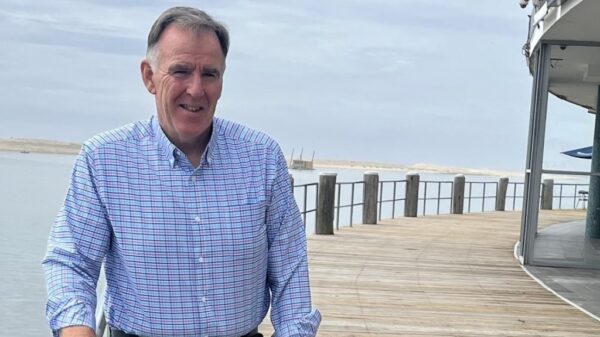
During a visit to Newcastle, Premier Chris Minns indicated that while he recognizes the challenges posed by the report, he is hesitant to halt mining approvals outright. “Mining, particularly in the Hunter, is still important for the NSW economy. It is our single biggest export,” he stated. He acknowledged a gradual decrease in demand for coal from trading partners but emphasized the potential consequences of an abrupt shutdown of the industry. “It would be irresponsible to do so,” he added.
Despite his cautious stance, the government has faced criticism from environmental groups. Since taking office nearly three years ago, the NSW Government has approved all eight coal mine expansions submitted for consideration, with plans for 18 more proposals currently under review. Notably, Glencore and Yancoal‘s Hunter Valley Operations received a lifespan extension in April, allowing the mine to continue operations until December 2026. At that time, the company emphasized that the extension was necessary to safeguard jobs and provide stability for contractors and local businesses.
Concerns over emissions from the Hunter Valley Operations have been raised, particularly following a report by the Newcastle Herald in February, which noted that the mine could potentially double its greenhouse gas emissions by 2026 if expansion plans proceeded without stringent reduction targets. This mine has been operating under a management plan that lacks specific conditions aimed at decreasing greenhouse gas emissions.
In a recent adjustment, the mine altered its development applications for its North and South pits, reducing the total coal extraction by approximately 220 million tonnes. This change means that the proposed life extension for the HVO North will be shortened from 2050 to 2045, while the HVO South’s life extension will now conclude in 2042 instead of 2045.
Critics within the Lock The Gate Alliance, including spokesman Nic Clyde, have urged the government to reconsider further expansions of coal mines. “This report makes it clear that further expansions… will cause severe harm to NSW communities,” he stated. Clyde emphasized that a continuation of current practices is not sustainable, asserting that safety and survival depend on the government’s response to the report.
The Net Zero Commission’s findings coincided with a visit from Prime Minister Anthony Albanese to Tomago Aluminium, a major employer in the Hunter region. During his visit, he announced a multi-billion dollar initiative aimed at preserving thousands of jobs at the plant beyond 2028. Albanese noted that both federal and state governments are collaborating to achieve a financially viable solution for the facility, although there were no state representatives present during his announcement.
When questioned about the absence of state officials at his visit, Premier Minns downplayed the significance, citing prior commitments in the Hunter region. “We had a lot on this weekend in the Hunter,” he remarked, indicating that negotiations regarding the Tomago Aluminium plant are ongoing.
As the NSW Government navigates these complex issues surrounding coal mining and its environmental impact, the balance between economic interests and climate commitments remains a pressing concern for stakeholders in the region.