


















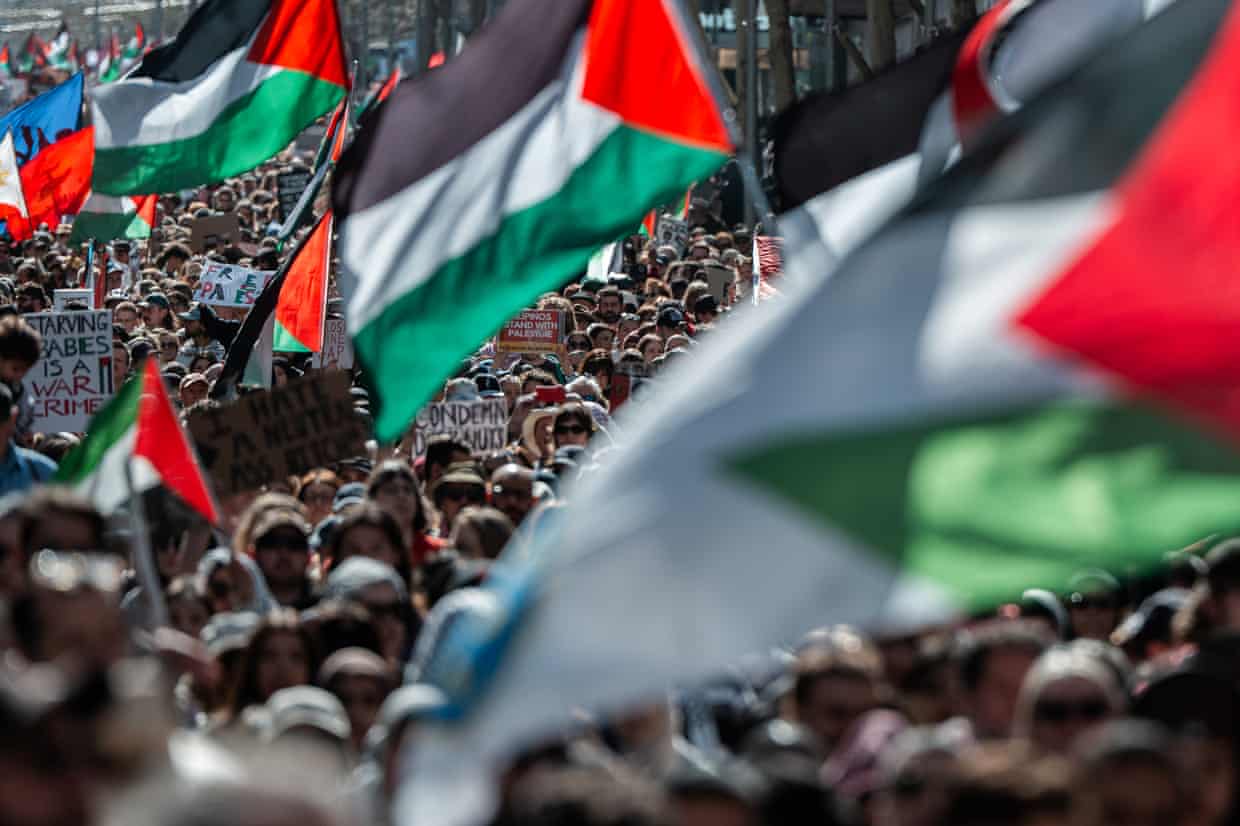
The New South Wales (NSW) government is exploring a potential ban on the phrase “globalise the intifada” as part of a broader inquiry into hate speech laws. This investigation follows a series of incidents, including the recent Bondi attack, prompting the Australian federal government to discuss legislation aimed at addressing hate speech. The inquiry, which has closed to public submissions, is expected to conclude its report by the end of October 2023.
The term “intifada,” meaning uprising in Arabic, has historical significance, referring to the Palestinian uprisings against Israel in 1987 and 2000. The phrase has become controversial, particularly within the Jewish community, where it is associated with violence and terrorism. Many in this community view the term as a call for hostility against Jews, prompting calls for its prohibition.
The Inquiry and Its Implications
The inquiry’s mandate includes reviewing hate speech laws and considering international best practices, notably those adopted in the UK. Recently, UK police have moved to arrest individuals chanting “globalise the intifada” during protests, signaling a shift in their approach to handling such expressions. The UK’s Crown Prosecution Service had previously deemed that phrases inciting fear within Jewish communities did not meet prosecution thresholds. However, following a series of violent events, including the Manchester synagogue attack and the Bondi incident, police have reassessed their enforcement tactics.
In December 2022, the UK’s Metropolitan and Greater Manchester police announced that they would take action against individuals displaying the phrase, citing a change in context. While outright bans on phrases have not been implemented, existing public order laws have been invoked to arrest protesters, with notable actions taken against supporters of the group Palestine Action, which was recently designated as a terrorist organization.
Critics argue that importing such measures to NSW could lead to significant constitutional challenges. Anne Twomey, a professor of constitutional law at the University of Sydney, highlighted that the UK lacks the constitutional protections of political communication entrenched in Australian law, making any potential bans more susceptible to legal scrutiny.
Expert Opinions and Community Reactions
Legal experts, including Luke McNamara from the University of NSW, have suggested that rather than implementing a specific ban on phrases, existing public order offences could provide a more effective means of addressing incitement. He emphasized the need for police discretion in determining whether specific expressions constitute a criminal offence.
The inquiry has drawn varied responses from community groups and experts. The Palestine Action Group has condemned the UK’s designation of its namesake as a terrorist group, warning that adopting similar frameworks in Australia would threaten civil liberties. In contrast, organizations such as the Jewish Council of Australia have expressed support for a ban, arguing that the broad application of counter-terrorism frameworks can lead to legal overreach that undermines democracy.
Dr. Vince Hurley, a criminology lecturer at Macquarie University, noted that while protests in Australia have not yet escalated to the level seen in the UK, introducing specific slogan bans could potentially lead to severe law enforcement responses.
As the inquiry progresses, it remains to be seen how the NSW government will navigate the complex landscape of free speech and community safety. The chair of the inquiry, Labor MP Edmond Atalla, has indicated that addressing hate speech is a priority for the government, aiming to take action when the government reconvenes in early February.
The debate over the phrase “globalise the intifada” underscores the delicate balance between protecting freedom of expression and addressing community safety concerns, a challenge that continues to resonate across various contexts in Australia and beyond.