

























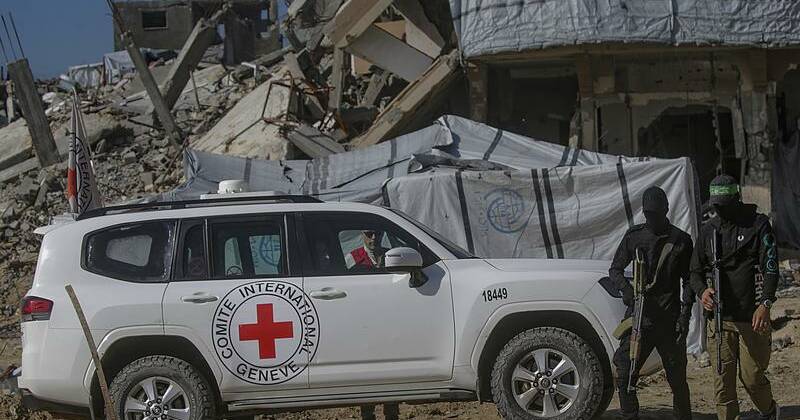
Palestinian militant group Hamas has returned the remains of one of the last two deceased hostages still in Gaza, as confirmed by the International Committee of the Red Cross (ICRC). This transfer aligns with the ceasefire agreement established in October. The Israeli Prime Minister Benjamin Netanyahu announced that Israeli forces received what they described as “findings” intended for forensic testing in Israel.
The two remaining deceased hostages are Ran Gvili, an Israeli police officer, and Sudthisak Rinthalak, a Thai national. Both were taken hostage during Hamas’ assault on October 7, 2023, which initiated a prolonged and devastating conflict in Gaza. Throughout these hostilities, the ICRC has acted as a mediator between Hamas and Israel, facilitating the release of living hostages and the return of remains.
Continued Violence and Casualties
On the same day as the hostage remains were returned, violence persisted in Gaza. An Israeli air strike resulted in the death of a Palestinian man identified by local health authorities as freelance journalist Mahmoud Wadi in Khan Younis. A senior official from the Israeli military informed Reuters that Wadi had participated in Hamas’ October attack, although this claim has not been independently verified.
The airstrike also wounded another Palestinian journalist, according to Gaza health authorities. Subsequently, Israeli tank shells struck a residential area in Gaza City, resulting in two fatalities and injuring at least 15 others. The Israeli military did not comment on the incident when approached by Reuters.
Despite a ceasefire taking effect on October 10, violence has not fully abated. While Israeli forces have reportedly reduced their strikes, they continue to target what they claim are Hamas infrastructures. Since the ceasefire began, at least 357 Palestinians have died, according to health authorities in Gaza. In this period, Israeli sources reported that three Israeli soldiers were killed in confrontations.
Impact on Journalists and Media Freedom
The ongoing conflict has severely impacted press freedom, with the Committee to Protect Journalists (CPJ) documenting the deaths of 201 journalists and media workers in Gaza, Israel, and Lebanon since the outbreak of hostilities. Among the deceased are journalists working for Reuters. The CPJ’s count includes 193 Palestinians killed by Israeli forces in Gaza, six in Lebanon, and two Israelis killed during the October 7 attack.
To date, the Israeli military has not released findings from formal investigations into these deaths, nor have they held anyone accountable for the killings of journalists. An Israeli military spokesperson stated that their forces have focused on combatants and military sites, asserting that civilian and journalist casualties are unintended. They have also claimed, without providing evidence, that some journalists were linked to Hamas activities, a claim that those organizations deny.
The situation continues to evolve, with both Hamas and Israel exchanging accusations regarding breaches of the US-backed ceasefire agreement. As the conflict persists, the humanitarian implications remain severe for those caught in the crossfire.