



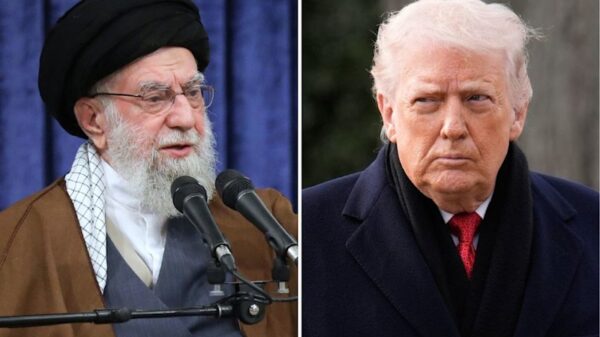






















Iran’s Supreme Leader, Ayatollah Ali Khamenei, issued a strong condemnation of former U.S. President Donald Trump, labeling him a “criminal” for his actions that have allegedly resulted in significant casualties and damage to the Iranian populace during ongoing protests. Khamenei’s remarks came during a speech on October 10, 2023, where he also placed blame on both the United States and Israel for what he described as the “thousands” of deaths connected to the unrest in Iran.
Khamenei’s statements reflect the Iranian government’s ongoing narrative that external forces, particularly the U.S. and Israel, are instigating chaos and violence within the country. He specifically criticized Trump for his administration’s policies and rhetoric that he claims incited unrest and suffering among the Iranian people. The Supreme Leader stated, “The actions taken by the former U.S. administration have led to severe consequences for our citizens, turning them into victims of a larger agenda.”
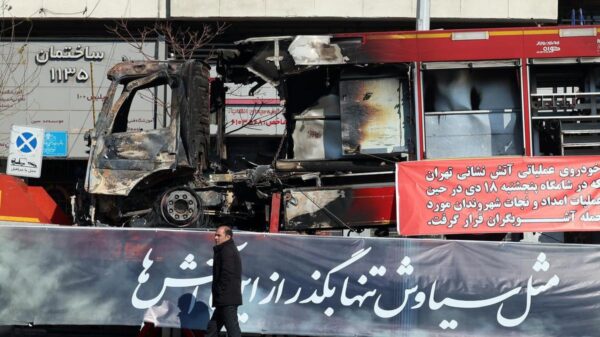
The unrest in Iran, which has intensified over the past months, has been characterized by widespread protests against the government, primarily sparked by issues related to human rights and economic stability. Protesters have faced a heavy crackdown, leading to a reported increase in fatalities during clashes with security forces. Khamenei’s speech sought to frame these protests not merely as an internal issue but as a consequence of foreign intervention.
In his address, Khamenei did not provide a specific number of casualties but emphasized the heavy toll the protests have taken on Iranian families. According to various reports, since the protests began, there have been hundreds of deaths and thousands of arrests, highlighting the ongoing volatility in the region.
The Iranian leadership’s focus on external blame serves a dual purpose: it aims to unify the public against perceived foreign threats while diverting attention from domestic governance challenges. Khamenei’s comments may also serve to bolster his position within Iran as the country grapples with both internal dissent and international scrutiny.
The relationship between Iran and the United States has been fraught with tension, particularly since the U.S. withdrawal from the 2015 nuclear agreement in 2018 and the subsequent imposition of sanctions that have severely impacted Iran’s economy. Khamenei’s rhetoric underscores a longstanding narrative in Iranian politics that frames the U.S. as a primary adversary, complicating any potential future negotiations.
As the situation in Iran continues to evolve, the international community remains watchful of the implications of Khamenei’s statements. The dynamics between Iran, the U.S., and Israel are critical not only for the region but also for global stability and security. Observers will be looking closely at how these developments impact the protests and the broader geopolitical landscape in the Middle East.