































Filmmaker Woody Allen has expressed no regret regarding his past friendship with convicted sex offender Jeffrey Epstein, even as new photographs have emerged highlighting their relationship. In a recent interview, Allen described Epstein as “charming and personable,” a characterization that has reignited discussions about Allen’s controversial past and moral stance.
Over the past three months, Allen celebrated his 90th birthday, released his first novel titled What’s With Baum?, and mourned the passing of his friend and muse, Diane Keaton. Amid these events, he participated in a series of interviews, revealing details about his interactions with Epstein, who had been a significant presence in his life.
Between 2010 and 2019, Allen and his wife, Soon-Yi Previn, frequently attended dinners at Epstein’s townhouse on the Upper East Side of New York. Allen described these gatherings as “always interesting,” filled with “illustrious people, college professors, scientists, Nobel laureates.” In an informal letter to Epstein on his 63rd birthday, Allen noted the enjoyment of their time together.
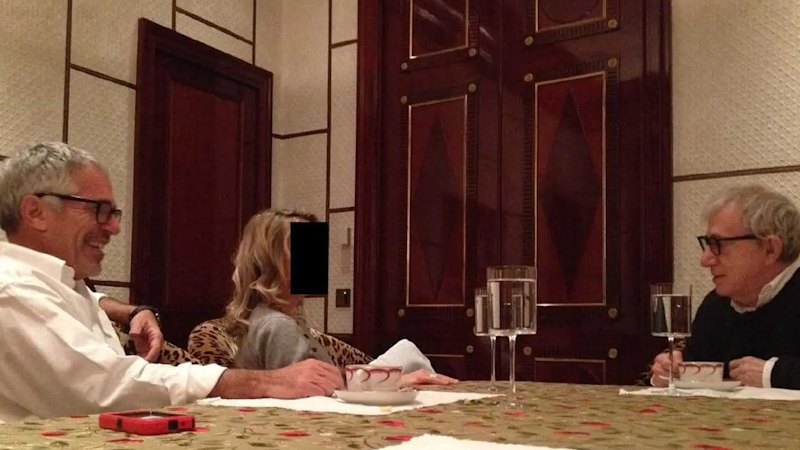
The connection between Allen and Epstein has resurfaced in public consciousness, particularly following the release of photographs by the House Oversight Committee. These images depict the two men in intimate settings, including one where they are seated across from each other at a table, suggesting a closer relationship than previously understood.
One notable image shows Allen on a film set, looking up at Epstein, who appears to be engaged with a monitor. This closeness raises questions about Allen’s judgment, especially considering Epstein’s history, including a conviction for soliciting sex from minors. Allen began visiting Epstein’s home two years after this conviction, a fact that complicates his claims of ignorance about Epstein’s past.
Allen’s recent comments have drawn criticism, especially in light of the ongoing discussions surrounding sexual morality and accountability in Hollywood. When questioned about Epstein’s character during an interview with The Sunday Times, he referred to him as “a substantial character,” showing no signs of remorse comparable to those expressed by other public figures linked to Epstein.
In another controversial remark, Allen recalled Epstein’s claims of being “falsely put in jail,” and he appeared to express sympathy for Epstein’s situation. “He told us he was trying to make up for it now by being philanthropic,” Allen stated, suggesting a lack of critical perspective on Epstein’s actions.
The photographs and Allen’s statements illustrate a complex dynamic between cultural privilege and ethical responsibility. Critics have highlighted the troubling nature of Allen’s dismissal of Epstein’s criminal past, especially given Allen’s own controversial history, including accusations of sexual abuse by his former partner, Mia Farrow. Allen has consistently denied these allegations, which were never pursued criminally.
As the dialogue around these figures continues, the implications of their interactions serve as a reminder of the complexities surrounding fame, morality, and accountability in the entertainment industry. The recent revelations challenge audiences to reconsider the narratives surrounding influential figures who have operated in the shadows of serious allegations.
As the story unfolds, the impact of Allen’s reflections on his friendship with Epstein will likely resonate through ongoing discussions about trust, power, and the consequences of ignoring troubling histories.