



































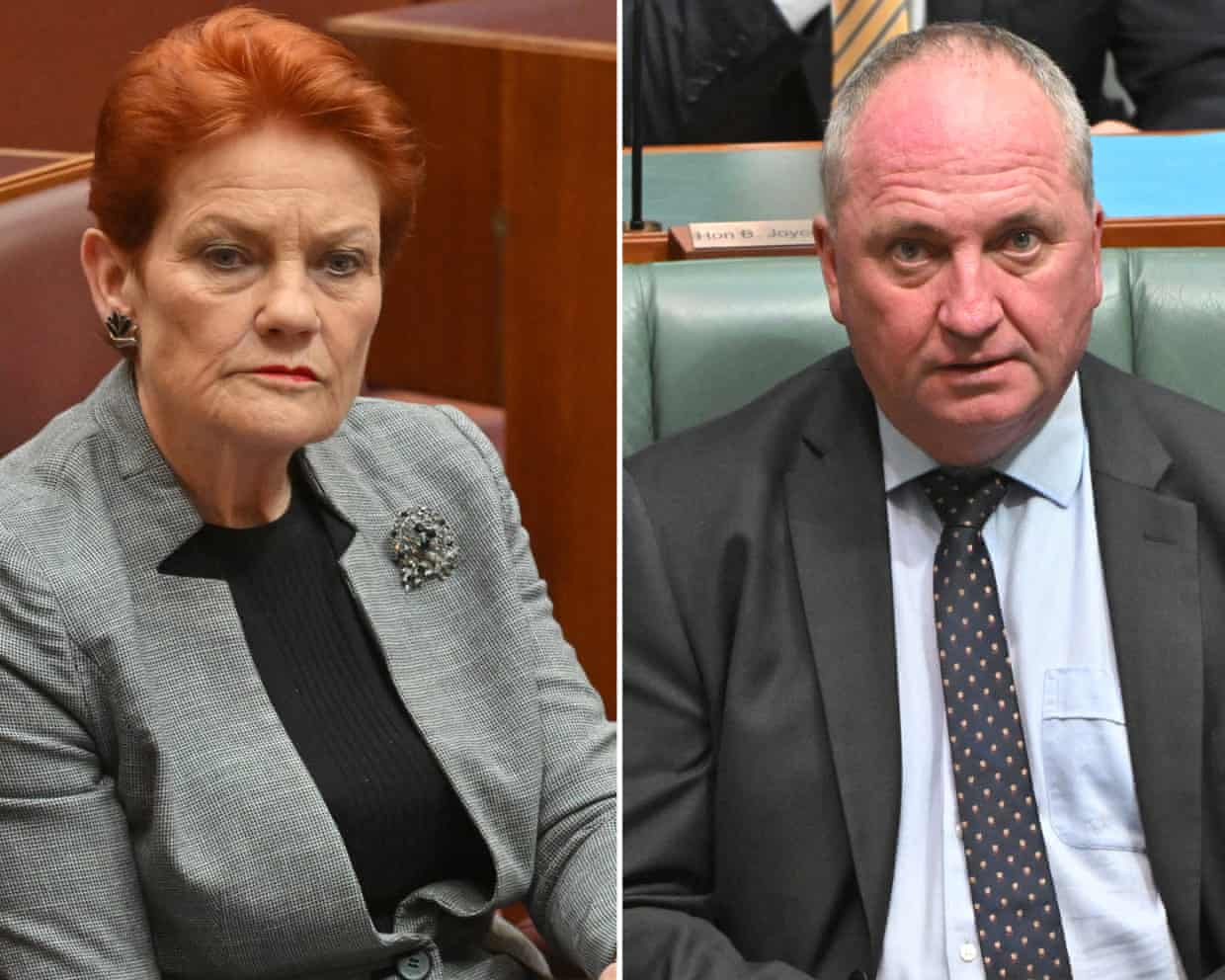
Pauline Hanson and Barnaby Joyce, both members of the One Nation party, recently utilized a private jet owned by mining magnate Gina Rinehart to visit communities in Queensland impacted by severe flooding. The pair traveled over the weekend to meet with local mayors and assess the damage caused by heavy rainfall following ex-Tropical Cyclone Koji.
Joyce, who switched from the Nationals party last month, defended the use of the Gulfstream G700 plane and accompanying helicopter, claiming it was a cost-effective choice for taxpayers. The aircraft, registered to the Bank of Utah, was confirmed by Joyce to have been provided by Rinehart, a long-time supporter of both politicians.
The visit included stops in Mount Isa, where local residents captured images of the politicians exiting the plane with grocery bags, which later circulated on social media. “I’ve got no problems with that at all,” Joyce remarked on Monday, emphasizing the importance of this support for the flood-affected regions. “Would people prefer the taxpayer pay for it?”
Hanson’s relationship with Rinehart is not new; last month, Guardian Australia reported that she and her chief of staff, James Ashby, traveled to Florida on Rinehart’s jet in October, where they attended a themed event at Donald Trump’s Mar-a-Lago estate.
Under current parliamentary rules, members of the legislature must declare any sponsored travel valued over $300. These declarations must be updated within 28 days for lower house members and 35 days for senators. After the details of Hanson’s Florida trip emerged, her office amended the declaration to comply with these regulations.
The Queensland visit comes at a critical time, as many areas continue to face threats of substantial flooding despite the cancellation of cyclone warnings. Joyce highlighted the necessity of One Nation’s presence in the region, stating, “With a lot of these things, you’d be more noted by your absence than your participation.” He pointed out the party’s commitment to understanding local concerns and advocating for recovery efforts.
Polling data from Demos for Capital Brief indicates that One Nation’s support has surged above 20%, positioning the party closely alongside the Coalition. Joyce’s recent defection and his potential rise as a leader within One Nation have sparked speculation about the party’s future trajectory, particularly as the next election approaches in 2028.
Joyce’s remarks also underscored a shift in the political landscape, asserting that One Nation is no longer just a minor player but rather a party with significant backing that must enhance its engagement with constituents. As the situation in Queensland evolves, the actions of Hanson and Joyce may reflect a broader strategy to solidify their presence in Australian politics.
