

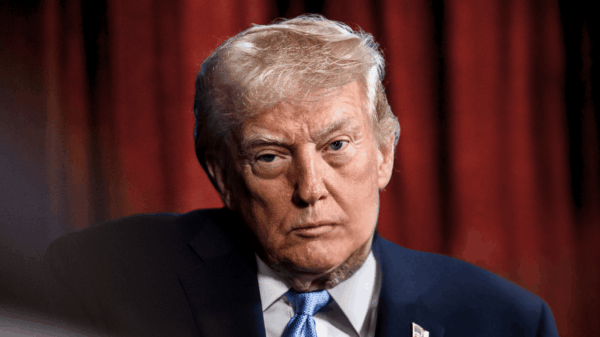
































Former US President Donald Trump has intensified his criticism of the Federal Reserve and its chair, Jerome Powell, raising concerns among fund managers in Australia. His call for lower interest rates has prompted an unusual response from 12 international central bankers, including Michele Bullock, the governor of the Reserve Bank of Australia (RBA). This unprecedented intervention underscores the importance of the Fed’s independence, which has become a focal point in global financial discussions.
The statement issued by the central bankers emphasized that the autonomy of central banks is crucial for maintaining price stability and economic health. It was also signed by other key figures, including Andrew Bailey, governor of the Bank of England, and Christine Lagarde, president of the European Central Bank. The statement reads, “The independence of central banks is a cornerstone of price, financial and economic stability in the interest of the citizens that we serve.”
Despite the serious nature of these developments, the financial markets have displayed a relatively muted reaction. Traders in equities and bonds have largely brushed off Trump’s remarks, recalling past market resilience, particularly following last April’s bond market turmoil triggered by tariff changes. Bullock has cautioned that low risk premiums may pose greater risks than anticipated, potentially catching traders off guard if adverse conditions arise.
Dr. Jonathan Kearns, chief economist at Challenger, expressed skepticism that Trump would heed the central bankers’ statement. He noted that if the bond market reacts sharply to the prospect of a politicized Federal Reserve, it might compel Trump to moderate his stance. “A lot of analysts believe that the risks are greater than seems to be priced by the bond market,” he stated.
The implications of Trump’s actions extend to Australian fund managers, who currently have over $600 billion invested in US assets, according to IFM Investors and the Super Members Council. As these funds increasingly seek opportunities in the US market, Kearns suggests that they should reassess their perspective on investment risks, particularly in light of potential inflationary pressures.
While some investors may be tempted to reduce their exposure to US investments, Kearns warns against overreacting, especially as the US equity market benefits from advancements in artificial intelligence. “What we’ve seen investors doing is saying, ‘well, I can’t completely reduce my exposure to the US, but I’m going to tweak it at the margin,’” he explained.
In response to these developments, some super funds have indicated a shift in strategy, directing a larger share of their investments to other markets rather than the US. This indicates a cautious approach driven by recent economic uncertainties and the evolving landscape of global finance.
As the situation develops, the actions and statements from key financial figures will continue to shape the discourse surrounding central bank independence and its implications for both domestic and international investors. The ongoing dialogue between political figures and financial authorities is set to have lasting effects on investment strategies and market dynamics worldwide.