



































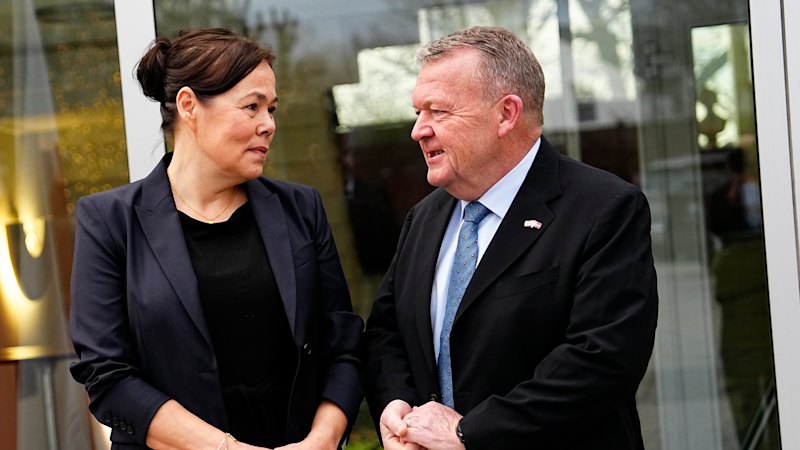
On March 13, 2024, the foreign ministers of Denmark and Greenland convened at the White House for critical discussions with US Vice President JD Vance. This meeting comes in the wake of President Donald Trump reiterating his administration’s demand for the United States to take control of Greenland, an autonomous territory of Denmark. Trump emphasized the territory’s strategic importance, asserting it is vital for US security and should be secured to prevent potential occupation by Russia or China.
Trump’s comments included a declaration that “all options are on the table” for securing Greenland, which he referred to as essential for a proposed missile defense system dubbed the “Golden Dome.” In a social media post, he stated, “Anything less than that is unacceptable.” He further insisted that NATO would be significantly strengthened with Greenland under US control, urging NATO to take immediate action regarding the situation.
Denmark and Greenland’s Response
In response to Trump’s assertions, both Greenland and Denmark firmly stated that the island is not for sale. They emphasized the importance of resolving security concerns among allied nations, gaining support from prominent European Union member states.
Ahead of the White House meeting, Denmark and Greenland announced plans to bolster their military presence in and around Greenland in close collaboration with NATO allies. This initiative is part of a broader commitment to enhance Arctic defense capabilities, including various military exercises planned through 2026, as outlined by the Danish defense ministry.
As Foreign Minister Lars Lokke Rasmussen of Denmark and Greenland’s Foreign Minister Vivian Motzfeldt prepared to meet with Vance and Secretary of State Marco Rubio, analysts suggested their objective would be to de-escalate tensions and seek a diplomatic resolution to US demands for increased control over the territory. Andreas Osthagen, research director for Arctic and ocean politics at the Fridtjof Nansen Institute, noted, “The end goal is to find some form of accommodation, or make a deal that would satisfy that need, or at least calm down the rhetoric sufficiently from Donald Trump.”
International Reactions and Concerns
Concerns about the implications of the meeting loomed large in Denmark and Greenland. Analysts, including former political advisor Noa Redington, expressed fears that Motzfeldt and Rasmussen could face a scenario similar to Ukrainian President Volodymyr Zelensky, who experienced a public humiliation during a previous meeting with Trump in February 2025. Redington labeled this meeting as “the most important meeting in modern Greenland’s history.”
Initially, Denmark and Greenland had sought to engage solely with Rubio, but Vance’s involvement shifted the dynamic, leading to heightened expectations for the meeting. French President Emmanuel Macron weighed in on the situation, stressing that any threat to the sovereignty of a European ally would have unprecedented consequences. He stated, “We do not underestimate statements on Greenland,” emphasizing France’s solidarity with Denmark’s sovereignty.
Earlier on the day of the meeting, Ursula von der Leyen, President of the European Commission, reaffirmed the EU’s strong relationship with Greenland, assuring that Greenlanders could depend on the EU’s support.
As discussions unfold, the global community will be closely monitoring the outcomes of this pivotal meeting. The implications of the US’s stance on Greenland could reshape international relations and security dynamics in the Arctic region.
