



































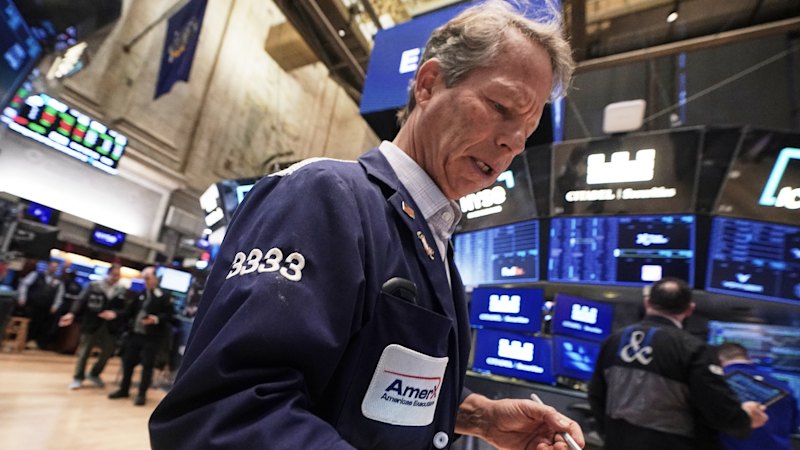
Wall Street experienced a significant decline on Friday as fears surrounding artificial intelligence (AI) stocks contributed to a sharp pullback from recent record highs. The S&P 500 fell by 1.1 percent, marking its worst day in three weeks, while the Nasdaq Composite dropped by 1.7 percent. The Dow Jones Industrial Average also declined, losing 245 points or 0.5 percent, following its record-setting performance just a day earlier.
The Australian sharemarket is poised to open lower, with futures indicating a potential drop of 51 points or 0.6 percent. This downturn comes as concerns over the AI sector continue to mount, particularly following notable declines in key tech stocks.
Broadcom, a major player in the semiconductor market, was a primary contributor to the market’s fall, plummeting by 11.4 percent. Despite reporting stronger-than-expected profits for the latest quarter, investor apprehension regarding the company’s financial forecasts dampened enthusiasm. CEO Hock Tan noted a remarkable 74 percent growth in AI semiconductor revenue, yet uncertainty lingered over how much profit Broadcom can generate from each USD 1 in revenue. This decline followed a substantial year-to-date gain of 75.3 percent for the company, outpacing the S&P 500’s performance significantly.
The AI sector’s struggles did not stop with Broadcom. Oracle also faced a setback, dropping nearly 11 percent despite exceeding profit expectations. Investors are questioning the profitability of Oracle’s substantial investments in AI technology, particularly in light of the high costs associated with its development.
The overall sentiment in the market was further pressured by rising bond yields. The yield on the 10-year Treasury increased to 4.18 percent from 4.14 percent, which may deter investors from pursuing high-priced stocks, particularly in a climate where valuations are already considered steep.
As AI stocks continue to retreat, the market shows a mixed response to broader economic indicators. While tech-heavy indexes like the Nasdaq struggled, the Dow Jones Industrial Average performed better, gaining 1 percent over the past week. Investors have begun to exhibit a more optimistic outlook regarding interest rates, particularly after the Federal Reserve cut its main interest rate for the third time this year and hinted at potential future cuts.
Despite the declines on Friday, consumer-dependent stocks showed resilience. Two out of every five stocks within the S&P 500 rose, with notable gains from Chipotle Mexican Grill (+3.6 percent), McDonald’s (+2.3 percent), and Norwegian Cruise Line (+1.5 percent). The standout performer was Lululemon Athletica, which surged by 9.6 percent after reporting better-than-expected profit and revenue.
In summary, the S&P 500 closed down 73.59 points at 6,827.41, while the Dow Jones finished at 48,458.05, down 245.96 points, and the Nasdaq composite ended the day at 23,195.17, a decline of 398.69 points. Internationally, European indexes saw modest declines, while Asian markets performed well, with Hong Kong stocks rising by 1.7 percent and Tokyo by 1.4 percent.
The market’s future direction will depend on further developments in the tech sector and economic signals from the Federal Reserve as investors navigate this volatile landscape.