




























Recent research led by scientists at **Memorial Sloan Kettering Cancer Center** and **Rockefeller University** has unveiled critical insights into the structure of the T cell receptor (TCR), a discovery that could transform the landscape of cancer therapies. The findings, published in the journal **Nature Communications**, address longstanding questions regarding T cell activation, particularly in the context of adoptive T cell therapies.
Adoptive T cell therapies involve re-engineering T cells outside the body to target and eliminate harmful cells. While approaches utilizing chimeric antigen receptor T cells (CAR-T) have demonstrated significant effectiveness against liquid tumors, their performance against solid tumors has been markedly less successful, with response rates falling below **25%**. The reasons behind this disparity have remained unclear until now.
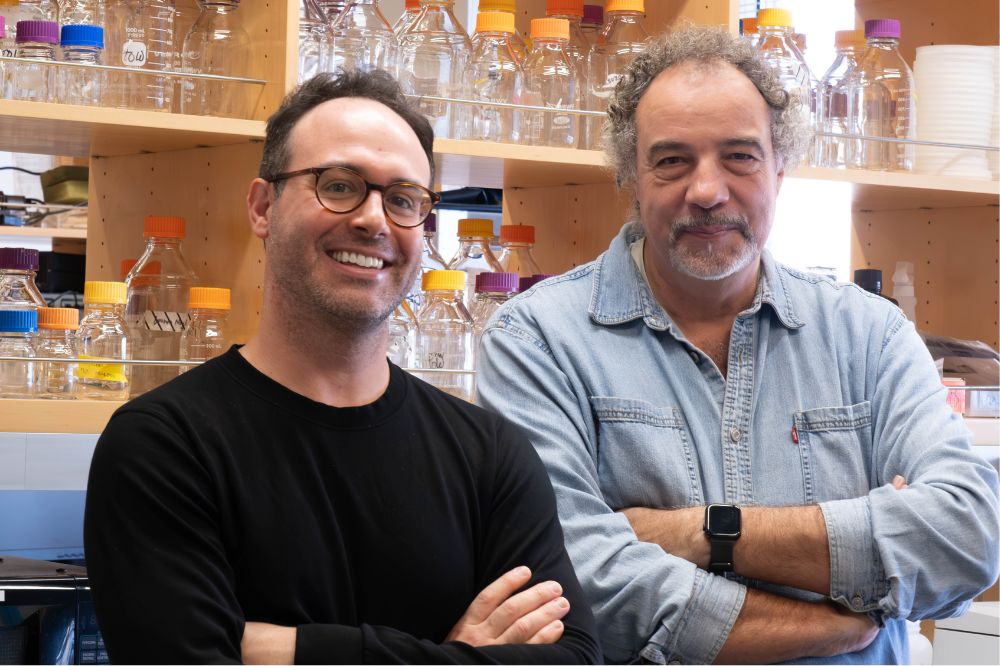
**Ryan Notti**, a special fellow in the Department of Medicine at Memorial Sloan Kettering and an instructor of clinical investigation at Rockefeller, collaborated with **Thomas Walz**, a prominent figure in electron microscopy, to explore the TCR’s fundamental structure. Their research revealed aspects of the TCR that had never been seen before, particularly its conformational states.
New Insights into T Cell Activation
Notti explained the groundbreaking nature of their findings, stating, “All the data we’d read depicted TCR as being open and extended in its dormant state, but we found that before activation, it has a compacted, closed shape. After binding to an antigen, it sort of springs open like a jack-in-the-box.” This discovery sheds light on the molecular mechanisms underlying T cell activation, a topic that has generated debate for over **40 years**.
The research was facilitated by Rockefeller’s **Clinical Scholars Program**, designed for clinically trained medical professionals to gain laboratory research training. This program emphasizes the importance of combining clinical insights with basic research, enabling scientists like Notti to better understand the mechanisms of T cell therapies.
Walz highlighted the significance of their collaboration, noting, “It’s very rare to have a medical doctor who is interested in structure, and the project was right in line with my lab’s basic research on membrane proteins.” Their combined expertise in clinical medicine and structural biology allowed for a comprehensive investigation into the TCR’s behavior within membrane environments.
Implications for Future Cancer Treatments
The implications of these findings are far-reaching, particularly for improving receptor-based and cell-based cancer therapies. Notti, whose clinical specialty includes sarcomas—cancers arising from soft tissue or bone—expressed optimism about the potential for refining T cell therapies based on their research. “Perhaps these insights can help fine-tune receptor sensitivity to make this approach more effective for a wider range of sarcomas,” he remarked.
Additionally, the study holds promise for advancements in vaccine design. Understanding how the TCR interacts with various antigens is crucial for developing effective vaccines. T cells play a vital role in signaling to B cells, which produce antibodies, thus ensuring a robust immune response. The researchers believe that their structural insights could guide the selection of antigens that better activate TCRs, ultimately enhancing vaccine efficacy.
Notti emphasized the importance of basic science in driving clinical advancements, stating, “Our study is a great example of how basic science is essential for accelerating improvements in the clinical space.” Walz echoed this sentiment, reinforcing that without ongoing basic research, there would be a lack of foundational knowledge to translate into future therapies.
As scientists continue to decode the complexities of the immune system, this breakthrough in understanding the T cell receptor structure represents a significant step forward in the quest to improve cancer treatments and immunotherapy approaches.