




























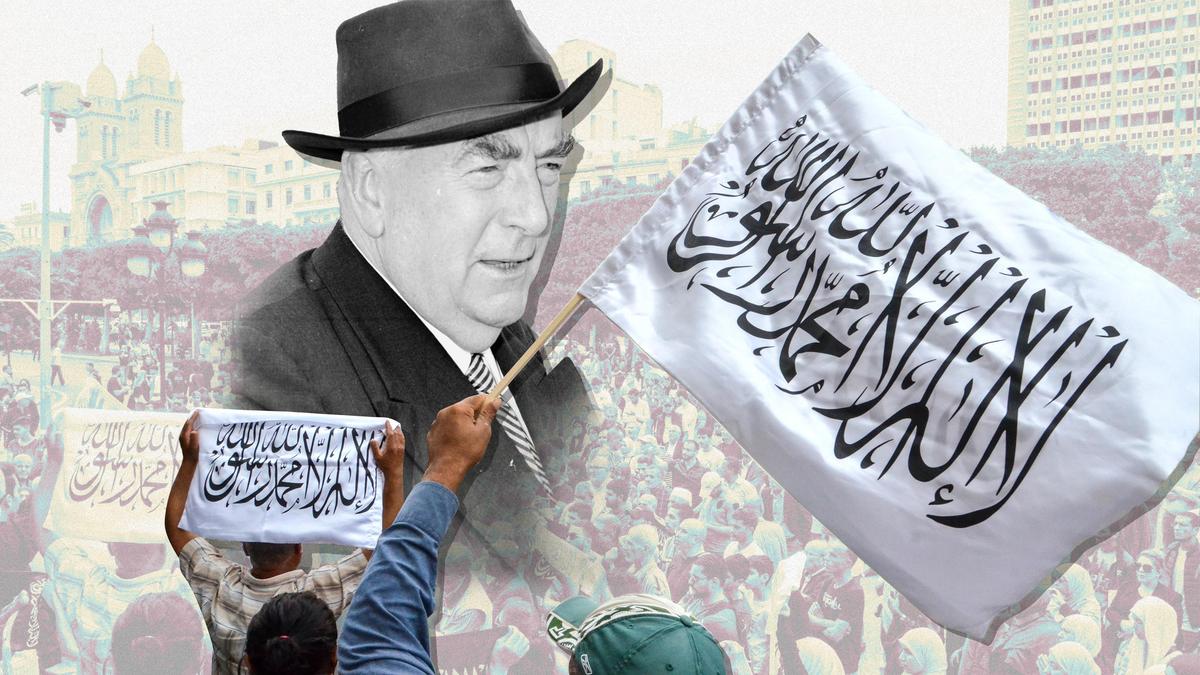
Anthony Albanese, Australia’s Prime Minister, has announced a significant move to ban the Islamist group Hizb ut-Tahrir. This decision positions him alongside historical figures like Robert Menzies, who sought to outlaw the Communist Party in the 1950s. Both leaders have faced the challenge of confronting organizations deemed detrimental to Australian society and its democratic values.
The new legislative proposal, part of Labor’s Combatting Anti-Semitism, Hate and Extremism Bill, received bipartisan support, with the Liberal Party also backing the creation of a new proscribed hate-group list. This legislation aims to ban Hizb ut-Tahrir alongside the National Socialist Network, a neo-Nazi organization. This initiative reflects a growing concern about the influence of extremist ideologies that challenge civil liberties and promote hate.
Historical Context and Ideological Threats
For over 75 years, groups like Hizb ut-Tahrir have expressed openly anti-Semitic views and have been critical of Australia’s democratic framework. The Communist Party’s bid to abolish capitalism and democracy in the early 1950s parallels Hizb ut-Tahrir’s goals of establishing a global Islamic caliphate. Unlike the Communist Party, which sought to implement a different political system, Hizb ut-Tahrir’s agenda includes violent measures against those who leave Islam, as articulated by its spokesman, Uthman Badar, during a 2017 event in Bankstown, Sydney.
The group’s ideology extends its disdain beyond Judaism, targeting LGBTQ+ individuals, ex-Muslims, and other non-believers. Despite not being classified as a terrorist organization, Hizb ut-Tahrir’s political stance raises significant alarm among policymakers.
As the Federal Parliament prepares to vote on the new hate-group list, concerns about a potential High Court challenge loom. Similar to the Cold War era when the Communist Party was targeted, there may be legal disputes regarding the constitutionality of banning Hizb ut-Tahrir.
Legislative Developments and Future Implications
New laws will grant Tony Burke, the Home Affairs Minister, the authority to designate hate groups under the Commonwealth criminal code. Critics, including Timothy Roberts, president of the New South Wales Council for Civil Liberties, argue that these laws could infringe on freedoms of political communication and association.
Roberts noted that granting broad powers to the minister risks creating constitutional challenges similar to those faced in the 1950s. This is particularly relevant given the historical context of the failed Communist Party Dissolution Act, which was deemed unconstitutional after a High Court challenge in March 1951.
Australia’s approach to combating hate has evolved, with existing laws like Section 18C of the Racial Discrimination Act addressing hate speech. However, calls for violence against specific groups still primarily fall under state jurisdictions.
While the proposed ban on Hizb ut-Tahrir represents a proactive step against extremism, further legal scrutiny is anticipated. A constitutional referendum to secure a permanent ban could be more successful if it garners bipartisan support, a vital element missing in past attempts.
Hizb ut-Tahrir’s influence has been increasingly scrutinized, particularly following events such as the 2023 demonstrations outside a Lakemba mosque that celebrated the October 7 attacks in Israel, which resulted in the deaths of over 1,200 individuals. The group’s presence at such events has fueled calls for stronger legislative action.
The situation reflects a broader global trend, with Hizb ut-Tahrir already banned in multiple countries, including Bangladesh since 2009, and Germany, which prohibited the group in 2003.
Australia’s long-standing hesitance to legislate against Hizb ut-Tahrir has come under scrutiny as the political landscape shifts, indicating a growing resolve to address extremist ideologies that threaten social cohesion and democratic values. As the debate unfolds, the implications for civil liberties and political expression will be closely watched by both supporters and detractors of the proposed ban.