





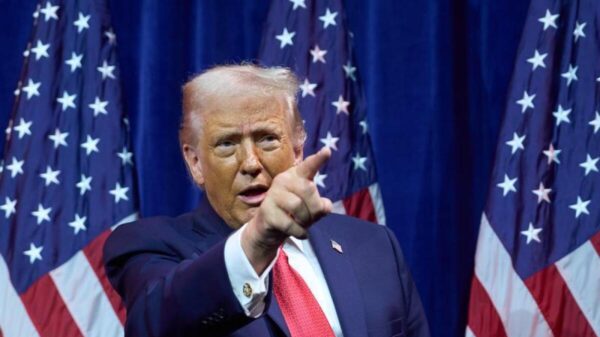



























U.S. President Donald Trump criticized transgender athletes during a speech to Republican members of the House of Representatives on March 12, 2025. In a performance characterized by mockery, Trump aimed his comments at transgender women, describing their participation in women’s sports as “crazy.” This speech marks a continuation of his opposition to transgender rights, which he has vocalized since resuming the presidency.
During the address, Trump acted out a scene involving a female weightlifter attempting to break a record, using exaggerated physical movements and vocalizations. His impersonation, which included grunting and wheezing, drew laughter from many in the audience. The President’s remarks reflect a broader political climate in which he has positioned himself against policies supporting transgender inclusivity in sports.
Trump’s commentary also included a reference to Algerian boxer Imane Khelif, describing her as someone who had transitioned gender. Khelif, who was assigned female at birth, has lived as a woman throughout her life. Such statements have sparked discussions about the representation of transgender athletes in competitive sports and the implications for female athletes.
The Republican Party has increasingly focused on issues surrounding transgender rights as part of its platform. Trump’s comments resonate with a segment of the party’s base that supports restrictions on transgender participation in sports. As debates continue over the fairness of allowing transgender women to compete against cisgender women, this speech is likely to intensify discussions on both sides of the issue.
In recent months, various states have introduced legislation aimed at limiting transgender participation in sports. These moves have drawn criticism from advocacy groups, which argue that such laws undermine the rights and identities of transgender individuals.
The President’s remarks come at a time when discussions around gender identity and sports are becoming more prominent in national discourse. Advocates for transgender rights emphasize the importance of inclusivity in sports, arguing that everyone should have the opportunity to compete in accordance with their gender identity.
As Trump prepares for the upcoming election cycle, his focus on this issue may play a significant role in shaping his campaign narrative. The reactions to his comments will likely influence how both supporters and opponents respond in the coming months.
In summary, Trump’s mockery of transgender athletes during his speech underscores the contentious nature of the debate surrounding transgender rights in sports. With ongoing legislative efforts and public discourse evolving, the implications of his statements will continue to reverberate across the political landscape.