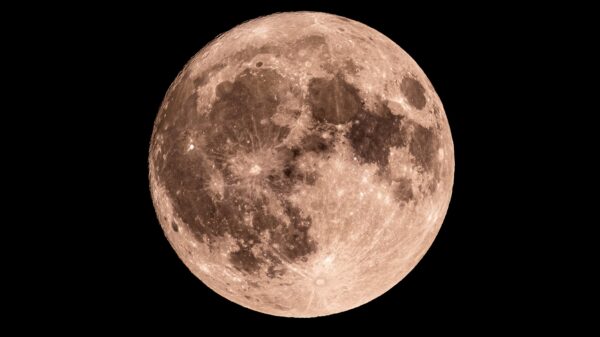




































As of January 4, 2024, the Moon is in its Waning Gibbous phase, with approximately 98.6% of its surface illuminated. After the recent Full Moon, the lunar body is now gradually decreasing in visibility as it transitions towards the New Moon phase. According to The Sky Live, the Moon will continue to shrink in size each night during this period.
The next Full Moon is set to occur on February 1, 2024. This cycle, known as the lunar cycle, spans roughly 29.5 days as the Moon orbits Earth. Understanding these phases sheds light on the complex relationship between the Moon, Earth, and the Sun.
Understanding Lunar Phases
The Moon goes through a series of eight distinct phases during its cycle. These phases are characterized by the varying amounts of sunlight that illuminate the Moon’s surface, which remains consistent as the same side always faces Earth. The phases include:
– **New Moon**: Occurs when the Moon is positioned between Earth and the Sun, rendering it invisible from our perspective.
– **Waxing Crescent**: A small sliver of light begins to appear on the right side.
– **First Quarter**: Half of the Moon is illuminated, appearing as a half-moon.
– **Waxing Gibbous**: More than half of the Moon is lit, approaching fullness.
– **Full Moon**: The entire surface of the Moon is illuminated and fully visible.
– **Waning Gibbous**: The Moon starts to lose light, with diminishing visibility from the right side.
– **Third Quarter (or Last Quarter)**: Another half-moon phase, but now the left side is illuminated.
– **Waning Crescent**: A thin sliver of light remains on the left side before the Moon becomes dark again.
The Importance of Lunar Observation
Understanding the various phases of the Moon is not just an astronomical curiosity; it has broad implications for various fields, including agriculture, fishing, and even cultural practices. Many cultures regard the lunar cycle as significant, aligning activities with its phases.
As we observe the Moon tonight, with 98.6% of its surface shining brightly, it serves as a reminder of the natural rhythms that govern our planet. Whether you are an avid stargazer or simply curious about celestial events, witnessing the waning phases can deepen appreciation for the beauty and complexity of the universe.