































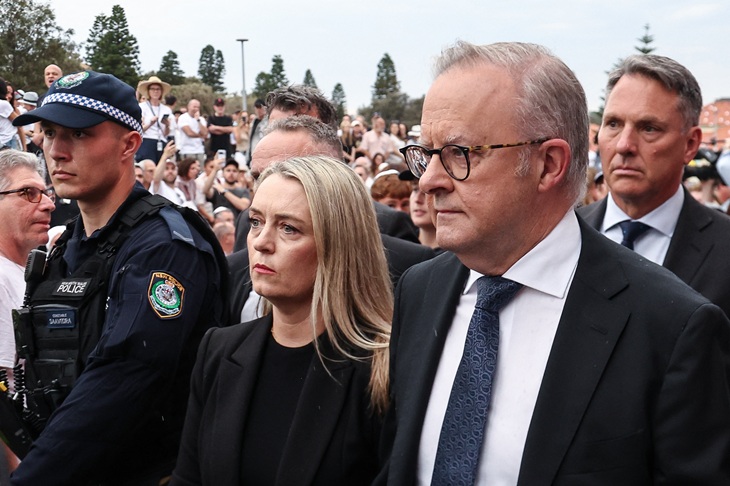
UPDATE: Prime Minister Anthony Albanese‘s government is facing fierce backlash following the urgent push to pass an omnibus bill that critics claim undermines Australian democracy. This legislation, aimed at addressing misinformation and hate speech, has been expedited with minimal parliamentary debate, raising alarms about civil liberties across the nation.
The sweeping bill has been fast-tracked without proper scrutiny, sidelining public consultation and parliamentary discourse. Critics argue this move erodes fundamental freedoms of expression and assembly, marking a significant deviation from the values Albanese has long claimed to uphold.
October 2023 has seen mounting tensions as this legislation seeks to combat rising antisemitism and online harms, particularly in the wake of the Israel-Hamas conflict. However, prominent leaders within the Jewish community, including the Executive Council of Australian Jewry, have expressed concerns that the bill’s broad measures could stifle legitimate discourse and advocacy.
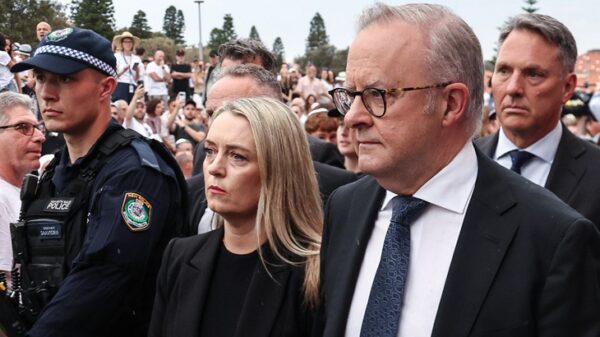
Dr. Michael de Percy and Professor Sascha-Dominik Bachmann, political scholars, have called the government’s actions a betrayal of democratic norms, suggesting that the bill represents a dangerous shift towards a two-tier justice system. They argue that the administration’s response to the Bondi massacre is being weaponized to justify increased control over free speech, rather than focusing on genuine security measures.
This legislative rush has drawn parallels to international incidents where political expediency has overshadowed democratic processes. The Birmingham football policing scandal in the UK serves as a stark reminder of how decisions made in the name of social cohesion can lead to severe public backlash.
Albanese’s administration has previously criticized leaders from various countries for bypassing essential governance processes. Yet, critics are quick to point out the irony in his government’s actions, accusing it of replicating the very autocratic behaviors he has condemned.
As the debate intensifies, many Australians are questioning the implications of such a rapid legislative process on their civil rights. The bill’s implications could redefine the landscape of free speech in Australia, leading to greater government oversight and potential censorship.
The fallout from this controversial push could be significant. The Australian public has a proud history of championing civil liberties, and many are urging the government to reconsider its approach. Calls for a thorough parliamentary inquiry and genuine community consultation are growing louder, as citizens demand that their voices be heard in matters affecting their freedoms.
With the government’s decision to prioritize speed over substance, there are fears that this may set a dangerous precedent for future governance. The current situation has ignited a national discussion on the balance between security and freedom, with many advocating for a return to democratic principles.
As developments unfold, the impact of this legislation on Australian society remains to be seen. Citizens are encouraged to engage in dialogue and voice their concerns as the government navigates this contentious issue.
This situation is evolving rapidly, and further updates are expected as public outcry continues. Will Albanese heed the call for a more democratic approach, or will the push for this controversial legislation continue unchecked? Stay tuned for more updates on this urgent issue.