






























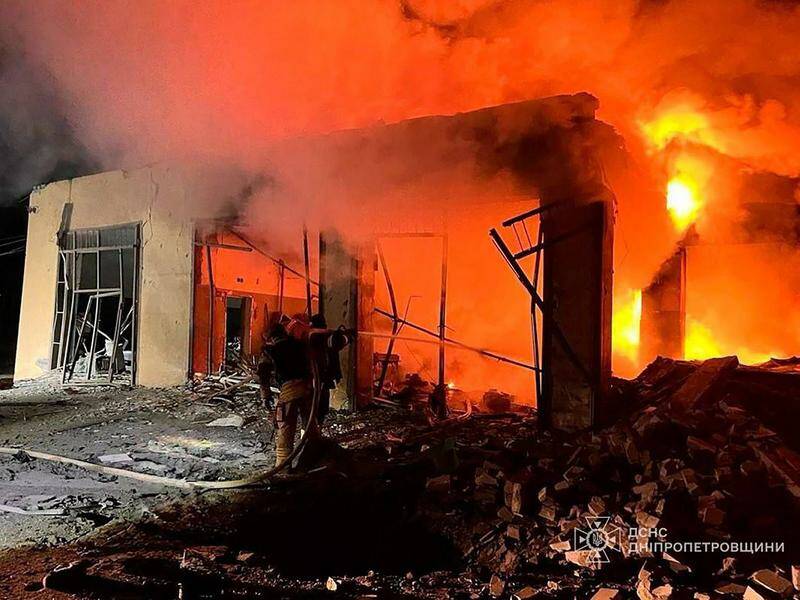
A series of missile and drone strikes launched by Russia against Ukraine resulted in the deaths of at least three individuals, including a child, and caused extensive power outages across the nation. The attacks, occurring on December 26, coincided with the lead-up to Christmas, a time when many Ukrainians are preparing to celebrate with their families.
The assault primarily targeted energy facilities, with significant damage reported in western regions, particularly in **Zhytomyr** and areas surrounding the capital, **Kyiv**. Ukrainian Prime Minister **Yulia Svyrydenko** indicated that the attacks were part of a broader strategy aimed at crippling Ukraine’s energy infrastructure. In the Zhytomyr region, two people lost their lives, including a four-year-old, while one fatality was reported near Kyiv, where at least five others sustained injuries.
President **Volodymyr Zelenskiy** condemned the strikes on social media, stating, “This Russian strike sends an extremely clear signal about Russia’s priorities.” He noted that the assault involved over **30 missiles** and **650 drones**, affecting at least **13 regions**. Zelenskiy highlighted the cruelty of launching such attacks during a festive season when citizens seek safety and family time.
The impact of the strikes was immediate, with Ukraine’s grid operator announcing emergency outages across many areas. Critical infrastructure was heavily affected in regions including **Chernihiv**, **Lviv**, and **Odesa**. In response, Ukraine’s energy ministry implemented emergency power cuts in several regions, including Kyiv and its surroundings, as a precautionary measure following the strikes.
This latest offensive follows a pattern of Russian attacks aimed at disrupting Ukraine’s power grid, particularly intensified during winter months. Such tactics seek to undermine electricity supplies and heating systems, adding strain to the logistics and economy of Ukraine.
In a related development, **Poland**, a NATO member that shares a border with western Ukraine, has deployed Polish and allied aircraft to protect its airspace following the Russian strikes. This measure, described by Poland’s operational command as preventive, aims to secure airspace amid the ongoing conflict. Polish jets have been scrambled during significant Russian missile and drone attacks, especially when threats near the border are perceived to be heightened.
On the diplomatic front, President Zelenskiy had recently characterized negotiations concerning U.S.-led peace proposals as “close to a real result.” However, Kremlin spokesman **Dmitry Peskov** downplayed any notions of progress, stating there had been no breakthrough in discussions held in **Miami** on **December 20-21**. “This is a working process,” Peskov remarked when asked about the potential turning point in negotiations.
Zelenskiy emphasized the importance of the discussions, which focused on a **20-point plan** proposed by U.S. envoys. This plan, however, has undergone scrutiny, with previous drafts criticized for being overly favorable to Russia. He underscored the urgency of establishing security guarantees for Ukraine to protect against future military actions from Russia once hostilities cease.
Further, Zelenskiy stressed the necessity of international pressure on the Kremlin to diminish its capacity for aggression. He called for continued global sanctions and efforts to reduce the price of Russian oil as vital strategies to influence Moscow’s actions.
As the situation evolves, the impact of these military actions and diplomatic efforts continues to shape the landscape of the ongoing conflict in Ukraine, with both immediate humanitarian consequences and broader geopolitical implications.