





















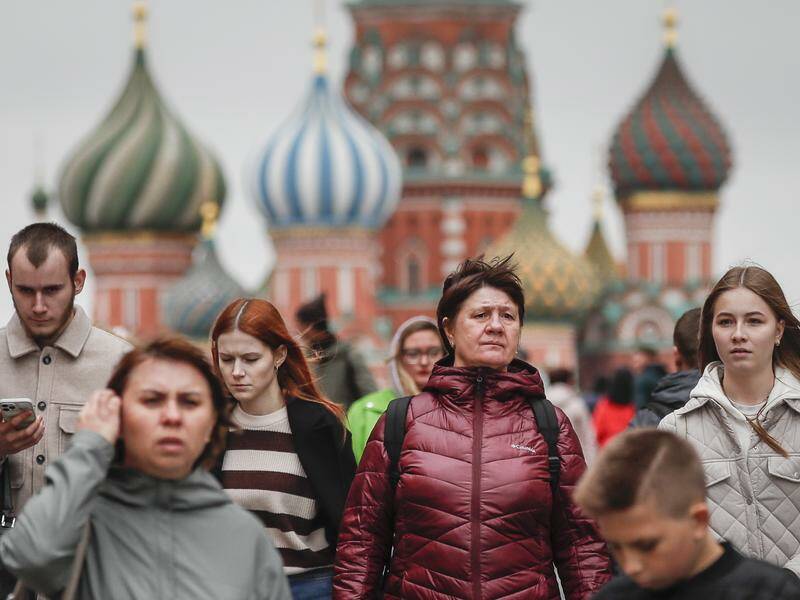
A recent survey indicates that a significant number of Russians perceive themselves as surrounded by hostile foreign powers, while viewing their own country as a victim. This perspective stems from persistent anti-Western propaganda, as explained by Lev Gudkov, a Russian sociologist affiliated with the independent Levada Centre in Moscow. The findings were presented in Berlin on behalf of the Sakharov Foundation.
The survey, conducted after nearly four years of conflict in Ukraine, involved over 1,600 participants. According to Gudkov, the results reflect what he termed a “militarisation of consciousness.” In the aftermath of the Soviet Union’s collapse, Russia has experienced only six years without war, contributing to this ongoing mentality.
Among respondents, 62 percent identified Poland and Lithuania as hostile nations. This sentiment extended to the United Kingdom (57 percent), Germany (50 percent), and Sweden (40 percent). In contrast, the United States was predominantly regarded as a competitor rather than an outright enemy, with 53 percent of respondents expressing this view.
When asked to identify friendly countries, respondents most frequently mentioned Belarus, China, Kazakhstan, India, and North Korea. With the exception of India, these nations are often classified as repressive or authoritarian regimes. The perception of the United States among Russians has varied significantly over the years. Gudkov noted that the image soured during the presidency of Joe Biden due to U.S. support for Ukraine, while it improved under Donald Trump, as many Russians hoped for a swift resolution to the ongoing war.
“People are tired of the war,” Gudkov stated, highlighting a widespread desire for peace. Many respondents have transferred their hopes to Trump, believing that President Vladimir Putin is unlikely to end the conflict and feeling powerless to influence his decisions. Despite this longing for peace, there is a strong conviction among Russians that Ukraine will ultimately capitulate.
The war in Ukraine is predominantly viewed within Russia as a conflict imposed by Western nations. In 1998, only 36 percent of respondents agreed with the statement that Russia had never been an aggressor in conflicts. This figure has now risen to 65 percent, reflecting a significant shift in perception over the past two decades, particularly following the invasion of Ukraine.
The findings from the Levada Centre provide a glimpse into the mindset of many Russians during a period of ongoing conflict and international tension. The survey underscores the impact of propaganda and historical context on public opinion in Russia, revealing a complex view of foreign relations shaped by decades of conflict and national narrative.