



































Astronomers have achieved a remarkable milestone by continuously observing an active region on the Sun, known as NOAA 13664, for over 90 days. This unprecedented duration of observation began on April 16, 2024, and spanned until July 18, 2024, coinciding with significant solar activity that produced geomagnetic storms impacting Earth. The findings were detailed in a study published in the journal Astronomy & Astrophysics.
The active region NOAA 13664 originated on the far side of the Sun before rotating into view in May, coinciding with a solar storm that illuminated skies across regions typically unaccustomed to auroras. During this intense period, astronomers lost sight of the region only briefly, from April 26 to April 29, thanks to the strategic positioning of two observatories.
Enhanced Monitoring of Solar Activity
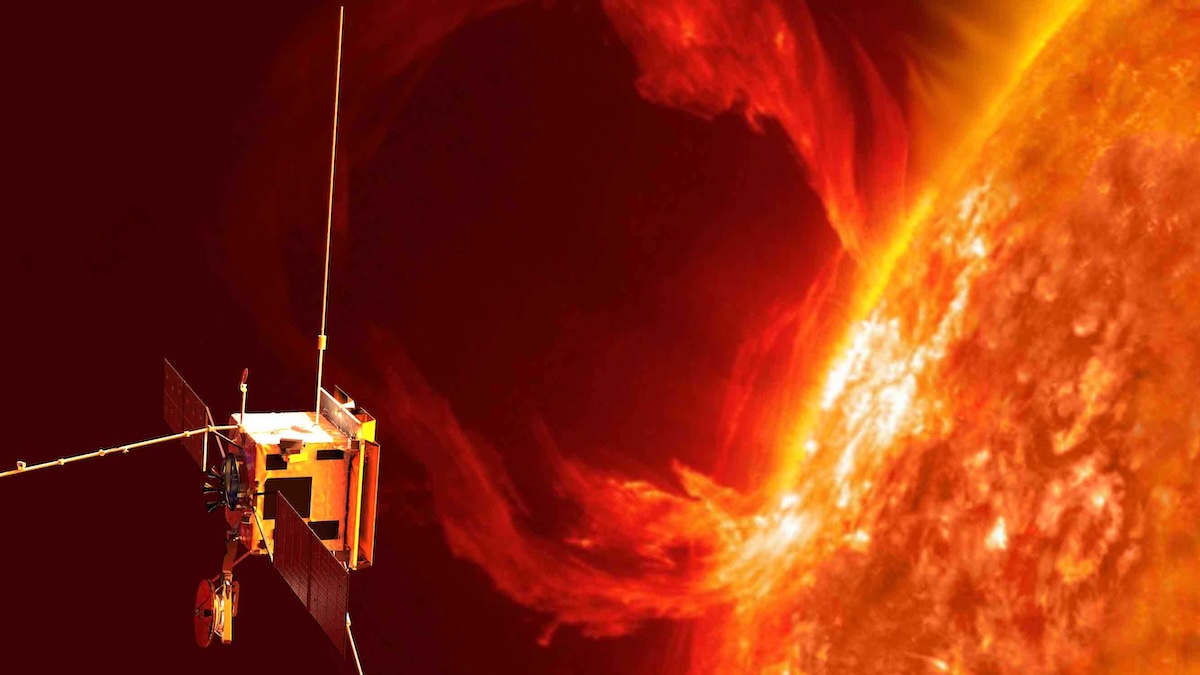
The Solar Orbiter, launched by the European Space Agency (ESA) in 2020, was crucial in monitoring the far side of the Sun while NOAA 13664 was developing. Concurrently, NASA’s Solar Dynamics Observatory provided vital data from its orbit around Earth. This dual observation allowed scientists to track the evolution of the region’s magnetic fields, a critical factor in understanding solar activity.
According to Ioannis Kontogiannis, a solar physicist at ETH Zurich, “This is the longest continuous series of images ever created for a single active region. It’s a milestone in solar physics.” Typically, observations of active solar regions last only about two weeks due to the Sun’s 28-day rotation cycle. The ability to monitor NOAA 13664 for such a prolonged period provides valuable insights into its behavior and characteristics.
Implications for Space Weather Predictions
Solar storms, while visually stunning, pose risks to modern technology, including satellites, electricity grids, and communication systems. Understanding the dynamics of solar activity is essential for improving predictions of space weather events. The data collected from this extensive observation period could enhance the accuracy of forecasts, allowing for better preparedness against potential disruptions caused by solar storms.
The record-setting observation of NOAA 13664 highlights the importance of international collaboration in space research. By utilizing advanced technology and strategic planning, astronomers can significantly advance our understanding of the Sun’s complex behavior and its effects on Earth.
