



































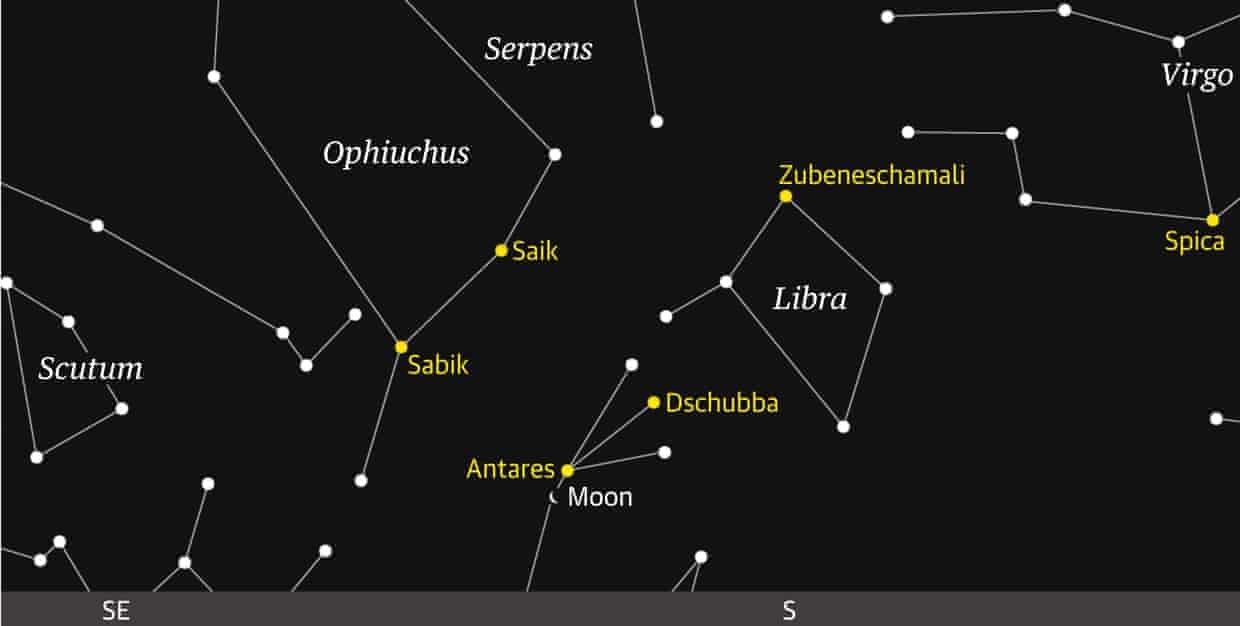
Early in the morning on February 11, 2024, skywatchers will witness a remarkable celestial event as the waning crescent moon rises close to Antares, the brightest star in the constellation Scorpius. This red supergiant star is located approximately 550 light years from Earth, and its appearance alongside the moon creates a stunning visual contrast in the pre-dawn sky.
For observers in the UK, particularly in London, the sight of Antares is always a rare treat, as it remains low on the horizon. The moon, about three days from new, will be illuminated at 34% and will rise shortly after Antares. The two celestial bodies will be separated by just a few degrees, making them easy to spot if conditions are favorable.
Optimal Viewing Conditions
Those wishing to catch this spectacle should start watching from around 05:30 GMT. The dawn is expected to chase Antares from view before the sun rises at 07:21 GMT, so early risers will have the best chance to enjoy the pairing. An unobstructed view of the south-south-east horizon is essential, as the moon and Antares will only rise a few degrees above the horizon before daylight overtakes them.
Due to the low altitude of Antares, atmospheric haze may diminish its brilliance. Nevertheless, the crescent moon will remain visible to the naked eye, serving as a guide to locate Antares in the sky. Observers are encouraged to take advantage of this celestial alignment, as such events offer a unique opportunity to appreciate the beauty of our universe.
In summary, the conjunction of the crescent moon and Antares presents a captivating moment for astronomy enthusiasts and casual observers alike. This event serves as a reminder of the wonders of the night sky, encouraging people to step outside and gaze upward at the cosmos.
