















Exciting developments are on the horizon for Australian literature in 2026, featuring an array of inventive themes and bold narratives. From stories of alien abductions to memoirs exploring personal challenges, readers can anticipate a diverse literary landscape that showcases the creativity of Australian authors.
Fiction: Risk-Taking Authors and Unconventional Stories
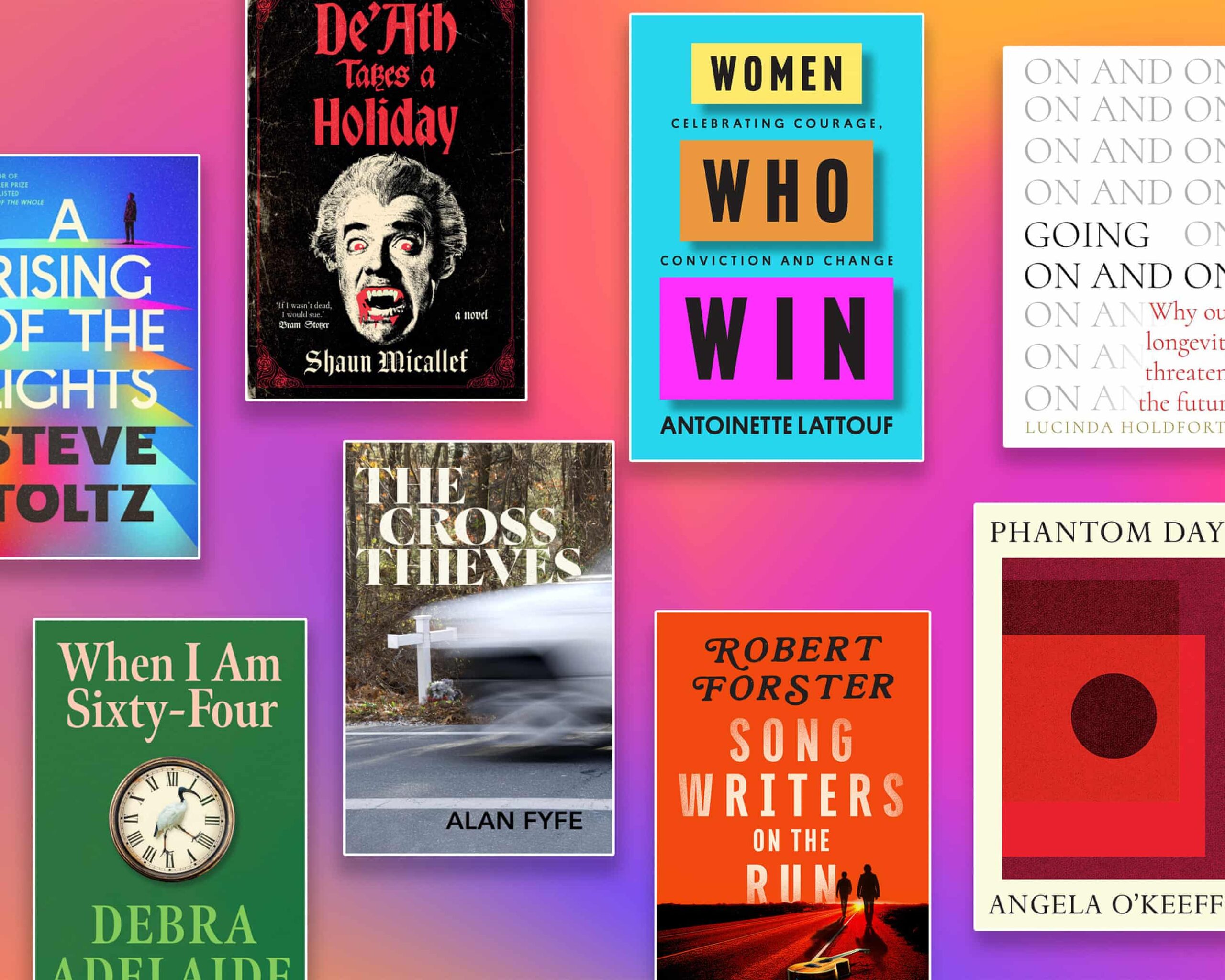
Several well-known authors are set to publish intriguing new works. Amanda Lohrey, recipient of the Miles Franklin Award, transitions from introspective narratives to cosmic themes in her upcoming novel, Capture (Text, April). Meanwhile, Chloe Hooper ventures into the realm of cold war thrillers with Lady Spy (Scribner, November). Adding to this dynamic lineup, Steve Toltz returns with a fresh dose of existentialism in A Rising of the Lights (Penguin, April).
Notably, musician and author Robert Forster makes his fiction debut with Songwriters on the Run (Penguin, May), described as a rock-and-roll road trip. Michael Winkler follows up his acclaimed debut with Griefdogg (Text, March), which tells the story of a climate scientist choosing a life as a family pet. Kris Kneen also re-enters the fiction scene with Rite of Spring (Transit Lounge, July), exploring themes of marriage and madness.
Readers can expect metafictional playfulness from Siang Lu, the reigning Miles Franklin winner, whose new work joyfully revisits The Odyssey (Useless Tse, Scribner, September). Additionally, Shaun Micallef offers a whimsical take with De’Ath Takes a Holiday (Ultimo, March), promising a tale filled with humor and absurdity.
Significant Themes: Eco-Literature and Socioeconomic Commentary
The theme of environmental concern continues to gain traction in Australian literature. Adam Ouston‘s novel Mine (Transit Lounge, August) creatively utilizes a single, sprawling sentence to depict a climate activist’s struggles in an abandoned goldmine. Johanna Bell presents The Department of the Vanishing (Transit Lounge, March), a gripping narrative that echoes contemporary anxieties about environmental degradation.
Other notable eco-themed works include The Endling by Keely Jobe (Scribe, March), which explores immaculate conception in a feminist utopia, and Mantle by Romy Ash (Ultimo, April), which examines a virulent rash as a metaphor for societal collapse. Tim Flannery co-authors A Brief History of Climate Folly (Text, August), a collection detailing humanity’s misguided attempts to control nature.
The financial struggles of modern life also feature prominently. Fiona Wright tackles this issue in Kill Your Boomers (Ultimo, March), while Jordan Prosser‘s Blue Giant (UQP, August) takes a hungover millennial on a journey to Mars. Additional contributions highlight the impact of late capitalism on personal lives, including The Ruiners by Ellena Savage (Summit, April) and Soft Serve by George Kemp (UQP, February).
The exploration of art and its influence on life remains a compelling subject. Wayne Marshall imagines Henry Lawson navigating a multiverse in Henry Goes Bush (Pan Macmillan, May), while Emily Lighezzolo tells a love story against the backdrop of an art class in Life Drawing (UQP, March). Angela O’Keeffe‘s Phantom Days (UQP, May) blurs the lines between art and narrative, offering a unique perspective on creative inspiration.
As the year unfolds, Australian literature promises to engage with complex themes, inviting readers to reflect on the nuances of existence through a rich tapestry of voices and stories.