
































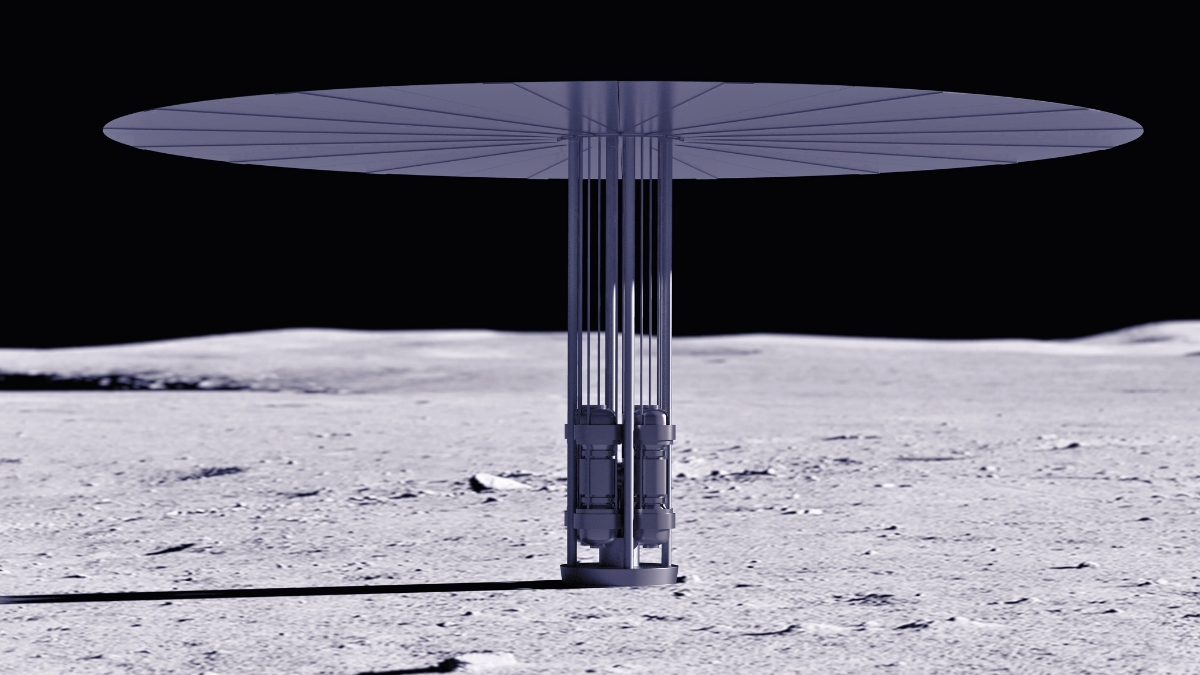
NASA, in collaboration with the US Department of Energy (DOE), has announced plans to develop a nuclear fission reactor for the Moon’s surface by 2030. This initiative aims to create a reliable energy source for lunar missions, eliminating the need for constant fuel resupply from Earth. The reactor is expected to provide continuous power for extended periods, significantly supporting future exploration efforts.
Challenges of Lunar Reactor Development
Developing a nuclear reactor that operates safely on the Moon presents unique challenges. According to NASA Administrator Jared Isaacman, this partnership will enhance the capabilities required for future space exploration. The Moon’s harsh environmental conditions complicate reactor design, particularly in managing waste heat. Unlike Earth, where cooling towers utilize water to dissipate excess energy as steam, the Moon’s near-vacuum conditions and low gravity pose significant obstacles.
Potential solutions for managing heat include solid-state conduction and liquid metal coolants, but these approaches introduce additional complexities. Furthermore, the lunar surface is covered in abrasive, electrostatically charged dust that can interfere with machinery. Any equipment designed for the Moon must be engineered to withstand this challenging environment while ensuring effective radiation shielding to protect astronauts.
Technical Progress and Future Plans
Scientists have been addressing these technical hurdles for several years, and NASA and the DOE are building on existing research. Current plans indicate a reactor capable of generating at least 40 kilowatts of power, sufficient to sustain around 30 households for a decade. While the initial design phase is complete, the transition to creating flight-ready hardware will take time, influenced by factors such as funding, regulations, and engineering requirements.
The prospect of a fission reactor on the Moon represents a significant advancement in space exploration technology. However, the recent announcement emphasizes that while the goals are ambitious, they will require continued effort and collaboration before becoming a reality. The timeline for deploying such a system remains uncertain, but the initiative marks a vital step toward sustainable lunar colonization and exploration.