Australians are grappling with significant civic challenges as the country navigates what some describe as a period of “managed fragmentation.” Since the events of September 11, 2001, successive governments have pursued policies that prioritize demographic diversity over integration, leading to an environment where shared civic obligations are increasingly unclear. Critics argue that this approach has contributed to a society where ideological divisions deepen rather than diminish.
A cohesive society relies on common civic norms and expectations for newcomers to embrace a shared moral and legal framework. In Australia, however, the expansion of differences has come without an accompanying commitment to assimilation or integration. The reliance on language management and bureaucratic controls to suppress tensions has been insufficient, leading to a landscape where ideological violence can occur without clear accountability or naming of its sources.
The government’s reluctance to address the nature of ideological threats directly has raised concerns. For instance, when Prime Minister Anthony Albanese referred to Islamist violence as a “radical perversion” of belief, critics viewed this as an evasion rather than a meaningful explanation. This reluctance to confront uncomfortable truths reflects a broader strategy of seeking political comfort at the cost of public clarity.
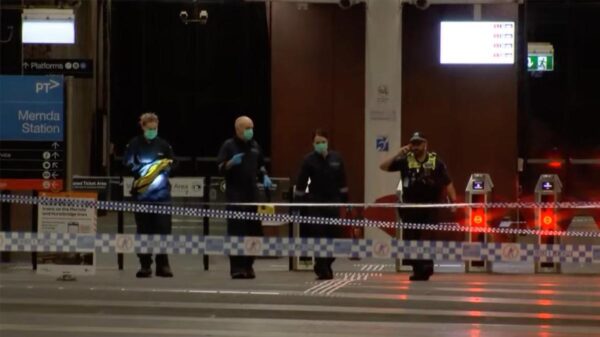
As tensions rise, public life has begun to feel the impact of this uncertainty. Events such as Christmas celebrations and New Year’s Eve fireworks have been quietly canceled, not due to explicit threats, but out of a pervasive sense of caution. The normalization of this retreat from public celebrations is troubling, as it indicates a shift in perception where normal civic engagement is increasingly viewed as a liability.
Public officials have responded with a familiar rhetoric focused on cracking down on “hate,” “antisemitism,” and “harmful speech.” However, the lack of stable legal definitions raises questions about the implications for free expression. Online platforms are flagged for intervention without clear guidelines on intent or proportionality, creating an environment where discretion can overshadow due process.
This dynamic, observed in Australia, mirrors trends seen in other countries, particularly the United Kingdom, where managerial classes often fail to confront ideological violence honestly. This leads to a scenario where dissenting voices are labeled as problematic, while the more significant issue of ideological violence remains unaddressed. Senior journalists, for instance, have incorrectly claimed that Islamic terror attacks “have nothing to do with religion,” illustrating a pattern of avoidance that hinders real discourse.
As the government under Labor’s Andrew Leigh announces plans to tighten laws targeting online hate and antisemitism, concerns are growing about the implications for ordinary citizens. The term “hate speech” risks becoming a flexible concept, subject to the interpretation of those in power. This shift poses a threat to open dialogue and democratic engagement, as it prioritizes authority over minority protection.
Australia lacks mechanisms such as recall elections or binding petitions that could empower citizens to hold their leaders accountable. In this context, persistent dissent becomes an essential tool. Writing to representatives and public broadcasters, despite often receiving generic responses, is crucial. Silence in the face of these challenges only reinforces the status quo, allowing managerial language to solidify into law.
The stakes are high. A society that fails to name its threats risks redefining its citizens as enemies. This moment calls for clarity and a reassertion of shared civic values. The time for reassurance has passed; it is now imperative for Australia to confront its challenges head-on, ensuring that its civic framework remains robust and inclusive.