



































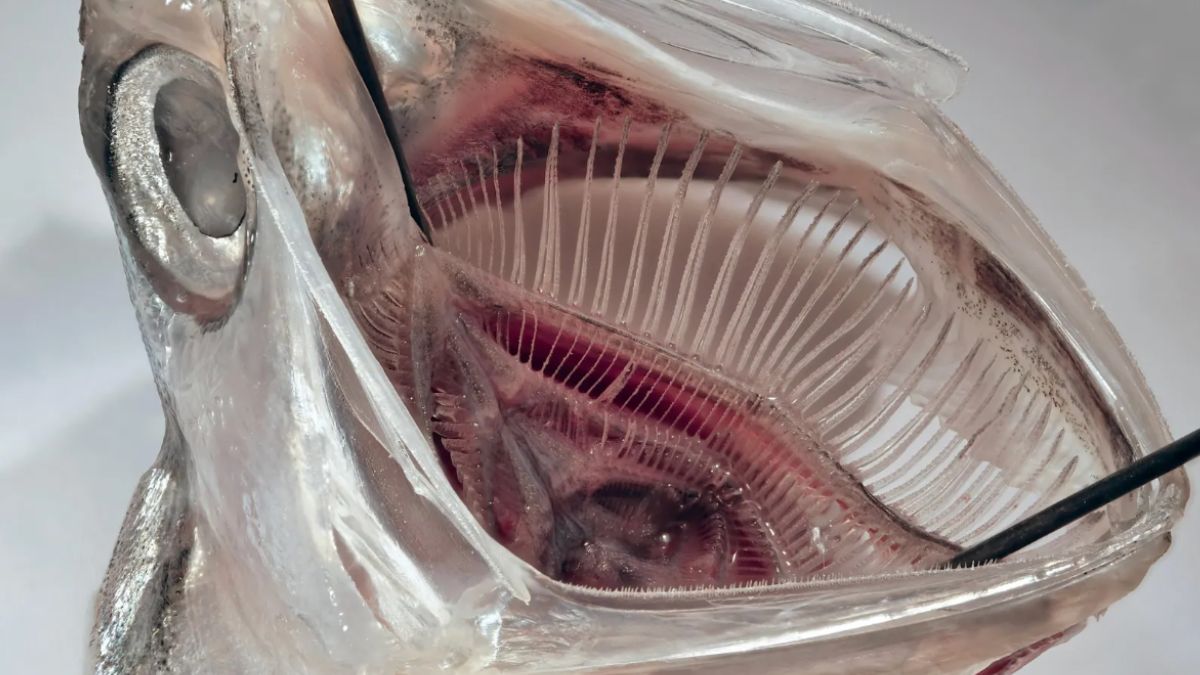
A team of scientists in Germany has developed a revolutionary filtration system that removes up to 99 percent of microplastics from laundry wastewater. Drawing inspiration from the natural feeding mechanisms of certain fish, this innovative approach aims to address a significant but often overlooked source of plastic pollution. The researchers have already filed a patent in Germany for their creation.
Every time a washing machine runs, millions of microplastic particles are released into local waterways. Some estimates suggest that up to 90 percent of the plastic found in sewage sludge originates from washing machines. This sludge is frequently repurposed in agriculture as soil or fertilizer, potentially exposing consumers to harmful pollutants through contaminated crops. While the health impacts of microplastics entering human bodies remain largely unknown, early studies on animals have raised concerns among toxicologists.
The challenge of capturing plastic pollutants before they are discharged from washing machines has been a complex issue. Existing filtration systems tend to clog easily, rendering them ineffective. To overcome this, researchers from the University of Bonn and the Fraunhofer Institute for Environmental, Safety, and Energy Technology turned to nature for a solution. They studied the feeding methods of fish such as mackerels, sardines, and anchovies, which have evolved specialized mouth structures for filtering tiny plankton from water.
According to functional morphologist Alexander Blanke from the University of Bonn, these fish utilize a funnel-shaped mouth to capture their prey while allowing clean water to flow back unimpeded. “During food intake, the water flows through the permeable funnel wall, is filtered, and the particle-free water is then released back into the environment via the gills,” Blanke explained. The fish’s natural sieve structure holds back larger particles while allowing smaller organisms to pass through.
Inspired by this evolutionary design, the research team created a cone-shaped filtration system with a mesh-like surface. Unlike traditional filters that face wastewater head-on, this new device allows plastic particles to “roll” along the edges, maximizing the surface area for filtration. The filtered plastic is then collected in a separate compartment that can be emptied every few dozen washes, similar to a dryer lint filter. This design reduces clogging by an impressive 85 percent compared to existing systems.
The issue of microplastics has gained increasing attention since the mass production of synthetic fibers, such as polyester and nylon, began in the 1950s. Recent predictions indicate that at least 5.6 million metric tons of synthetic microfibers have been released into the environment from clothing alone. Despite growing awareness of plastic pollution in various aspects of daily life, the environmental impact of our clothing remains largely unaddressed.
As society looks for solutions to mitigate plastic pollution, high-efficiency filtration systems like this one will become essential. The study detailing this innovative approach has been published in the journal npj Emerging Contaminants, marking a significant advancement in the battle against microplastics. By harnessing insights from nature, researchers are paving the way for a cleaner future.