






























UPDATE: Fossil hunters are flocking to Jan Juc on Victoria’s Surf Coast as researchers unveil new discoveries from the Oligocene epoch, dating back 25 million years. The area is buzzing with excitement as beachgoers and palaeontologists alike search for ancient relics that could reshape our understanding of evolution.
Dr. Erich Fitzgerald, senior curator of vertebrate palaeontology at Museums Victoria Research Institute, emphasizes the thrill of discovery, stating, “You can be there discovering a fossil that might change our understanding of the evolution of life on Earth.” As the powerful Southern Ocean waves erode the cliffs, beachcombers might uncover massive whale bones or shark teeth, remnants of a pivotal period in Earth’s history.
This unique geological site is drawing immense interest from both novice and seasoned fossil hunters. Prof. John Long, a well-known palaeontologist, notes, “You can find fossils of nearly all geological periods in Victoria… if you know where to look.” This accessibility is making fossil hunting an achievable adventure for families just a short drive from Melbourne.
Fossils discovered at Jan Juc include rare species such as Janjucetus dullardi, an early baleen whale, and formidable prehistoric sharks like Carcharocles angustidens, an ancestor to the fearsome megalodon. These findings highlight the area’s significance as a fossil hotspot, attracting attention from researchers and fossil enthusiasts alike.
Local fossil records reveal a rich history, showcasing ancient marine organisms and early mammals. Recently, locals unearthed fossilized claw prints estimated to be 354 million years old, providing crucial insights into the evolution of vertebrates. Palaeontologist Sally Hurst from Found a Fossil stresses the importance of community involvement in fossil discovery, saying, “Most of the time they are not found by scientists; they’re found by members of the public.”
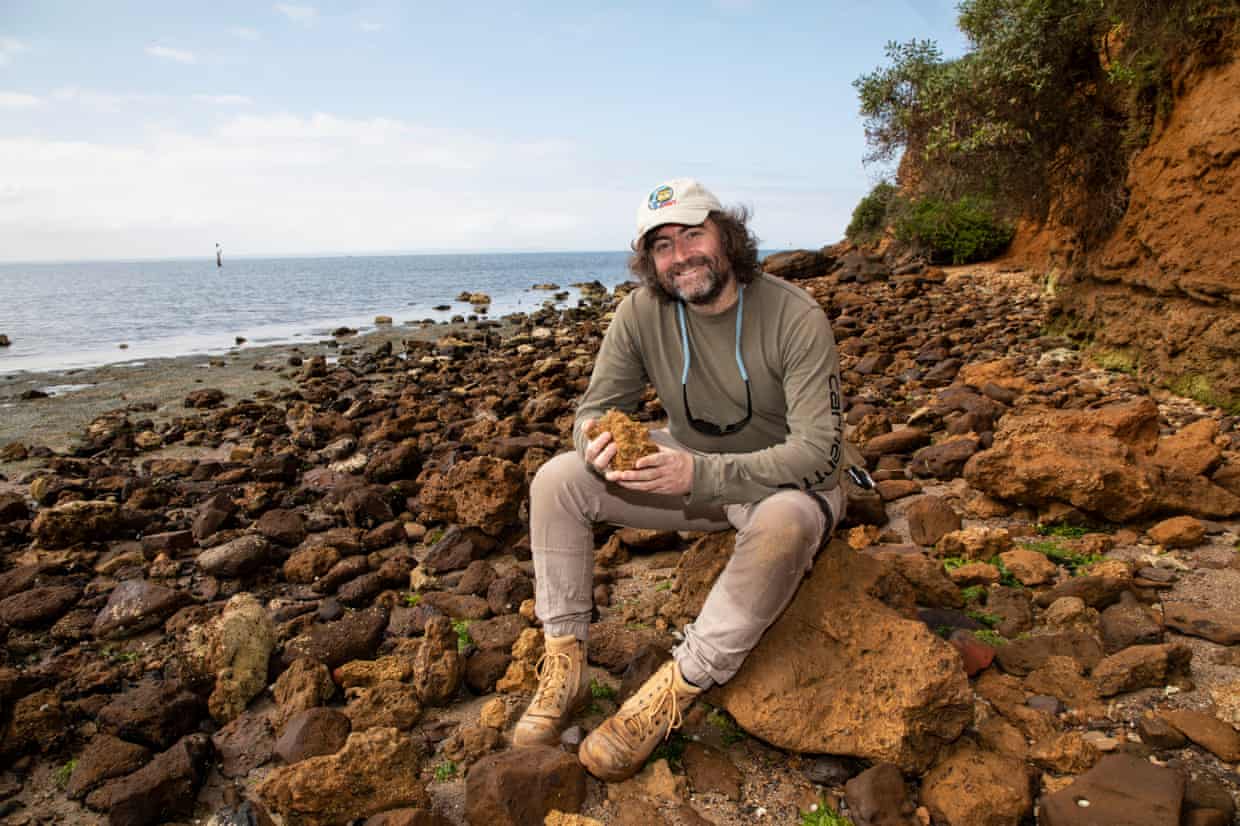
For those eager to join the hunt, local beaches like Beaumaris offer urban fossil exploration opportunities. Users can find marine fossils from 5 million to 6 million years ago in picturesque settings. Hurst advises beginners to familiarize themselves with local geological history and to look for unique textures that might indicate fossilized remains.
As fossil discoveries gain momentum, the community is encouraged to report significant finds. “We really do rely on the public doing the right thing and letting us know when something really significant has been found,” Fitzgerald explains. This collaborative effort allows scientists to preserve important fossils for future generations.
In addition to guided tours and educational initiatives, organizations like the Bunurong Environment Centre offer insights into fossil hunting regulations, ensuring that the rich history of Victoria’s coastline is respected and preserved. Visitors may only collect fossils with a permit, but they are encouraged to engage with ongoing research and exploration efforts.
As fossil hunting continues to captivate the public, the excitement surrounding discoveries at Jan Juc and beyond is palpable. This fascinating intersection of recreation and science provides an enriching experience for all involved, encouraging a deeper appreciation for the evolutionary history of life on Earth.
Stay tuned for more updates on fossil findings and community events, as researchers and enthusiasts work together to uncover the secrets of our planet’s past.