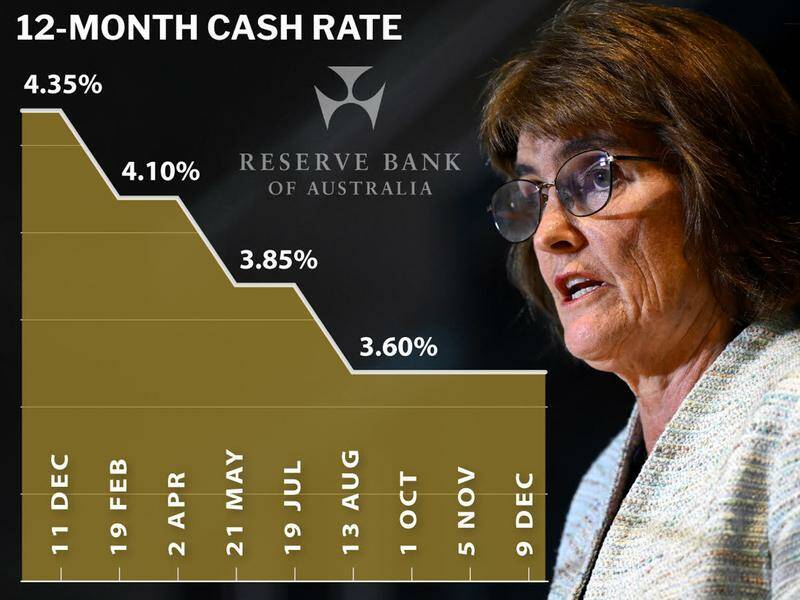
UPDATE: The Reserve Bank of Australia (RBA) has issued a stark warning that interest rate hikes could be on the horizon for 2026, contingent on upcoming inflation data due on January 28. This critical report from the Australian Bureau of Statistics will determine if price pressures are becoming entrenched in the economy, raising alarms for millions of Australians.
During a press conference following the RBA’s recent rates-setting meeting, Governor Michele Bullock highlighted a significant shift in the bank’s stance. While the board did not explicitly consider a rate hike this time, discussions focused on the conditions that would necessitate an increase in rates as early as 2026.
Two crucial factors must align to avoid these hikes: first, inflation must be proven to be influenced by temporary fluctuations rather than persistent issues, particularly in market services and new dwellings, both of which have recently outpaced expectations. Secondly, the RBA needs assurance that financial conditions remain restrictive, keeping inflation in check.
According to Sally Auld, chief economist at NAB, the RBA’s minutes reveal growing concerns about broad inflationary pressures. The board’s members are divided, with some suggesting that rising home prices and competitive banking conditions indicate easing restrictions, while others point to a gradual rise in unemployment as evidence of ongoing financial constraints.
As the RBA prepares for its next meeting in February, the market is pricing in a 25% to 33% chance of a rate hike. Traders reacted cautiously to the RBA’s hawkish comments from earlier in December, reflecting uncertainty about future monetary policy.
NAB estimates a 0.9 percent increase in the RBA’s preferred underlying inflation measure for the December quarter, a figure that could complicate the bank’s decision-making process. Meanwhile, JP Morgan analyst Tom Kennedy believes underlying inflation is tracking lower at 0.8 percent, which would not significantly challenge the RBA’s forecasts.
As Australians await vital economic indicators, the implications for homeowners and borrowers could be significant. The outcome of the inflation report will not only shape the RBA’s responses but also impact financial planning for households across the nation. Stay tuned for updates as this story develops.