































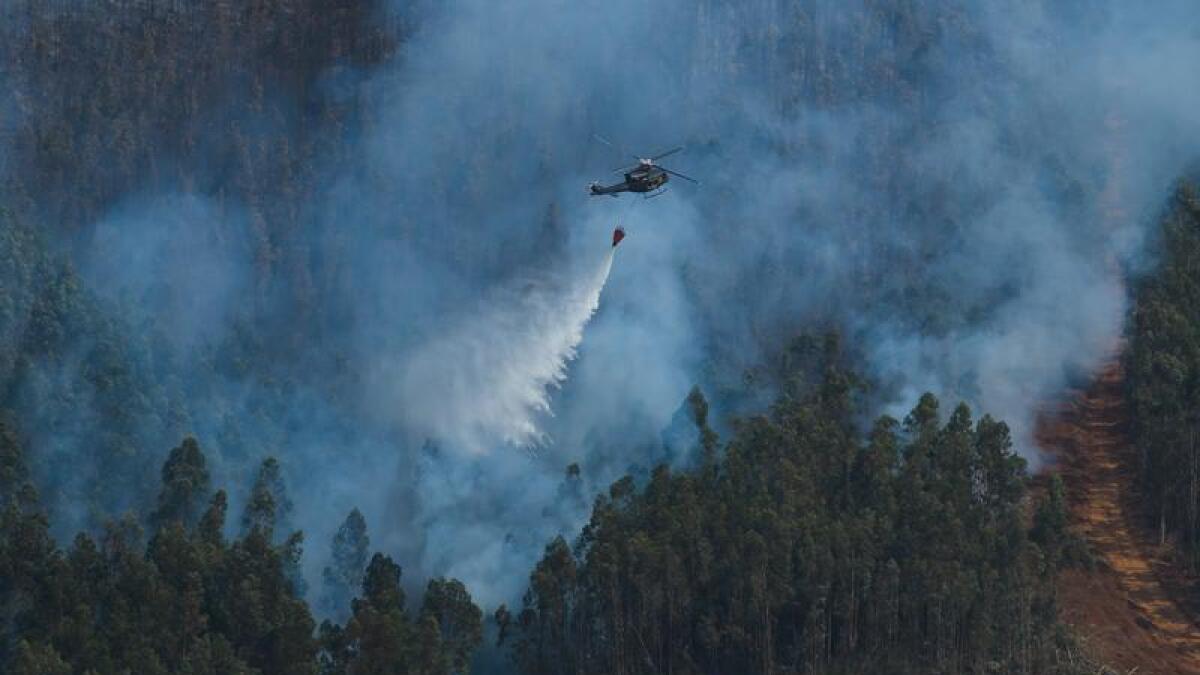
Wildfires raging across central and southern Chile have resulted in the deaths of at least 19 people, with authorities issuing severe heat warnings as temperatures are projected to soar to 37°C. The most affected area is Penco, a small coastal city located just north of the regional capital, Concepcion. Thousands of residents are now returning to their neighborhoods to sift through the debris left by the fires while firefighters work tirelessly to control the blazes.
By late Monday afternoon, Chile’s National Forestry Corporation, known as CONAF, reported that firefighters were battling 34 active fires across the country. The most significant fires are located in the Nuble and Bio Bio regions, prompting President Gabriel Boric to declare a state of catastrophe. So far, over 35,000 hectares have been devastated, with one fire surpassing 14,000 hectares on the outskirts of Concepcion.
Impact on Local Communities
The destruction is extensive, with 325 homes confirmed destroyed and an additional 1,100 properties currently under evaluation. The flames have left many families displaced and searching for shelter. As firefighters continue their efforts, the situation remains dire, exacerbated by extreme weather conditions.
Miguel Castillo, a professor at the University of Chile’s Forest Fire Laboratory, highlighted several factors contributing to the ferocity of these fires. He noted that the region has experienced several consecutive days with temperatures exceeding 30 degrees Celsius, which is unusual for Concepcion. “One or two days are common, but not four or five,” Castillo explained.
He further emphasized the challenges faced by firefighters, stating, “Once fires reach a certain size, they become significantly harder to control. The strong, shifting winds only complicate matters.” Castillo described the conditions as creating an “uncontrollable monster,” where the risk of multiple fires merging before they can be contained poses a severe threat to the surrounding communities.
Looking Ahead
With the forecast indicating continued high temperatures, concerns mount that new fires could ignite across the region. As the situation evolves, local authorities are prioritizing emergency responses and resource allocation to prevent further loss of life and property. The ongoing crisis underscores the urgent need for effective wildfire management strategies in the face of changing climate conditions.
As Chile grapples with these devastating fires, the resilience of its communities is being tested. The commitment of firefighters and emergency services remains crucial as they work to protect lives and restore order amidst this natural disaster.