


























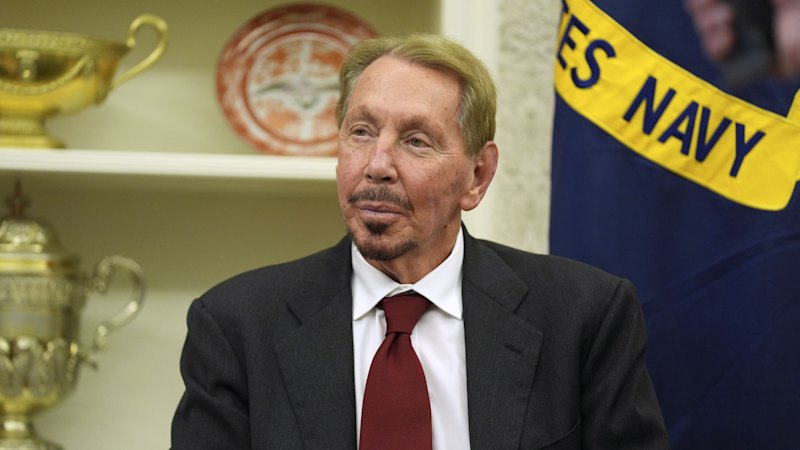
In a year marked by rapid technological advancements and shifting fortunes, Larry Ellison has emerged as the most significant figure in the tech industry. Unlike Elon Musk, who many anticipated would dominate headlines, Ellison’s influence has permeated various major business narratives throughout 2025. As co-founder and chairman of Oracle, the 81-year-old has played a pivotal role in the artificial intelligence landscape and has seen his wealth fluctuate dramatically alongside Oracle’s stock performance.
Ellison’s prominence began with the launch of the ambitious Stargate project, announced on January 21, 2025. On this day, just after Donald Trump‘s inauguration, Ellison joined forces with tech leaders such as Sam Altman of OpenAI and Masayoshi Son of SoftBank to reveal a $500 billion initiative aimed at building AI infrastructure. The announcement promised to create 100,000 jobs, but skeptics viewed the funding as overly ambitious.
Throughout the year, Oracle has aggressively expanded its data centre operations, focusing on AI capabilities. This rapid build-out, however, has led to negative cash flow for the first time since the early 1990s, a significant shift for a company historically known for its financial stability. Despite past hesitations regarding cloud computing, Ellison has repositioned himself as a key player in the AI sector.
A major turning point for Oracle occurred in the summer when OpenAI entered into a deal worth approximately $300 billion to utilize Oracle’s computing capabilities. This partnership solidified OpenAI’s status as Oracle’s largest customer and sent investor confidence soaring. On September 15, 2025, news of the deal propelled Ellison’s net worth to $388 billion, marking an extraordinary one-day increase of $89 billion—the largest recorded by the Bloomberg Billionaires Index at that time. This surge briefly made him the richest person globally, surpassing Musk.
Ellison’s financial ascent aligned with his son David Ellison‘s ambitions in the entertainment industry. In August, David’s company, Skydance Media, secured control of Paramount, a move substantially financed by his father. Shortly thereafter, David sought to acquire Warner Bros. Discovery, home to iconic franchises such as Batman and Harry Potter. Larry Ellison offered to back this venture financially and personally approached Warner Bros. executives to advocate for the acquisition.
Despite the ambitious bid, Warner Bros. opted for a more lucrative offer from Netflix Inc.. In response, David Ellison submitted a hostile offer reminiscent of his father’s prior acquisitions. The rejection of this proposal raised concerns about the ability of Skydance to fulfill the equity requirements. To address these worries, Larry Ellison agreed to personally guarantee $40.4 billion in financing, a considerable commitment even by his standards.
As the year progressed, challenges emerged for Ellison. His wealth has diminished alongside a decline in Oracle’s stock price, which has raised investor skepticism regarding the company’s high debt levels and its reliance on AI investments. Currently, Ellison ranks as the fifth-richest person globally, with a net worth nearing $250 billion. While this provides him with ample assets to meet his financial commitments, the concentration of his wealth in Oracle shares poses potential liquidity challenges should he need to access cash quickly.
Historically, Ellison has leveraged his wealth for personal acquisitions, including luxury items and real estate. However, his focus has shifted significantly towards the competitive AI market and the uncertain future of the media venture led by his son. As 2025 unfolds, Ellison stands at a critical intersection of technology and entertainment, navigating a landscape fraught with both opportunity and risk.