





















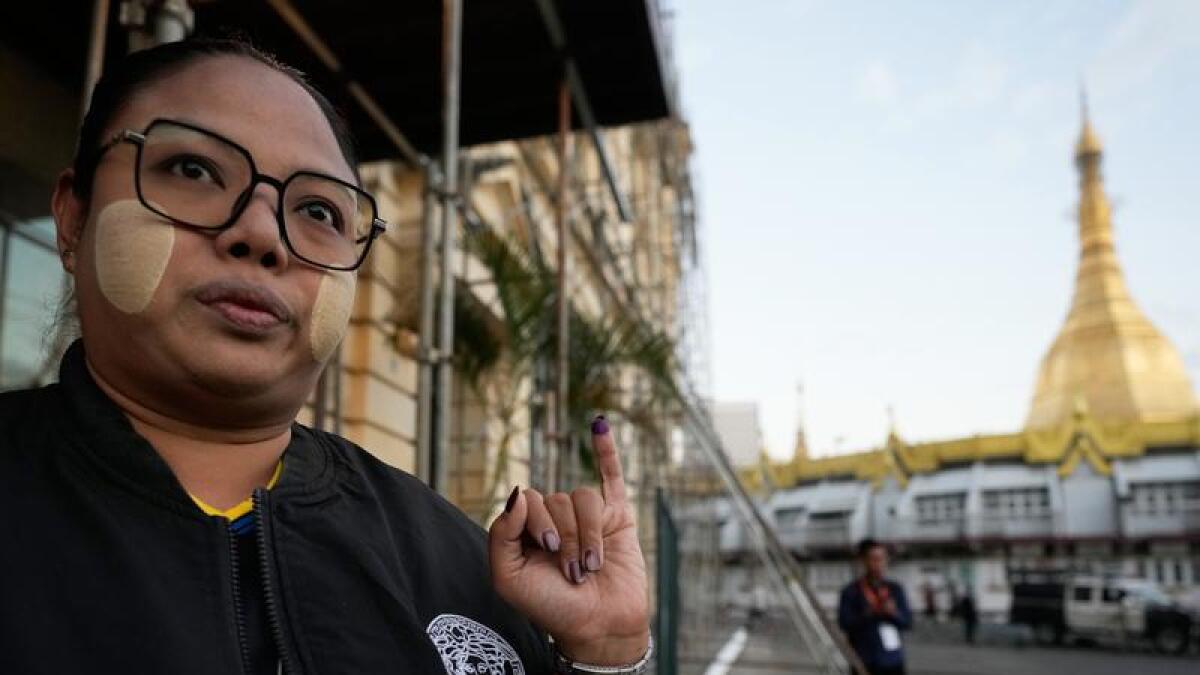
Voter turnout in Myanmar’s recent elections was markedly low, raising concerns about the legitimacy of the process. The military junta, which has faced widespread condemnation for its crackdown on pro-democracy protests, touted the three-phase election as a means to bring political stability to the country. However, various international observers, including the United Nations and human rights organizations, criticized the elections as neither free nor fair, citing the exclusion of anti-junta political parties and the prohibition on criticizing the polls.
The military’s grip on power follows the ousting of Nobel Peace Prize winner Aung San Suu Kyi and her National League for Democracy (NLD), which won a significant victory in the 2020 elections. Since the coup, Suu Kyi remains detained, and the NLD has been dissolved. The Union Solidarity and Development Party (USDP), aligned with the military and led by retired generals, is expected to dominate the elections, facing only minimal competition.
Lalita Hanwong, a Myanmar expert at Kasetsart University in Thailand, remarked, “The junta’s election is designed to prolong the military’s power of slavery over people.” According to her, the USDP and its allies are poised to form the next government.
Initial reports indicate that voter turnout for this election was significantly lower than during the 2020 elections. Residents from various cities across Myanmar have noted the lack of enthusiasm among the electorate. The upcoming rounds of voting are scheduled for January 11 and January 25, covering 265 of Myanmar’s 330 townships, although the junta does not maintain complete control over all areas.
In a heavily guarded polling station in the capital city of Naypyitaw, junta chief Min Aung Hlaing cast his vote while dressed in civilian clothes. State media, including MRTV, broadcast footage of him displaying his ink-stained finger, a requirement to prevent multiple voting. When asked by reporters if he harbored ambitions to become president, Hlaing deflected, stating that he was not the leader of any political party and emphasized the parliamentary process for electing a president.
The UN’s special envoy for human rights in Myanmar, Tom Andrews, declared on election day that the event does not offer a pathway out of the country’s ongoing crisis and should be firmly rejected. In response to international criticism, junta spokesman Zaw Min Tun acknowledged dissent but insisted that the elections would lead to political stability, expressing a belief in a better future for Myanmar.
As the political landscape continues to evolve, the implications of these elections remain uncertain, with many citizens expressing skepticism about the military’s promises of stability and governance.