

























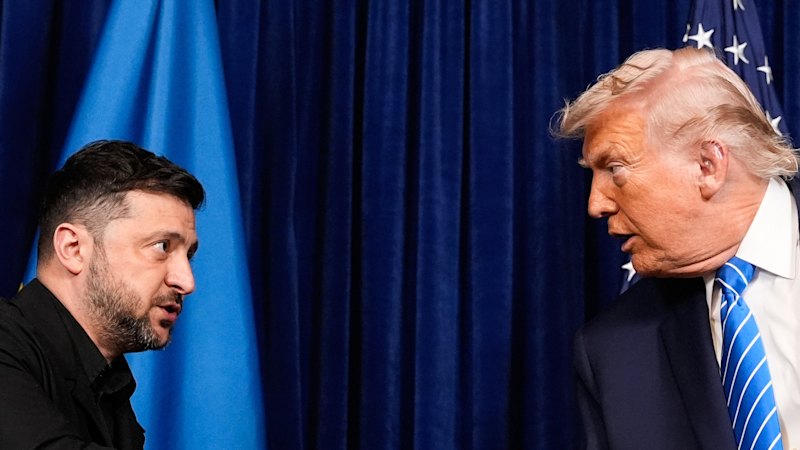
Ukrainian President Volodymyr Zelensky has expressed a desire for a long-term security guarantee from the United States, proposing a term as extensive as 50 years to deter future threats from Russia. In a recent audio message to reporters, Zelensky indicated that the current discussions around a peace plan involve a 15-year security agreement, with the option for extension, but he is advocating for a more prolonged commitment.
During talks with former President Donald Trump at his Mar-a-Lago resort in Florida on December 17, 2023, Zelensky articulated his vision for a historic agreement that would enhance Ukraine’s defense capabilities. “I would like the guarantee to be much longer,” he stated, adding that a formal agreement backed by Congress could effectively combine with pledges from the so-called Coalition of the Willing to bolster Ukraine’s security.
Zelensky outlined that European Union membership would also play a crucial role in the proposed security arrangements. He emphasized the need for comprehensive monitoring of any ceasefire, which partners would assist with through technical oversight and presence. Both negotiating teams have acknowledged the necessity for strong US security guarantees.
The discussions come in the wake of a prolonged and intense conflict, with Zelensky highlighting that while significant progress was made in discussions with Trump, key issues remain unresolved. These include the status of the eastern territories of Ukraine and the future of the Zaporizhzhia Nuclear Power Plant, currently under Russian occupation.
No consensus was achieved regarding Russian President Vladimir Putin’s demand for Ukraine to withdraw from the Donbas region, which has been partially occupied by Russian forces. Zelensky noted concerns over the lack of clarity surrounding US proposals for a demilitarized zone or a free economic zone in eastern Ukraine, particularly regarding territorial control.
Trump expressed optimism that a deal is “getting a lot closer,” although he acknowledged that finalizing an agreement might take several weeks. Zelensky stated that the peace plan is “90 percent agreed,” indicating significant movement toward resolution.
Following their meeting, Trump reportedly held “very productive” phone talks with Putin, with plans for another call soon, according to Kremlin spokesman Dmitry Peskov. Zelensky has called for a meeting with European partners and Trump in January, followed by discussions with Russian officials.
French President Emmanuel Macron announced that the Coalition of the Willing would convene in early January to evaluate ongoing support for Ukraine. After nearly a year of US-led efforts to negotiate peace, Trump has indicated he would only meet with the leaders of Ukraine and Russia again if an agreement is imminent.
Zelensky reiterated that Ukraine is open to any format of negotiations with Russia but emphasized the need for Putin to demonstrate a commitment to peace by halting attacks on Ukrainian territory. “These actions do not coincide with the peaceful vocabulary that he uses in dialogue with the US president,” Zelensky remarked, highlighting the ongoing tension between rhetoric and action.
As negotiations evolve, Ukrainian officials continue to revise a previously proposed 28-point draft plan, now condensed to 20 points. Moscow has signaled its rejection of certain elements, such as stipulations regarding Ukraine’s military post-conflict and demands for guarantees against NATO’s eastward expansion. Russia seeks clarity on the potential removal of sanctions and the future of its assets frozen in the West.
The ongoing discussions and the forthcoming meetings in January hold significant implications for the future stability of Ukraine and its relations with both the US and Russia, as the conflict enters a crucial phase.