



































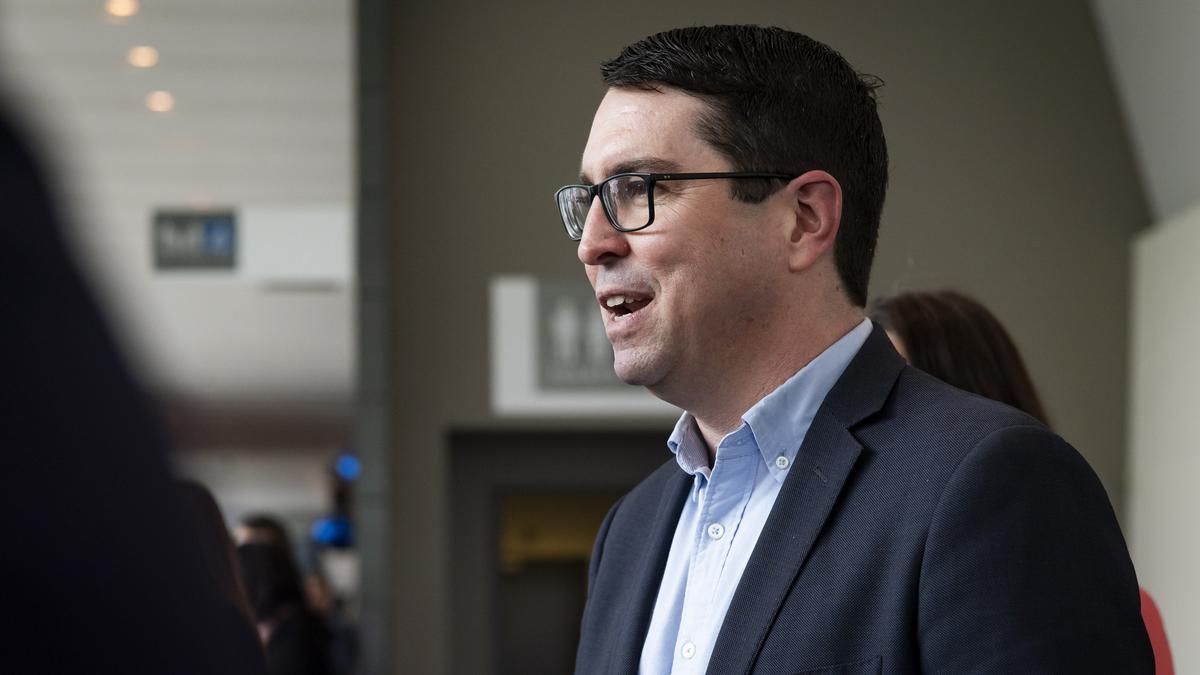
In response to escalating concerns over anti-Semitism and recent protests, Labor MP Patrick Gorman expressed his disgust at certain demonstrations while supporting the Australian government’s stance on handling these issues. Gorman, who serves as the Assistant Minister to the Prime Minister, defended Anthony Albanese’s decision not to initiate a Royal Commission into the recent Bondi terrorist attack.
Protests and Security Concerns
As more arrests took place in Perth and Canberra, Gorman emphasized the urgent need for action against anti-Semitism. He stated that waiting for a Royal Commission is not an option, declaring, “We need unity and action. I don’t want division and delay.” He firmly believes that the government’s approach is the right course amid rising tensions.
Gorman’s comments followed the arrest of a man from Yangebup, who was found in possession of firearms and flags associated with Hamas and Hezbollah. This individual has been accused of praising the Bondi attackers, prompting Gorman to describe the situation as “truly shocking” and commend the efforts of WA Police.
In light of a separate incident involving a man charged for making a Nazi salute in a Canberra shopping centre and the firebombing of a rabbi’s car in Melbourne, Gorman reiterated that there is no place for anti-Semitism in Australia. “Those who are doing this will be found and will be punished in accordance with the law,” he asserted, while also urging those making excuses for such behaviour to reconsider their views.
Calls for Action and Legislative Changes
While Gorman expressed support for a temporary ban on protests in New South Wales, he maintained that it is up to state governments to decide on similar measures in other regions. He described some of the protests in Western Australia as “inappropriate, disgusting, and completely unhelpful for any form of social cohesion.” He did acknowledge that he is not fully aware of every protest, including those against Iran’s bombing of Gaza, where controversial slogans have emerged.
“Some of the chants that have been made… have disgusted me,” Gorman reflected. He noted his personal experience of hearing chants outside his electorate office in Inglewood, which he found deeply troubling. Gorman called for a national priority to address hate speech, recognizing that while Western Australia has seen less hate activity than regions like Sydney and Melbourne, it is not entirely free from these issues.
Looking ahead, Gorman indicated that the Federal Parliament might need to cut its summer break short to expedite the passage of hate speech laws and empower the Immigration Minister to deport extremist preachers. “We are drafting laws right now,” he stated, emphasizing the need for prompt action.
As he defended the Prime Minister’s response to the Bondi attack, Gorman acknowledged the varied public reactions, including booing from a memorial service in Sydney. “When Australia faces the most horrific terrorist attack on Australian soil, there is obviously going to be a range of responses,” he explained, highlighting the government’s commitment to unity and decisive action.
In conclusion, Gorman’s remarks underscore a critical period for Australia as it grapples with issues of hate speech and public safety in the wake of terror attacks and rising anti-Semitism. His calls for action reflect a broader political will to ensure that the nation confronts these challenges head-on.
