




















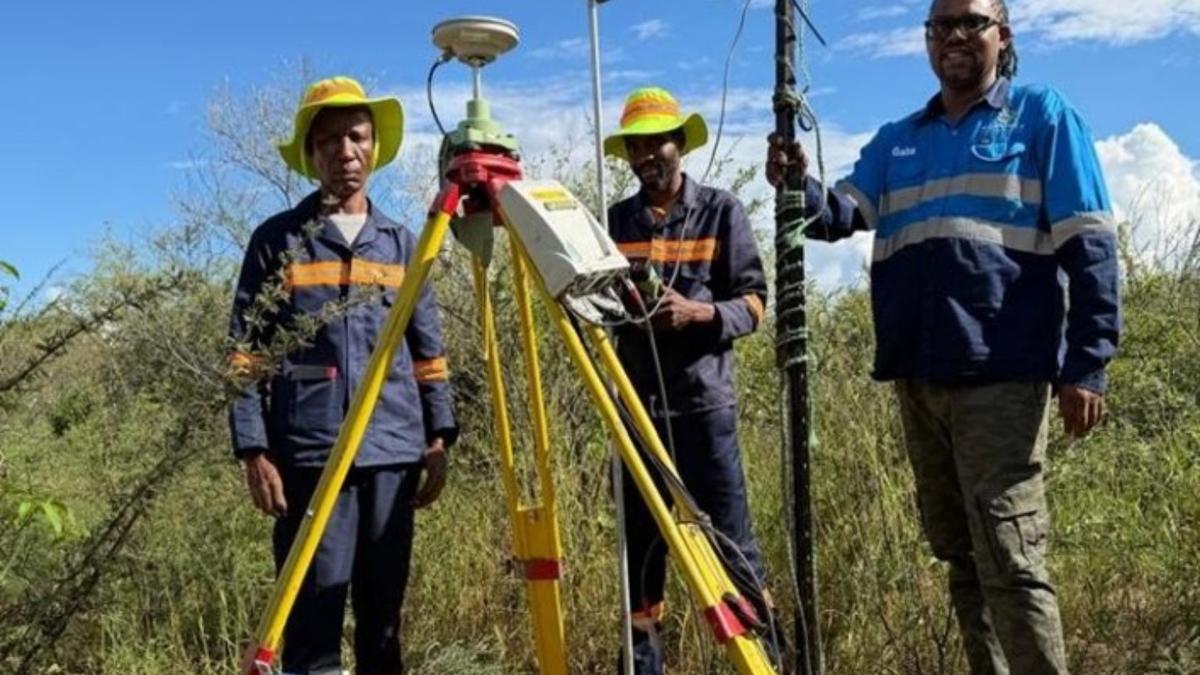
Noronex has initiated a ground gravity survey at its Cgae Cgae copper-silver project in northern Botswana. This follows the completion of initial drilling efforts in the southern section of the project. The gravity survey aims to investigate the stratigraphy and structures of the Kalahari Copper Belt, potentially revealing significant low-grade copper deposits within the geological framework.
By mapping density contrasts and identifying concealed structures, the survey is expected to enhance geological models and direct the next phase of drilling targets within this expansive project. Noronex recently concluded a scout reverse circulation (RC) drilling program in the southern area, which included 35 holes drilled over a total of 2,655 metres. This program was primarily designed to assess lithology, structure, alteration, and background geochemistry in the basement rocks rather than to evaluate immediate economic mineralisation. The company is currently awaiting assay results and plans to provide updates once all data have been analyzed.
Large sections of the Cgae Cgae license area are covered by Kalahari sediments, which restrict surface mapping. This makes geophysical tools, such as gravity surveys, crucial for imaging subsurface features. Noronex’s upcoming gravity survey is part of a staged strategy across both the northern and southern blocks of its licenses. The region has experienced limited modern exploration compared to other areas within the Kalahari Copper Belt.
This survey is financially supported through the Cgae Cgae earn-in agreement with base metals leader South32. Under this agreement, South32 can acquire a 60 percent stake in the extensive projects in Botswana and Namibia by investing $4 million in exploration annually for a minimum of five years. During this period, Noronex will retain operational control.
In addition to its activities in Botswana, Noronex has also launched its first drilling program for uranium at the Etango North project in Namibia. Located approximately 32 kilometres east-northeast of Swakopmund, Etango North is positioned within a highly prospective geological corridor that includes Bannerman Resources’ significant 207-million-pound Etango project. This uranium hotspot is also adjacent to the Rössing and Husab uranium mines, which are further northeast and are among the largest uranium mines globally.
The Rössing project has produced over 140,000 tonnes of yellowcake since its inception in 1976 until 2022. As Noronex rolls out gravity stations across its northern blocks in Botswana while awaiting assay results from its southern scout holes, the company is systematically exploring the Kalahari region. This area is already home to many of the world’s leading copper producers, and Noronex is keen to discover the next significant copper-silver system that may lie below the surface.
With its methodical approach, Noronex continues to navigate the complexities of exploration in a region rich with potential, aiming to uncover valuable mineral resources that could reshape its future.