



































Samsung has positioned itself as a formidable player in the audio market, announcing a new lineup of soundbars and wireless speakers at CES 2026, following its acquisition of Masimo’s Consumer Audio business through its Harman subsidiary. The integration of renowned brands like Bowers & Wilkins, Denon, and Marantz underscores Samsung’s ambition to transform audio from an accessory to a strategic pillar of its consumer electronics ecosystem.
At CES 2026, Samsung will present an innovative selection of audio products alongside its next generation of televisions. This shift reflects a growing consumer demand for premium sound experiences that match high-quality visual displays. Hun Lee, Executive Vice President of Visual Display Business at Samsung Electronics, emphasized the company’s commitment to advancing home audio technology. “For more than a decade, Samsung has shaped the evolution of home audio through advanced acoustics, intelligent features, and thoughtful design,” Lee stated. “We’re continuing that legacy with next-generation sound devices designed to deliver rich, expressive performance for any space and moment.”
New Innovations in Sound Technology
The 2026 lineup features significant enhancements, particularly in Samsung’s Q-Series soundbars. The new models are designed with AI-driven audio processing capabilities, allowing them to adapt to room size, layout, and even the number of occupants. This technology aims to create a more immersive audio experience without the complexity typically associated with traditional home theater systems.
Samsung’s flagship soundbar for 2026, the HW-Q990H, replaces the previous HW-Q990F model. Both soundbars feature an 11.1.4-channel configuration, which includes a main bar, rear speakers, and a subwoofer that employs dual 8-inch drivers to deliver impressive low-end sound. The 2026 model incorporates upgraded AI software that enhances vertical sound elevation and anchors dialogue to the center of the screen, minimizing the disconnection often felt between audio and visuals. Furthermore, refined auto volume controls aim to maintain consistent audio levels across various content sources.
For those who prefer an all-in-one solution, Samsung is introducing the HW-Q990H soundbar, designed for ease of use without sacrificing sound quality. This model features a 7.1.2-channel design with 13 integrated drivers, including nine wide-range speakers, eliminating the need for separate surround speakers or a dedicated subwoofer. Its innovative Quad Bass Woofer system provides rich low-frequency performance, ensuring powerful sound from a single unit.
Expanding the Wireless Speaker Range
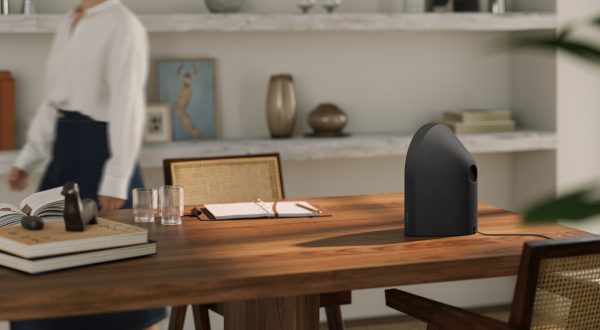
In addition to soundbars, Samsung is launching two new models in its wireless speaker lineup for 2026: the Music Studio 7 and Music Studio 5. These speakers are designed to integrate seamlessly into Samsung’s broader audio ecosystem, focusing on refined sound quality rather than sheer volume.
The Music Studio 7 (LS70H) stands out as the more advanced option, featuring a 3.1.1-channel configuration with drivers that create immersive sound from one enclosure. Key technologies include Audio Lab Pattern Control for improved clarity and AI Dynamic Bass Control, which ensures deep, controlled low frequencies while supporting high-resolution audio formats up to 24-bit/96kHz.
Conversely, the more compact Music Studio 5 (LS50H) provides a versatile yet unobtrusive audio solution, featuring a tuned 4-inch woofer and dual tweeters for balanced performance. This model supports a range of connectivity options, including Wi-Fi casting and Bluetooth, making it suitable for modern home environments.
Samsung’s Q-Symphony technology has also evolved, now allowing up to five audio devices to connect to a single Samsung TV. This development enables a broader soundstage and immersive audio layouts while dynamically calibrating output based on room conditions.
The expansion of the SmartThings platform further enhances the user experience by serving as a central hub for voice assistant integration and system control. This allows for hands-free adjustments to playback and volume settings, streamlining the user experience.
As LG Electronics continues to invest heavily in celebrity endorsements and partnerships with struggling audio brands, Samsung is quietly consolidating its position as a leader in the audio industry. The acquisition of Harman grants Samsung access to elite acoustic engineering and advanced digital signal processing (DSP) technologies, positioning it well to reshape the audio landscape in the coming years.
Samsung’s commitment to audio innovation is evident in its 2026 product lineup, underscoring the company’s vision to integrate sound as a vital component of its consumer electronics offerings.