

































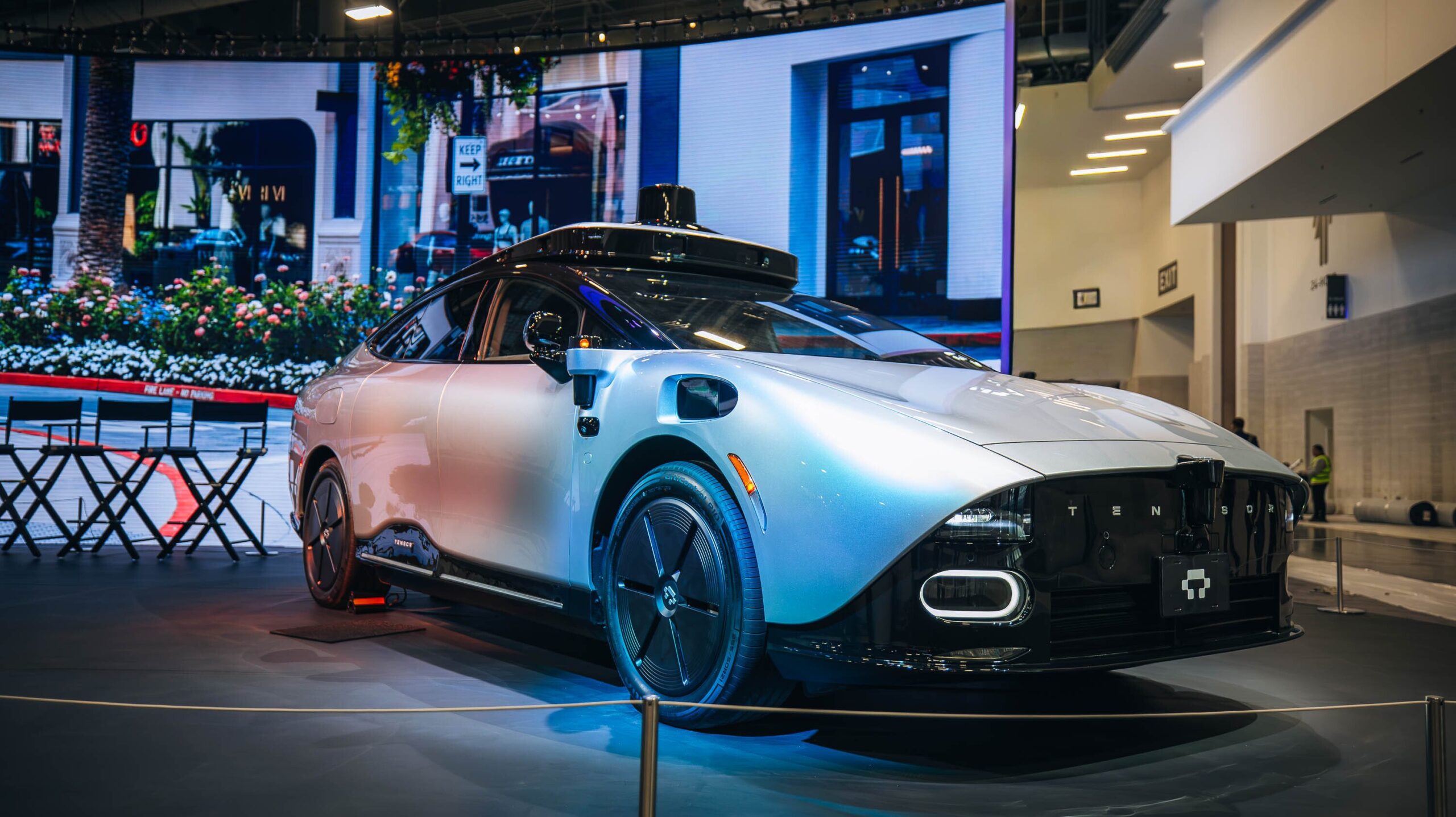
Tensor Auto introduced its innovative Robocar at the Consumer Electronics Show (CES) 2026, showcasing a luxurious electric vehicle designed for fully autonomous driving. This unveiling, which occurred just a day before the event officially opened, highlights Tensor’s commitment to creating a vehicle from the ground up for Level 4 autonomy, diverging from the retrofitting approach adopted by other companies such as Waymo.
According to Amy Luca, Tensor’s chief marketing officer, the distinction of designing a vehicle specifically for autonomy is crucial. “This wasn’t built by taking an existing car and adding autonomy,” Luca stated. “It was designed as an autonomous vehicle first, and then designed to be something you’d actually want to own.” This foundational philosophy positions the Robocar not just as a mode of transport, but as an intelligent vehicle capable of interacting with its owner.
Design and Features of the Robocar
The Robocar features a sleek, silver sedan-like body equipped with a low, aerodynamic profile and a halo-style LiDAR unit atop its roof. Its futuristic design is complemented by camera-based side mirrors, integrated lighting, and subtle black accents, giving it a modern yet understated appearance. Internally, the vehicle boasts an impressive array of sensors, including five LiDAR units, over a dozen cameras, radar systems, and more than 100 sensors in total. This advanced technology processes data on-board using Nvidia hardware, highlighting Tensor’s commitment to privacy by opting for an internal hard drive instead of relying solely on cloud services.
The Robocar’s interior is designed to support both manual and fully autonomous driving. This is facilitated by a foldable steering wheel, developed in partnership with Autoliv, which retracts completely in autonomous mode to create a spacious cabin. However, in manual mode, it functions like a conventional steering wheel. “People still want the option to drive,” Luca explained. “We didn’t want autonomy to mean giving that up.”
The luxury aspect of the Robocar is evident, featuring massage seats, a Dolby Atmos sound system, large displays, and a spacious layout that provides a lounge-like atmosphere. While Tensor has not disclosed specific pricing details, Luca indicated that the vehicle will target the high end of the market, reflecting both its premium features and long-term goals for autonomy.
Market Potential and Future Plans
Production of the Robocar is anticipated to ramp up in the second half of 2026. The vehicle aims to capture a niche market for high-end, privately owned autonomous vehicles, distinguishing itself from the traditional robotaxi model. Tensor’s background in robotaxi development informs the design and functionality of the Robocar, ensuring it meets the demands of individual owners.
As CES 2026 continues, the overall impression of Tensor’s Robocar is one of completeness and sophistication, showcasing the potential for the future of personal autonomous vehicles. The event serves as a platform for the latest innovations in technology, and the Robocar stands out as a significant development in the automotive industry. For ongoing updates and insights from CES 2026, visit the Mashable CES 2026 hub, where journalists provide real-time coverage from the event.