
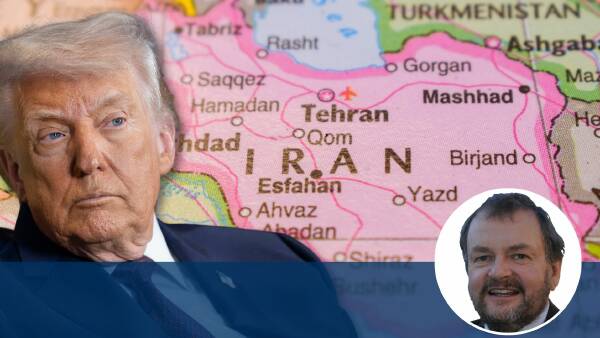



















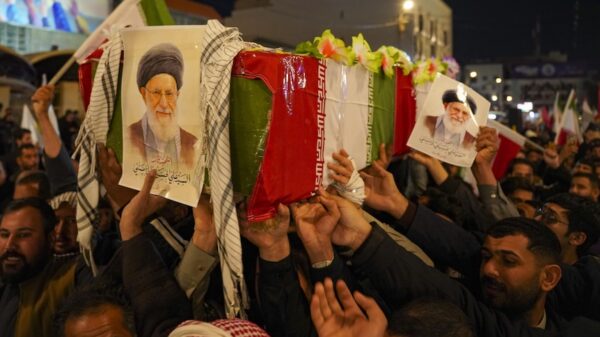

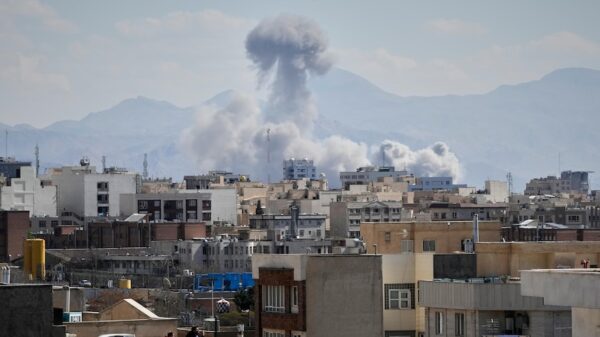



Recent assessments from US intelligence regarding Iran’s internal dynamics have sparked significant concerns, echoing previous misjudgments seen in the lead-up to conflicts in Ukraine and elsewhere. Analysts question whether the United States has accurately gauged Iran’s political landscape and the potential for uprisings against the regime led by Ali Khamenei.
Historical Context of US Intelligence Failures
Historically, the US has faced criticism for its intelligence assessments in various global conflicts. The Korean War (1950-1953) serves as a notable example, where US forces miscalculated the resolve of North Korean troops and the backing they received from the Soviet Union and China. This misjudgment led to a protracted conflict that ended with a stalemate.
Similarly, during the Vietnam War, US military intelligence consistently underestimated the North Vietnamese forces’ morale and domestic support. Despite winning numerous battles, the US ultimately lost the war due to flawed strategic evaluations. In Afghanistan, a two-decade military presence concluded with the return of the Taliban, revealing significant gaps in understanding the on-ground realities.
In the early 1990s, during the Gulf War, President George H. W. Bush encouraged Iraqis to rise against Saddam Hussein, only to witness the brutal suppression of uprisings by Iraqi security forces. This pattern of misreading adversaries raises questions about current intelligence regarding Iran.
Current Assessment of Iran’s Political Climate
As unrest continues in Iran, many observers draw parallels to the miscalculations seen in Ukraine. In the context of the Russian invasion, US intelligence made critical errors, including the belief that Ukraine would quickly succumb to superior Russian military power. Volodymyr Zelenskyy, the Ukrainian President, encapsulated the misalignment in expectations when he famously requested ammunition instead of evacuation during the initial days of the invasion. This response highlighted the underestimation of Ukrainian resilience and tactical ingenuity.
In light of these historical precedents, there are concerns that the US may similarly misjudge the Iranian populace’s capacity for resistance against a repressive regime. There is a prevailing notion that the Iranian people would rise up against their government; however, many analysts argue that such a change would require a well-organized and well-resourced opposition, which currently does not exist.
The complexities surrounding US-Iran relations are further compounded by the legacy of past interventions, notably the CIA-backed coup in 1953 that reinstated the Shah of Iran. This intervention ultimately fostered resentment that contributed to the Islamic Revolution of 1979, leading to today’s authoritarian regime.
The historical record suggests that US intelligence often operates with a sense of certainty that may not align with the realities on the ground. In the current geopolitical climate, particularly with the evolving situation in Iran, it is crucial for policymakers to reassess their strategies and avoid repeating past mistakes.
As the international community observes the unfolding events in Iran, there is a pressing need for a nuanced understanding of the region’s dynamics. Rigidly enforced sanctions may not yield the desired outcomes, particularly in a global landscape where countries like China and India could undermine such measures.
Moving forward, it is imperative that the US and its allies engage with a more comprehensive approach that considers the historical context of their interventions and the intricate realities of Iranian society. Only through a thorough understanding can they hope to foster a stable and just resolution to the ongoing crisis.