
































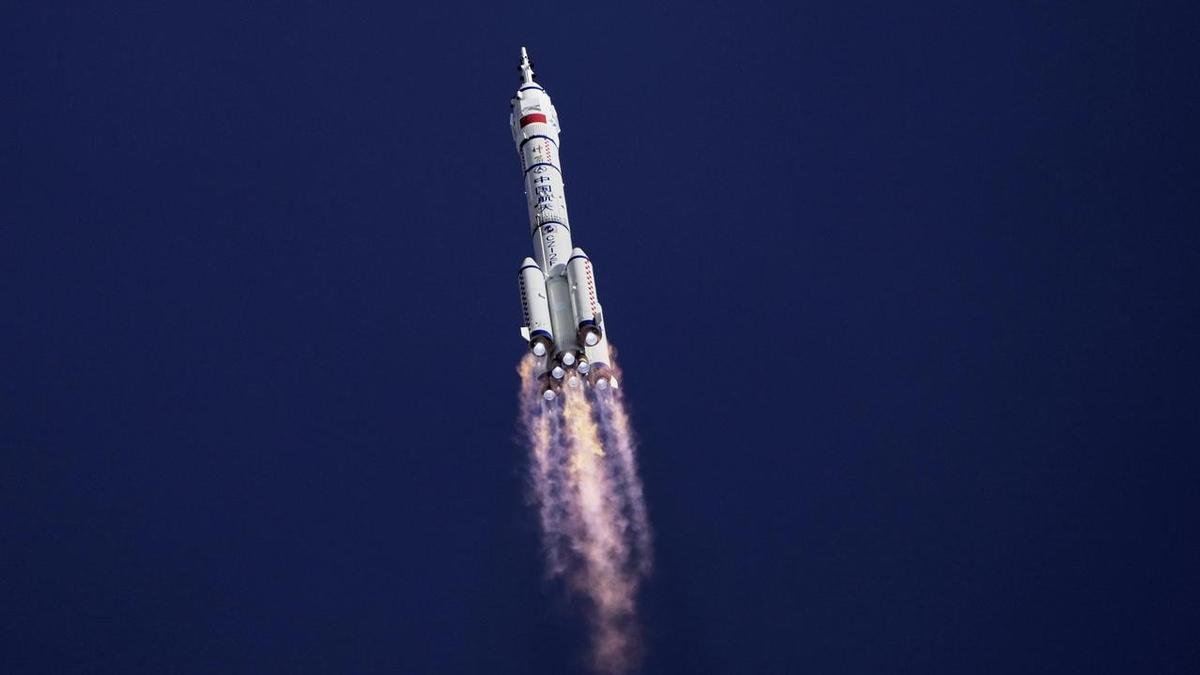
The damaged return capsule of China’s Shenzhou 20 spacecraft has successfully landed back on Earth. The capsule, which was uncrewed during its return, touched down in the Gobi Desert in northern China on November 6, 2023. According to official reports from state news agency Xinhua, initial inspections showed that the capsule appeared to be in normal condition and that the onboard supplies were intact. This outcome has led officials to classify the mission as a “complete success.”
The Shenzhou 20 spacecraft was originally scheduled to return on November 5. However, the mission faced delays due to cracks that developed in the capsule’s window. Chinese space experts believe these cracks were the result of a collision with small pieces of space debris. This incident underscores the increasing challenges posed by orbital debris—objects like defunct satellites and fragments that clutter the space environment.
The astronauts aboard Shenzhou 20 returned safely to Earth in mid-November, using the same spacecraft that had previously transported their successors on the Shenzhou 21 mission to the Tiangong space station. This dual-use aspect of the spacecraft highlights the ongoing efforts by China to develop a robust space program capable of supporting extended missions.
As space exploration expands, the issue of orbital debris continues to gain attention. The accumulation of space junk not only complicates mission planning but also poses significant risks to both crewed and uncrewed spacecraft. Addressing these challenges will be critical as nations aim to enhance their presence in outer space.
In conclusion, the safe return of the Shenzhou 20 capsule represents a significant achievement for the Chinese space program, despite the complications encountered during the mission. As the space landscape evolves, the need for effective management of orbital debris will be paramount in ensuring the safety and success of future space endeavors.