



































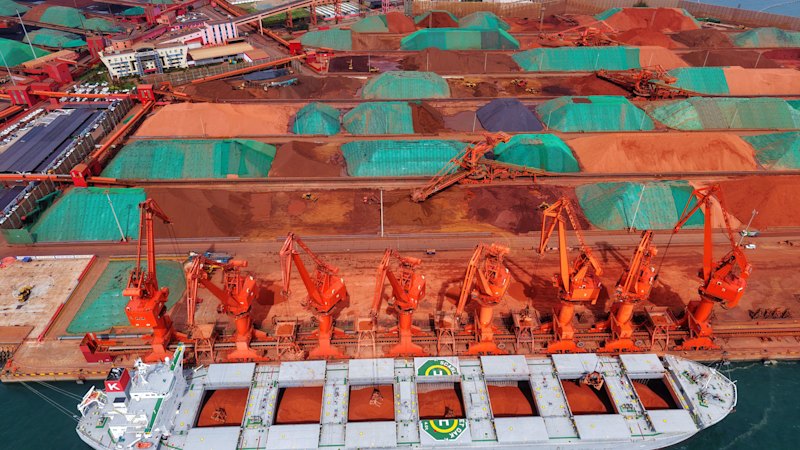
China’s state-backed iron ore buyer, the China Mineral Resources Group (CMRG), is pushing for new regulations aimed at curbing the hoarding of iron ore at ports. This initiative could significantly impact the pricing dynamics for Australian and other international miners. The proposed measures involve increasing storage costs for iron ore held at ports, targeting around 15 offshore companies, including major players like BHP and Vale.
According to sources familiar with the discussions, CMRG has requested that authorities overseeing import terminals implement these new storage fees. The goal is to discourage miners and traders from holding substantial quantities of iron ore at ports for extended periods. By doing so, it aims to limit their influence over supply and pricing, ultimately benefiting China’s steelmakers.
Impact on Iron Ore Trading
CMRG’s strategy highlights its growing influence within China’s administrative framework. Over the past five years, major companies such as BHP and Rio Tinto have developed “portside trading” units in China, catering to customers seeking smaller volumes while managing supply effectively. As the world’s largest buyer of iron ore, China has long expressed dissatisfaction with the pricing power held by major global miners.
Established in 2022, CMRG has adopted a more assertive approach this year, particularly after negotiations for long-term contracts with BHP stagnated. Reports indicate that CMRG is now engaging with other miners to discuss supply arrangements for the upcoming year.
Under the proposed regulations, miners and traders would benefit from up to 30 days of free storage. Following this period, fees would start at 0.1 yuan per ton per day and progressively increase, capping at 1 yuan after 180 days. Currently, ports generally permit 60 days of free storage before imposing more modest charges.
Notably, some Chinese steel mills and traders aligned with CMRG would be exempt from these new rules. Nonetheless, they are also being encouraged to lower their inventory levels at ports. While this plan has been communicated informally to specific traders, there has yet to be an official announcement from Beijing.
Market Reactions and Future Implications
The proposed changes have sparked concern among foreign miners and traders, with BHP and Vale opting not to comment publicly on the matter. CMRG has consistently criticized perceived opaque pricing practices in the iron ore market, arguing that they inflate costs for Chinese steelmakers and diminish the country’s negotiating power.
Earlier this week, CMRG’s research unit issued a commentary warning that the recent spike in iron ore prices is largely attributed to speculative trading activities. The complexities of China’s iron ore trading ecosystem, which often involves multiple intermediaries, blending, and repackaging at different ports, further complicate the pricing landscape.
The port regulation proposal has been in the works for some time, involving consultations with China’s transport authorities and port regulators. It remains uncertain whether these changes will affect iron ore futures traded on the Dalian Commodity Exchange, which can be settled through physical delivery.
As China continues to navigate its iron ore market, the implications of these proposed changes could echo through the global mining sector, reshaping relationships and pricing strategies in the industry.
