



































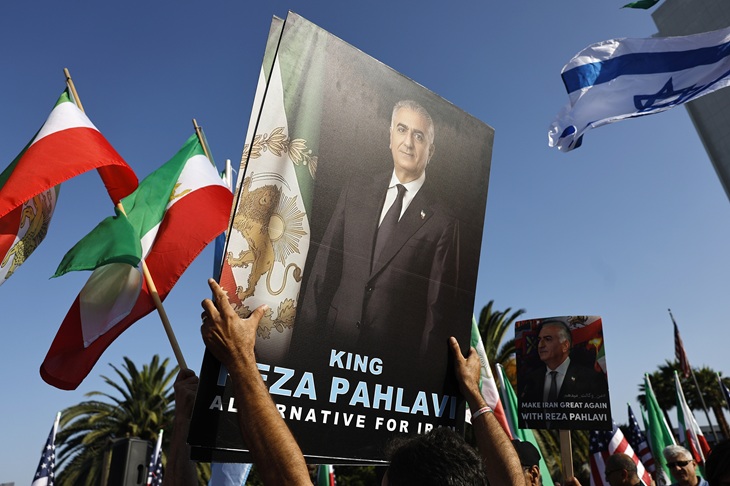
UPDATE: Iranians living in Australia are urgently voicing their concerns over the misrepresentation of their struggles as protests escalate in Iran. A significant disconnect between the grassroots demands of Iranian protesters and the narratives propagated in Australian media has sparked outrage.
Many Australians are unaware that the protests in Iran are not solely about “economic dissatisfaction,” as often reported. Instead, these demonstrators are openly calling for the overthrow of the Islamic Republic and expressing support for a national alternative, symbolized by the name of Reza Shah II. This name, chanted both in Persian and English, aims to directly counteract the softening and neutralization of their demands in the media.
This distortion of the Iranian voice is more than a miscommunication; it is a significant political issue that impacts public policy in Australia. Officials, including Prime Minister Anthony Albanese, face criticism for their cautious approach towards Iran, which many argue allows systemic human rights violations to continue without consequence. The perception that the Iranian regime can operate without serious repercussions is alarming, as it normalizes a structure known for decades of repression and violence.
The implications of this narrative are profound. When protests are simplified to mere economic grievances, the critical political context is lost, allowing the regime to maintain its grip unchallenged. The recent Bondi terrorist attack serves as a stark reminder of the dangers posed by extremist ideologies that can flourish when their proponents are granted uncritical platforms.
Leila Naseri, an Iranian-Australian social and cultural activist, emphasizes the urgency of addressing these distortions. She questions, “How long can reality be distorted in defense of a policy that disregards human life?” Her call to action highlights the need for Australia to take a clear stance against violent ideologies instead of remaining silent or complicit.
Naseri argues that transparency in media representations is crucial. By fully acknowledging and amplifying the voices of Iranian protesters, Australian policy can align with the values of human rights and accountability. She warns that historical patterns show that false neutrality benefits injustice, urging for a shift in narrative towards recognizing the true demands of the Iranian people.
The time for Australia to act is now. As sentiments rise among the Iranian diaspora, they demand not only acknowledgment of their struggles but also a commitment to ensuring that their voices are heard and understood. This call for action resonates deeply, urging both the Australian government and the public to reconsider their perspectives on Iran and its people.
As developments continue, the international community watches closely. The stakes are high, and the need for a nuanced understanding of the situation in Iran is more crucial than ever. The situation is evolving rapidly, and the voices of those on the front lines must not be silenced.
Stay tuned for further updates as this story develops, and join the conversation about the importance of accurately representing the voices of the Iranian people.
